How to Define an Ideal Customer Who Will Buy
TL;DR
Focus on one specific, realistic customer profile instead of marketing to the entire market. Identify that customer through competitor research, then document their needs, emotional wants, expected outcomes, fears, daily tasks, and obstacles so your messaging, offer, and sales conversations address problems they already want solved.
Transcript
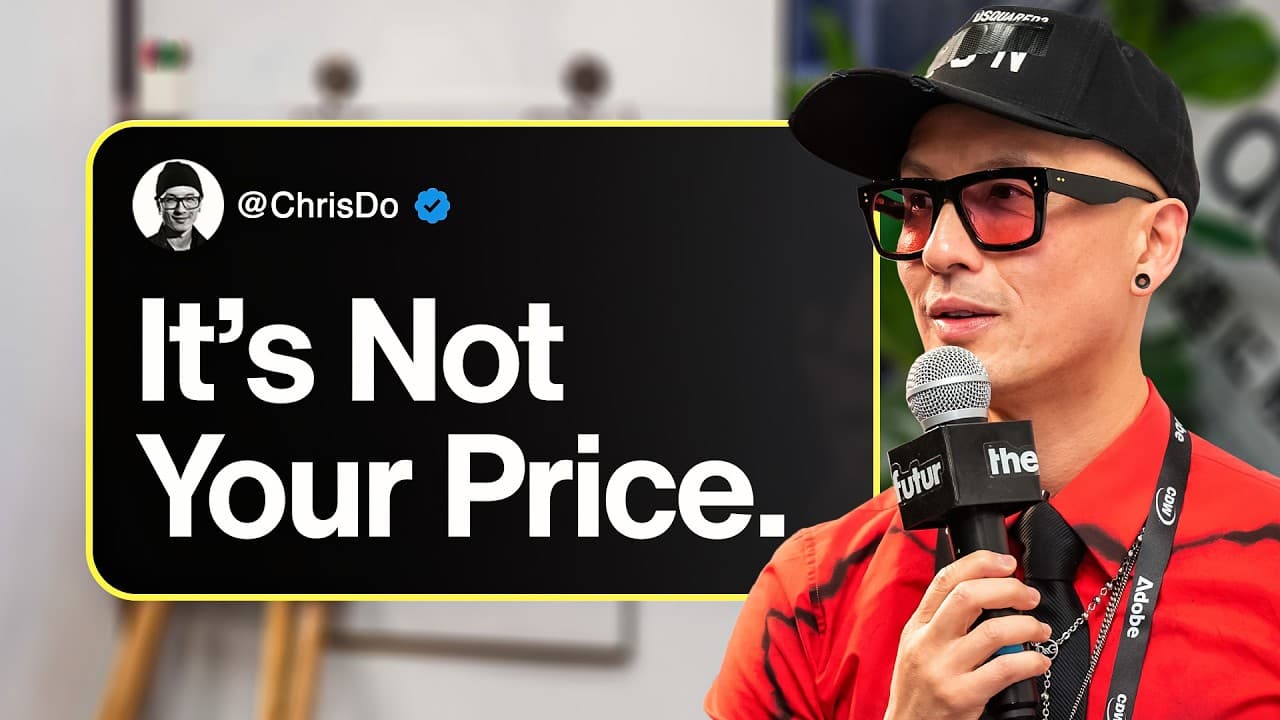
The market is bigger than your target. You're gonna have to say that a thousand times. I'm telling you right now, if we can just focus on one specific target, I'm gonna tell you right now, your business will 2x. Uh if you don't know who your ideal customer profile, it's a first sign of a problem. But what we can do is we can look at someone who you... Read More
Key Insights
- The market is larger than the target customer, so effective marketing requires choosing a specific segment rather than aiming at everyone. Focusing on one recognizable customer can also attract adjacent buyers who are slightly older, younger, or otherwise different from the central profile.
- An ideal customer profile must represent a plausible buyer rather than the customer a business merely wishes existed. If the description is vague or fictional, the resulting offer and marketing language will not reliably connect with people who have real problems and purchasing motivations.
- Competitor research is a practical starting point for a new business that has no customers of its own. The business can identify a company whose market share it wants, study who buys from that company, and reverse engineer a profile of those customers.
- Every prospective client who initiates contact has a problem, even when the problem has not been clearly stated. A service provider should determine whether it can solve that problem, whether the working relationship feels compatible, and whether the prospect can respect the value being created.
- A useful customer profile combines observable characteristics with behavioral details. Location, income, hobbies, preferred brands, vehicles, interests, and content platforms help create a clear picture that can guide decisions about where and how the business communicates with prospective customers.
- External needs and internal wants are different buying drivers. A customer may request more Instagram followers, while internally seeking importance, significance, legacy, impact, better leads, increased profit, or a larger team. Effective messaging connects the stated request to the deeper desired result.
- Customer fears shape purchasing decisions and should be documented explicitly. Concerns about wasting money, losing time, being burned, disliking the provider, or being pressured into unwanted activities affect how an offer should be presented and how trust should be established.
- The TGO framework maps tasks, gaps, and opportunities across a customer’s day. Tasks show what the customer must accomplish, gaps identify obstacles such as commuting, preparation, exhaustion, or email overload, and opportunities reveal ways a business could make those activities easier.
Install to Summarize YouTube Videos and Get Transcripts
Explore YouTube Video Summarizer or Get YouTube Transcript Extractor
Questions & Answers
Q: How do you define an ideal customer profile?
Define an ideal customer profile by selecting one realistic person who represents the specific target within a larger market. Document details such as location, income, hobbies, preferred brands, interests, content platforms, external needs, internal emotional wants, hoped-for outcomes, and purchasing fears. Giving the profile a name can make the person easier to visualize and help the business communicate more specifically.
Q: How can a startup find its ideal customer without existing customer data?
A startup can begin by identifying a competitor whose customers it would like to attract. It can then examine who those customers appear to be, where they buy, what they value, and what characteristics they share. This approach provides a realistic starting point for customer profiling when the startup has no established customer base from which to draw its own evidence.
Q: Why should a business target one specific customer instead of the whole market?
The market includes more people than the business’s specific target, but aiming at the entire market can make the message too broad to connect with anyone. Targeting one recognizable person creates clearer language and a more relevant offer. The focused message can still attract people who differ somewhat from the central profile, including buyers who are older, younger, or otherwise adjacent.
Q: What should a business ask during a prospective client call?
A business should use the call to answer three central questions. First, does the prospect have a problem the business can solve? Second, does the relationship feel compatible enough for both parties to work together? Third, does the prospect have enough money to respect the value the provider expects to generate? These questions help evaluate both practical fit and working compatibility.
Q: What is the difference between customer needs and customer wants?
Customer needs are the external results people directly request, such as growing an Instagram following. Customer wants are the deeper feelings or outcomes attached to that request, such as feeling important, creating a legacy, making an impact, attracting higher-quality leads, increasing profit, or scaling a team. Understanding both levels helps a business connect its service to the customer’s real motivation.
Q: What customer fears should an ideal customer profile include?
An ideal customer profile should include realistic concerns about buying and working with a provider. The example customer fears being burned, wasting money, wasting time, failing to connect with the provider, and being required to do something unwanted, such as dancing on TikTok. Recording these fears helps the business adjust its language, process, and offer to address hesitation directly.
Q: What is the TGO framework for customer research?
The TGO framework examines tasks, gaps, and opportunities. Tasks are the jobs and activities a customer performs from morning to night. Gaps are the obstacles that slow down or complicate those tasks. Opportunities are ways a business could make the customer’s life easier. The framework turns an understanding of daily behavior into specific areas where a service may provide value.
Q: How do daily customer tasks reveal business opportunities?
Daily tasks reveal opportunities when each activity is examined for friction. A workout may involve commuting, getting dressed, meeting a trainer, or overcoming exhaustion. Breakfast may require preparation, shopping, and usable ingredients. School preparation involves waking and dressing children, while checking email can involve an overwhelming volume of messages. Each obstacle suggests a problem that could potentially be made easier.
Summary & Key Takeaways
-
A business should distinguish its broad market from its specific target. Broad messaging attempts to reach everyone but may connect with no one. A focused ideal customer profile makes marketing and selling easier because the business can tailor its language, services, and value proposition to a recognizable person with identifiable circumstances and priorities.
-
New businesses without customer data can begin by examining a competitor whose customers they want to attract. The profile should be realistic rather than an invented description of a perfect buyer. Relevant details include location, income, activities, brand preferences, content platforms, external needs, emotional wants, expected business outcomes, and purchasing fears.
-
The TGO framework organizes customer research into tasks, gaps, and opportunities. First, map the customer’s activities from morning to night. Next, identify obstacles that slow down or complicate each activity. Those obstacles reveal opportunities to make the customer’s life easier, giving the business concrete problems around which it can shape services and messaging.
Read in Other Languages (beta)
Share This Summary 📚
Summarize YouTube Videos and Get Video Transcripts with 1-Click
Try YouTube Summary with ChatGPT & Claude or YouTube Transcript Generator
Explore More Summaries from The Futur 📚
Summarize YouTube Videos and Get Video Transcripts with 1-Click
Try YouTube Summary with ChatGPT & Claude or YouTube Transcript Generator