What Duty Do Sellers Have to Disclose Property Issues?
TL;DR
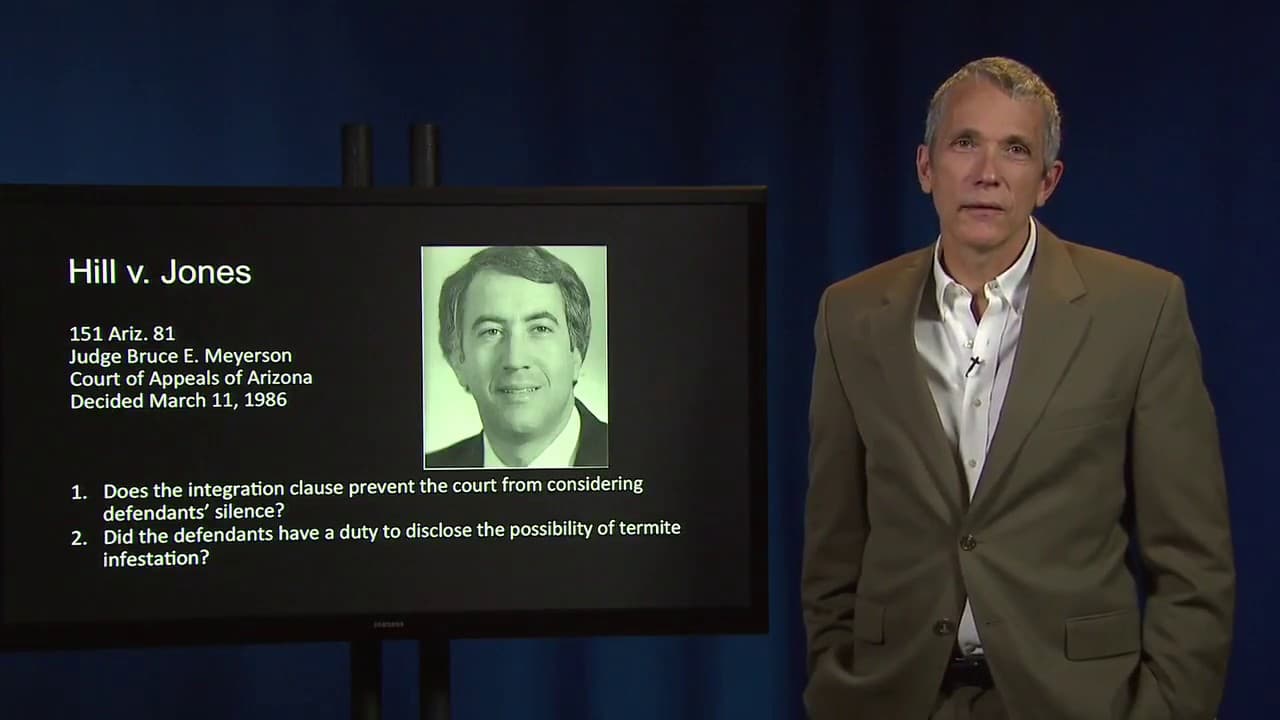
Sellers are obligated to disclose known material defects, like termite damage, that could affect the buyer's decision. In the case of Hill v. Jones, the court ruled that the sellers, the Joneses, failed to inform the Hills about past infestations, creating grounds for the lawsuit. Disclosure is required when the seller's silence would misrepresent the property's actual condition.
Transcript
the case of Hill v Jones deals with the question of when parties have an affirmative duty to disclose information during contract negotiations the hills had purchased the Jones's house when it turned out to be infested with termites they sued to rescind the contract for sale let's consider what happened in the case in chronological order in 1963 un... Read More
Key Insights
- 💁 The case highlights the importance of disclosing material information during contract negotiations to avoid misrepresentation or fraudulent assertions.
- 💁 Exceptions to the general rule of non-disclosure exist when the information materially affects the value of the property, is based on a mistake, pertains to the contents of the contract, or involves relationships of trust and confidence.
- 🤫 Integration clauses may not prevent courts from considering silence when intentional fraud is involved.
Install to Summarize YouTube Videos and Get Transcripts
Explore YouTube Video Summarizer or Get YouTube Transcript Extractor
Questions & Answers
Q: Did the Joneses have a duty to disclose the past termite damage to the house?
Yes, the court found that the Joneses had a duty to disclose since the termite damage materially affected the value of the property and was not readily observable by the Hills.
Q: What exceptions allow for a duty to disclose during contract negotiations?
The exceptions include when disclosure is necessary to prevent a previous assertion from being a misrepresentation or fraudulent, when one party knows the other's agreement is based on a mistake, when there is a mistake regarding the contents of the contract, and in relationships of trust and confidence.
Q: Was the integration clause in the contract valid in preventing the court from considering the Joneses' silence?
No, since the case involved intentional fraud, the integration clause did not prevent the court from looking into the parties' dealings and considering the Joneses' silence as misrepresentation.
Q: What theories of disclosure do Anthony Kronman and Robert Cooter and Tom Yulin present?
Kronman distinguishes between deliberately acquired and casually acquired information, while Cooter and Yulin differentiate between productive and redistributive facts.
Summary & Key Takeaways
-
The Hills bought a house from the Joneses, unaware of termite damage, which would cost $5,000 to repair.
-
The Joneses failed to disclose the termite damage during the sale, leading the Hills to sue for rescission of the contract.
-
The court examines whether there was a duty to disclose and if the integration clause in the contract prevents consideration of the Joneses' silence.
Read in Other Languages (beta)
Share This Summary 📚
Summarize YouTube Videos and Get Video Transcripts with 1-Click
Try YouTube Summary with ChatGPT & Claude or YouTube Transcript Generator
Explore More Summaries from YaleCourses 📚


Summarize YouTube Videos and Get Video Transcripts with 1-Click
Try YouTube Summary with ChatGPT & Claude or YouTube Transcript Generator