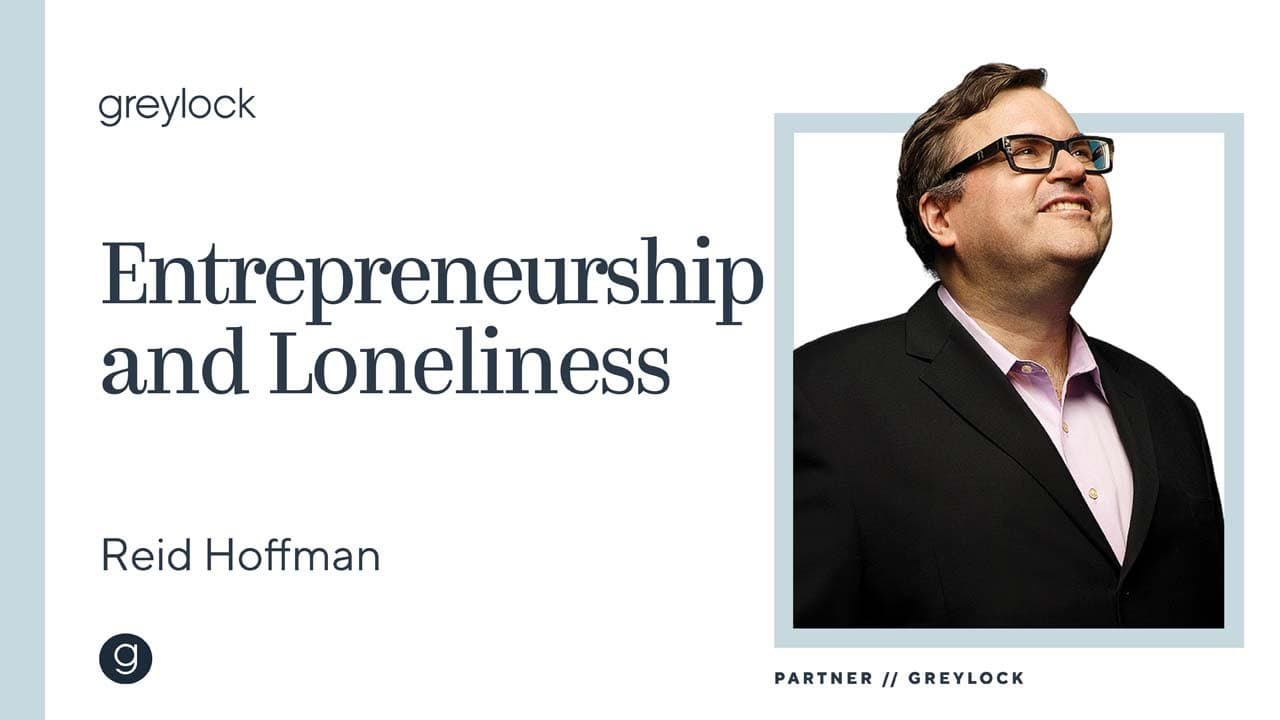
Reid Hoffman | Entrepreneurship and Loneliness
TL;DR
Entrepreneurship is often lonely due to the immense pressure and responsibility founders face while leading risky ventures. This loneliness is intensified as they feel the weight of decisions affecting their team, investors, and customers. Building a support network and sharing fears with trusted allies can help alleviate this isolation and foster resilience.
Transcript
foreign the co-author of Blitz scaling and I'm here with my co-author and old friend Reid Hoffman the co-founder of LinkedIn and investor at Greylock Partners Now read it's the holiday season happy holidays you too and of course all the people listening to us now this year the holidays are remarkably unprecedented in fact they're probably some of t... Read More
Key Insights
- 🏋️ Entrepreneurship is a lonely journey due to the weight of decisions and responsibilities.
- 🥺 Founders experience intense loneliness as they lead risky ventures with a community depending on them.
- ❓ Emotional support from allies and mentors is crucial in navigating the challenges of entrepreneurship.
- 🆘 Leadership and teamwork can help combat loneliness and stress in entrepreneurial journeys.
- 😤 Entrepreneurship is a team sport, and building a support network is essential for success.
- 😨 Sharing fears and doubts with trusted friends and allies can alleviate the burden of loneliness.
- 😨 Founders can demonstrate heroism and leadership by facing fear and stress in challenging times.
Install to Summarize YouTube Videos and Get Transcripts
Explore YouTube Video Summarizer or Get YouTube Transcript Extractor
Questions & Answers
Q: Why is entrepreneurship considered such a lonely journey?
Entrepreneurship involves making tough decisions, leading risky ventures, and carrying the weight of the organization's success, leading to feelings of isolation.
Q: How does loneliness impact founders differently compared to CEOs?
Founders face a more intense loneliness as they lead risky entrepreneurial ventures, persuading a community to join them on a challenging journey of uncertainties.
Q: What role does emotional support play in an entrepreneur's journey?
Emotional support from friends, family, and allies outside the company can provide grit, inspiration, and help in navigating the challenges of entrepreneurship.
Q: How can entrepreneurs combat loneliness and stress in their journey?
Building a trusted support network, sharing fears and doubts with allies, and showcasing leadership in difficult times can help entrepreneurs overcome loneliness and stress.
Summary
In this video, Reid Hoffman and his co-author discuss the loneliness and challenges of entrepreneurship. They explore why the entrepreneurial journey can be even more lonely than being a CEO and how founders carry the weight of not only their own doubts and fears but also the hopes and investments of their team, family, and investors. They also delve into the role of mentors, coaches, and support networks in helping entrepreneurs navigate this loneliness and find the support they need. The video concludes with a reminder that while the year 2020 has been unprecedented in its difficulties, it is also an opportunity for entrepreneurs to show heroism, leadership, and resilience.
Questions & Answers
Q: What makes entrepreneurship such a lonely journey compared to being a CEO?
Entrepreneurs carry the weight of not only their own doubts and fears but also the hopes and investments of their team, family, and investors. They are responsible for persuading people to join them on their risky journey, and when doubts and uncertainties arise, the burden falls on the founder to navigate them.
Q: How does the loneliness of the entrepreneurial journey differ from the loneliness of being a CEO?
While both roles can be lonely, being a CEO often requires a balance between being a friend and a boss. As a CEO, one must prioritize the well-being and success of the organization, which sometimes means making tough decisions and sacrifices. This can strain friendships and make the CEO role lonelier. On the other hand, the founder of a startup carries the weight of an entire community of people who have invested in their vision, making the journey even more intense.
Q: How does Reid Hoffman's own experience as a founder relate to the loneliness of entrepreneurship?
Reid shares that during his time as a founder, he experienced the loneliness and stress that often come with building a startup. He mentioned gaining weight due to stress eating and the strain it placed on personal relationships. However, he also highlights that his experience improved with LinkedIn, where he had a more experienced team and a better understanding of the startup journey.
Q: Why is it important for entrepreneurs to have a team on board?
Reid emphasizes that entrepreneurship, like life, is a team sport. Having the right team on board allows entrepreneurs to share the burden of the journey. By setting the right expectations and collaborating with the team, entrepreneurs can navigate challenges more effectively and find the emotional support they need along the way.
Q: What are some of the places entrepreneurs can turn to for help with their loneliness and challenges?
Besides seeking out the support of mental health professionals, entrepreneurs can turn to friends, family, and other entrepreneurs who have shared similar experiences. Joining entrepreneurial communities or organizations can provide opportunities to connect with others who understand the journey and offer advice and support. Additionally, consuming content such as podcasts or books that share the experiences and insights of successful entrepreneurs can provide emotional support and guidance.
Q: How can entrepreneurs navigate the fears and doubts they face without undermining their chances of success?
It is important for entrepreneurs to carefully choose who they confide in about their fears and doubts. Some individuals may misunderstand or misinterpret these expressions of uncertainty. It is essential to seek out people who can provide perspective and support without undermining the entrepreneur's belief in their vision.
Q: How can entrepreneurs find the emotional support they need?
Building strong relationships with mentors, coaches, and support networks is crucial. These individuals can provide guidance, offer emotional support, and help navigate challenges. Entrepreneurs should not hesitate to reach out to trusted individuals who can provide advice and empathize with their experiences.
Q: Is entrepreneurship purely about tactics and techniques?
While tactics and techniques are essential in entrepreneurship, there is also a need for emotional context and inspiration. Understanding the "why" behind the entrepreneurial journey, the mission, and the impact it can have on the world is just as important as the technical aspects. Content that shares the emotional experiences and motivations of entrepreneurs can provide support and inspiration.
Q: How can entrepreneurs balance their emotional struggles with projecting confidence and determination?
Entrepreneurs can balance their emotional struggles by seeking the right support system—one that understands the challenges of entrepreneurship. It is crucial to confide in individuals who can provide guidance and empathy without fearing that the entrepreneur is no longer confident or determined. Expressing fears and doubts can be a way to navigate challenges, rather than a sign of weakness.
Q: What final thoughts does Reid have for entrepreneurs as they navigate the challenges of 2020?
Reid acknowledges that 2020 has been an incredibly difficult year but encourages entrepreneurs to see it as an opportunity for heroism, leadership, and resilience. He emphasizes that entrepreneurs have a crucial role to play in creating new industries and jobs, and their ability to navigate these turbulent times with hope and determination is essential for recovery and progress.
Takeaways
The entrepreneurial journey can be a lonely one, but entrepreneurs should seek the right support system to navigate the challenges. This includes building strong relationships with mentors, coaches, and support networks. It is essential to confide in individuals who understand the journey and can provide guidance, empathy, and perspective. While tactics and techniques are important, entrepreneurship is not only about the "how" but also the "why." Understanding the mission and impact can provide emotional support and inspiration. Expressing fears and doubts is not a sign of weakness but an opportunity to navigate challenges together. In a year like 2020, entrepreneurs have the chance to show heroism, leadership, and resilience as they contribute to recovery and progress.
Summary & Key Takeaways
-
Entrepreneurship can be a lonely journey due to the weight of decisions and responsibilities.
-
The loneliness intensifies for founders, as they lead risky ventures with a community depending on them.
-
Sharing fears and doubts with trusted allies and seeking support is essential in the entrepreneurial journey.
Read in Other Languages (beta)
Share This Summary 📚
Summarize YouTube Videos and Get Video Transcripts with 1-Click
Try YouTube Summary with ChatGPT & Claude or YouTube Transcript Generator
Explore More Summaries from Greymatter Podcast (Audio) 📚






Summarize YouTube Videos and Get Video Transcripts with 1-Click
Try YouTube Summary with ChatGPT & Claude or YouTube Transcript Generator