How to choose a high ticket model to price expertise
TL;DR
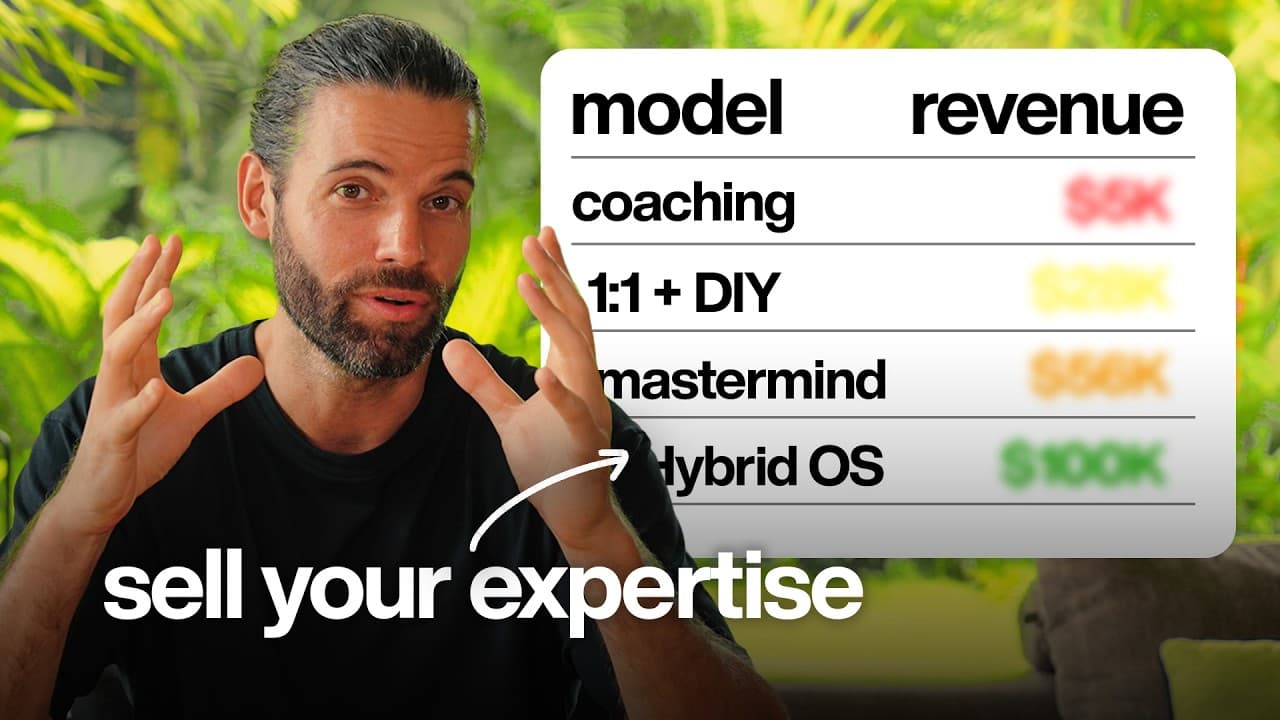
The five high ticket models are Cohort group coaching, elite masterminds, DIY programs with mentorship, done-for-you services, and a hybrid operating system. Pick the model that matches your strengths, scale needs, and delivery capacity without burning out, then use a diagnostic to rate fit for each option. This gives a clear path to premium pricing.
Transcript
Everyone wants to make a great living doing what they're actually good at. But the real challenge isn't finding [music] your passion. It's knowing how to package it into something people will pay premium prices for. You know, most people try to create a high ticket offer out of thin air. They guess, they wing it, and then they burn out. But here's ... Read More
Key Insights
- The five high ticket models are group coaching, masterminds, DIY program plus mentorship, done-for-you services, and a hybrid operating system, offering different scales of delivery and income potential.
- Group coaching replaces time for money with a system that can be delivered to 20 to 30 people per cohort, enabling replication and recurring revenue.
- Masterminds rely on elite peer groups and curated networks, often charging 30K to 60K per member per year, with strong retention and network effects.
- DIY program plus high-touch mentorship separates information delivery from decision support, allowing scalable reach while providing critical guidance at decision points.
- Done-for-you services deliver specialized outcomes with a hands-on approach, typically requiring strong execution capabilities and a clear value proposition for clients.
- The hybrid operating system combines elements of the other models to balance delivery burden with client transformation and scalable support.
- A great curriculum and high-quality delivery are essential; a weak curriculum reduces the model to expensive Zoom therapy and harms reputation.
- Choice of model should consider personal brand strength, audience fit, and the ability to sustain delivery without burnout.
- More videos from this channel:
- More from this channel: Matt Gray
Install to Summarize YouTube Videos and Get Transcripts
Explore YouTube Video Summarizer or Get YouTube Transcript Extractor
Questions & Answers
Q: What is the main idea behind the five high ticket models for monetizing expertise?
The main idea is to package expertise into high value offerings that scale beyond one-on-one coaching. Each model provides a different path to premium pricing, whether through a structured group program, exclusive networks, automated content with selective mentorship, hands-on services, or a hybrid system that combines elements for maximum reach and impact. Success hinges on choosing a model that fits your strengths and delivering a proven transformation, not just selling time.
Q: How does group coaching differ from traditional coaching in this framework?
Group coaching shifts the focus from trading time for money to delivering a transformation system. It uses a pre-built curriculum and milestones to drive progress for a cohort, enabling multiple participants to progress in parallel. The product becomes the system itself, allowing you to scale with live sessions that are recorded for reuse, reducing incremental delivery time while maintaining live calibration and accountability.
Q: Why are masterminds considered high value in this model?
Masterminds are valued for network arbitrage rather than education alone. They curate elite groups where members gain access to introductions and opportunities that compress years of trial and error into strategic connections. When well curated, masterminds generate high revenue per member, strong retention, and powerful network effects as members open doors for one another and contribute value back into the group.
Q: What does the DIY program plus mentorship model emphasize?
This model emphasizes separating information delivery from decision support. Content is recorded once and sold repeatedly, while mentorship provides targeted guidance at critical decision points. It supports large-scale reach (potentially 500+ clients) but requires careful design of activation points, onboarding, core milestones, and ongoing calibration to ensure clients achieve promised outcomes.
Q: What are the challenges of the done-for-you services model?
Done-for-you services demand high execution capability and a clear value proposition. The challenge lies in delivering individualized outcomes at scale, maintaining consistent quality, and managing client expectations. Success requires efficient processes, skilled teams, and a compelling reason for clients to choose your hands-on service over automated or higher-level guidance options.
Q: How does the hybrid operating system model work?
The hybrid operating system blends elements from the other models to create an integrated, scalable delivery framework. It combines structured learning, mentorship, and possible accountability mechanisms with selective hands-on components. This approach aims to maximize impact while balancing delivery workload and creating a cohesive client journey that can adapt to different client needs.
Q: What should you assess before picking a model to pursue?
You should assess alignment with your strengths, the size of your target market, delivery capacity, and appetite for ongoing live involvement. Also evaluate pricing potential, required brand authority, and the ability to sustain a high level of quality without burning out. A diagnostic self-audit can help rate fit for each model and guide the final decision.
Q: What is the role of curriculum quality in these models?
Curriculum quality determines whether the model becomes a genuine transformation or a source of frustration. A strong curriculum enables scalable delivery, clear milestones, and reliable outcomes, while a weak curriculum risks turning the program into ineffective, costly coaching with poor results. Investing in upfront curriculum development pays off in retention, referrals, and perceived value.
Summary & Key Takeaways
-
This video outlines five scalable high ticket models for monetizing expertise, emphasizing that the product is the system or the curated group, not just the individual provider. It stresses alignment with strengths and sustainable delivery to reach premium pricing levels.
-
The first model focuses on group coaching where a structured, timebound curriculum drives outcomes for a cohort, enabling recurring revenue while maintaining a manageable delivery footprint with live sessions.
-
The fifth model introduces a hybrid operating system that blends elements from the other models to create a scalable, integrated delivery and support structure for clients.
Read in Other Languages (beta)
Share This Summary 📚
Summarize YouTube Videos and Get Video Transcripts with 1-Click
Try YouTube Summary with ChatGPT & Claude or YouTube Transcript Generator
Explore More Summaries from Matt Gray 📚
Summarize YouTube Videos and Get Video Transcripts with 1-Click
Try YouTube Summary with ChatGPT & Claude or YouTube Transcript Generator