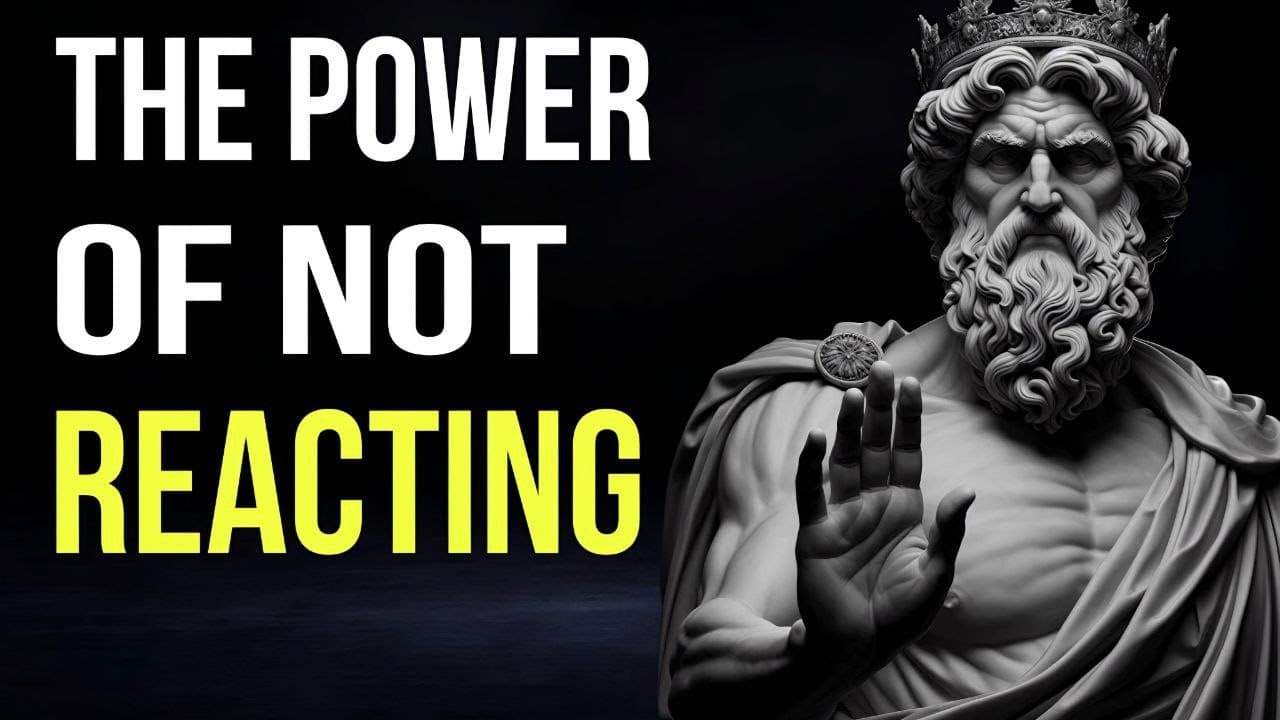
How to Control Emotions Without Reacting
TL;DR
Emotional control begins by pausing between a trigger and your response, then choosing an action that reflects your values instead of your first impulse. Notice bodily warning signs, question the judgment behind the emotion, and investigate whether an old experience is shaping the present reaction. Repeated observation, breathing, reflection, and self-compassion gradually strengthen calmness and resilience.
Transcript
There's a quiet strength hidden in the moments we choose not to react. In a world that rewards outrage, impatience, and impulsivity, the ability to remain still, to feel without being ruled by feelings, has become a forgotten art. The Stoics taught us that we're not disturbed by events themselves, but by our judgments about them. And yet, how often... Read More
Key Insights
- Emotional freedom is the ability to control your response to life, not the ability to control external events. The decisive moment is the gap between what happens and what you do next, because that gap allows judgment and choice to replace automatic impulse.
- Emotional triggers are present situations connected to older experiences and unresolved feelings. Criticism, exclusion, or being ignored may provoke unusually strong reactions when they activate memories of not being heard, betrayal, guarded pride, fear, or loneliness.
- Self-awareness is the bridge between being ruled by emotion and responding deliberately. Asking what you are truly reacting to, whether the response fits the present situation, and whether an old story is involved exposes patterns that otherwise operate without permission.
- Bodily sensations are an early warning system for emotional reactions. A quickened heartbeat, tight chest, tense shoulders, clenched jaw, shallow breathing, stomach fluttering, or physical heaviness can reveal anger, anxiety, fear, or sadness before conscious thought fully forms.
- Embodied awareness creates an opportunity for choice before emotion gains destructive momentum. Checking inward, noticing physical sensations, and staying with discomfort can reveal what is happening without allowing the mind to rationalize, deny, distort, or immediately act.
- Slow breathing and conscious physical relaxation can soften an emotional surge. Breathing into tension, relaxing the shoulders, and noticing the heartbeat help anchor attention in the present, where patience, calmness, and clarity remain possible.
- The pause between stimulus and response is where practical emotional mastery occurs. Refusing to speak or act during the first surge of anger, fear, jealousy, embarrassment, or sadness prevents instinctive reactions from controlling conversations, relationships, and decisions.
- Emotional mastery is a repeated practice, not the elimination of every trigger or feeling. Each moment of observation, reflection, compassion, and successful interruption strengthens resilience, even when awareness sometimes arrives only after the reaction has already occurred.
Install to Summarize YouTube Videos and Get Transcripts
Explore YouTube Video Summarizer or Get YouTube Transcript Extractor
Questions & Answers
Q: How can I control my emotions without suppressing them?
Control begins by allowing the emotion to be felt while delaying action. Notice the first bodily sensations, breathe, and ask what judgment or older story is shaping the reaction. This approach does not deny anger, anxiety, sadness, or jealousy. It creates enough space to select a response that reflects your values rather than obeying the emotion's first impulse.
Q: What is the Stoic meaning of not reacting?
Not reacting means refusing to let an external event dictate an automatic response. The source presents the Stoic view that events are neutral and become disturbing through our judgments, interpretations, attachments, and old wounds. A person still feels emotion, but pauses long enough to examine its meaning and choose a wise action instead of acting reflexively.
Q: How do I identify my emotional triggers?
Observe situations that repeatedly produce reactions stronger than the immediate event seems to justify. Criticism, exclusion, being ignored, or being misunderstood may connect with earlier experiences of loneliness, betrayal, fear, wounded pride, or not feeling heard. When emotion rises, ask what you are really reacting to and whether you are carrying an older story into the present.
Q: What physical signs warn that an emotional reaction is starting?
Early warning signs can include a quickened heartbeat, tightness in the chest, tense shoulders, shallow breathing, a clenched jaw, fluttering in the stomach, or a heavy feeling in the chest. Different emotions may have different physical signatures. Recognizing these sensations before the mind constructs an explanation gives you time to intervene before the reaction intensifies.
Q: How do I create a pause before responding in anger?
When anger begins to rise, avoid speaking or acting immediately and focus first on breathing. Notice where tension appears, such as the jaw, shoulders, chest, or breath, and allow the first wave to pass without obeying it. This brief pause makes room to evaluate the situation and choose a response aligned with your values rather than momentary anger.
Q: Why do small events sometimes cause strong emotional reactions?
A small present event may activate emotional history beneath the surface. Criticism can reconnect with memories of not feeling heard, while being ignored or excluded can awaken older loneliness or fear. The visible situation is therefore only part of the reaction. Examining the judgment and personal history attached to it helps explain why the emotional intensity feels disproportionate.
Q: How can breathing help reduce impulsive reactions?
Slow breathing interrupts the rush from emotional stimulus to automatic action. It directs attention toward present bodily sensations, helps soften physical tension, and creates time for clearer judgment. The source also recommends consciously relaxing the shoulders and noticing the heartbeat. These practices do not erase emotion, but they can reduce its momentum before it becomes an impulsive remark or action.
Q: How can I build emotional resilience through daily practice?
Emotional resilience grows through repeated observation, reflection, breathing, and compassion toward yourself. Watch for recurring triggers, notice the body's early alarms, and question whether each reaction belongs entirely to the present. Sometimes awareness will arrive before an outburst and sometimes afterward. Each recognition still provides insight and strengthens the ability to remain steady during future emotional waves.
Summary & Key Takeaways
-
Stoic emotional mastery rests on the idea that external events do not directly determine our distress. Our judgments, interpretations, attachments, and unresolved experiences give events their emotional weight. Freedom therefore comes from examining what a situation means to us and choosing our response, rather than trying to control every circumstance.
-
Strong reactions can reveal emotional triggers rooted in earlier experiences, including criticism, exclusion, betrayal, loneliness, or not feeling heard. Observing recurring patterns without blame helps uncover the older story beneath a present reaction. Awareness does not eliminate emotion, but it reduces the trigger's hidden control and creates room for deliberate action.
-
The body often signals emotion before the mind explains it through a faster heartbeat, tight chest, tense shoulders, clenched jaw, shallow breathing, or stomach discomfort. Recognizing these sensations early makes a pause possible. Slow breathing, relaxing physical tension, and remaining present can interrupt impulsive momentum and support a calmer response.
Read in Other Languages (beta)
Share This Summary 📚
Summarize YouTube Videos and Get Video Transcripts with 1-Click
Try YouTube Summary with ChatGPT & Claude or YouTube Transcript Generator
Explore More Summaries from Stoic Saga 📚
Summarize YouTube Videos and Get Video Transcripts with 1-Click
Try YouTube Summary with ChatGPT & Claude or YouTube Transcript Generator