How I Made $1.56 Million Day Trading in 2025: Institutional Precision Model Full Course
TL;DR
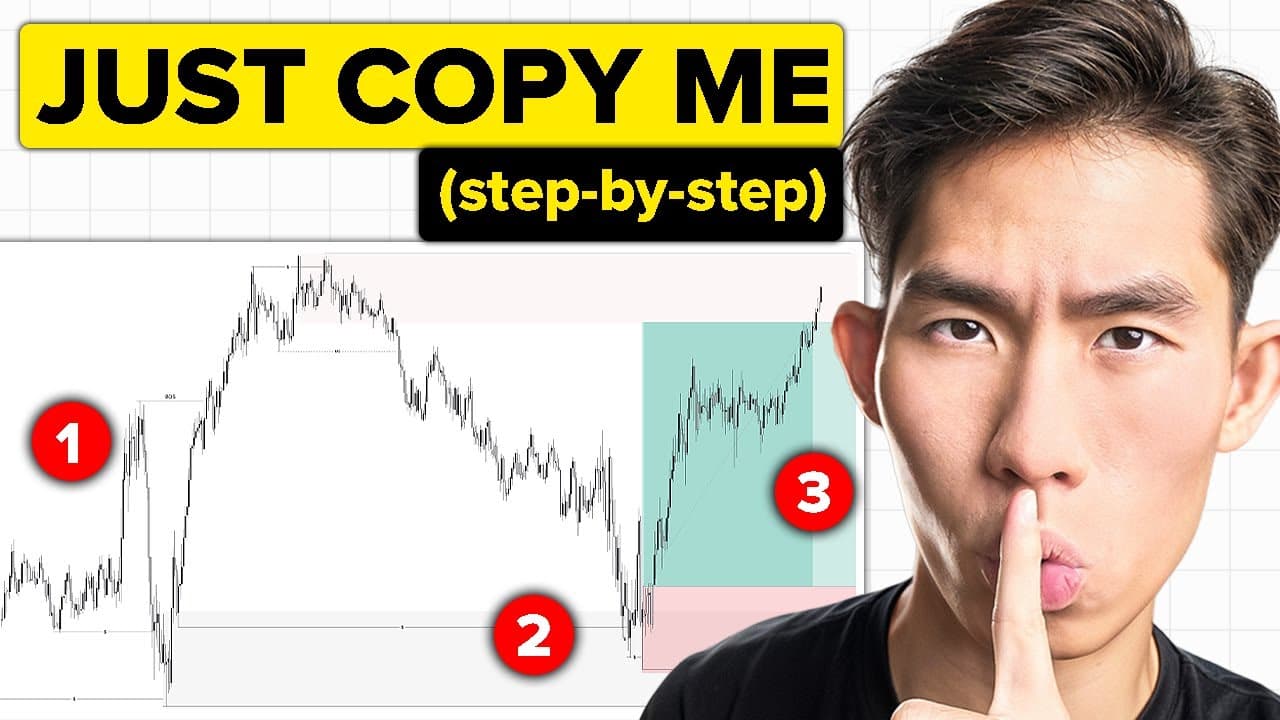
The institutional precision model trades with institutional money flow in three steps: identify a protected low or high that swept liquidity, wait for price to mitigate the institutional zone, and enter after the initial mitigation is swept. Brad Goh reports making $1.56 million day trading in 2025 using a patient, structure-based approach rather than trading in the middle of nowhere. Read on for the zone criteria, confirmation signals, and entry timing.
Transcript
So far this year, I've made $1.56 million day trading, and I've documented every single trade live on my second channel. And today, I'm breaking down a simple and effective entry model, which is what I like to call the institutional precision model. Well, that sounded a lot better in my head. Anyways, if you stay to the end, I'm going to share with... Read More
Key Insights
- An institutional zone is a price point where institutions entered a large amount of buy or sell orders, identified by finding a protected low or protected high that swept liquidity before price sharply reversed.
- A liquidity sweep occurs when price collapses to trigger stop losses hanging below a swing low, grabbing liquidity before pushing back up, often leaving a sharp V-shaped reaction and large momentum candles.
- The core logic is that smart money will not buy at high prices; they wait for price to return to their original point of interest to scale into more buy orders at a better price.
- A valid institutional zone must lead to a break of structure, meaning demand overpowers supply and price takes out a prior swing high, which increases the probability the zone holds.
- The second step is to do nothing until price mitigates the marked institutional zone; trading in the middle of nowhere with 'itchy fingers' is why many traders keep getting stopped out.
- The initial mitigation of a zone is usually an inducement, a trap that entices retail traders to enter early before price sweeps their stop losses and the real move happens.
- The correct entry comes after price sweeps the initial mitigation, ideally on at least the 15-minute time frame for day traders, so the trader spots the liquidity instead of becoming it.
- Traders should trade the objective reality of the market by first understanding the objective of price, rather than trading their personal beliefs about where the market should go.
Install to Summarize YouTube Videos and Get Transcripts
Explore YouTube Video Summarizer or Get YouTube Transcript Extractor
Questions & Answers
Q: What is the institutional precision model in day trading?
The institutional precision model is Brad Goh’s method for trading in the direction of institutional money flow. It involves identifying an institutional zone, waiting for price to return and mitigate it, and entering only after price sweeps the initial mitigation.
Q: How do you identify an institutional zone?
Find a protected low or protected high that swept liquidity before price reacted sharply. Mark the pivot candle that performed the sweep as the institutional zone, then confirm that the zone led to a break of structure.
Q: What is a liquidity sweep?
A liquidity sweep occurs when price moves beyond a previous swing low or high and triggers the stop losses positioned there. In the bullish example, price swept a swing low, grabbed liquidity, and then reversed with a sharp V-shaped reaction and large bullish candles.
Q: Why must an institutional zone cause a break of structure?
A break of structure shows that demand overpowered supply or that supply overpowered demand. When a demand zone takes out a prior swing high after sweeping liquidity, it increases the probability that the protected low and zone will hold.
Q: When should you enter using the institutional precision model?
Wait until price returns to and mitigates the marked institutional zone. Enter only after price then sweeps the initial mitigation and available liquidity, ideally with that sweep visible on at least the 15-minute time frame for day trading.
Q: Why should you avoid entering at the initial mitigation?
The initial mitigation is described as an inducement that attracts retail traders into entering early. Price may sweep those traders’ stop losses before making the intended move, so waiting for that sweep helps the trader identify liquidity instead of becoming it.
Q: Why does the model require patience?
Price may spend time consolidating or trading in the middle of the swing range before returning to the institutional zone. Entering there because of “itchy fingers” can lead to repeated stop-outs, while the model calls for doing nothing until the marked zone is mitigated.
Q: How much did Brad Goh report making from day trading in 2025?
Brad Goh reports making $1.56 million from day trading in 2025. He says he documented every trade live on his second channel and presents the institutional precision model as his simple, effective entry approach.
Summary & Key Takeaways
-
Brad Goh reports making $1.56 million day trading in 2025 and documenting every trade live on his second channel. He teaches an entry method he calls the institutional precision model, designed to trade in the direction of institutional money flow with high probability setups.
-
Step one is identifying an institutional zone, a protected low or high where price swept liquidity, triggered stop losses, and reacted sharply. The zone must lead to a break of structure by taking out a prior swing high, confirming smart money entered and increasing the odds the zone holds.
-
Step two is waiting until price returns to mitigate the zone, and step three is entering only after price sweeps the initial mitigation, which is an inducement trap. This patience avoids becoming the liquidity. Brad also shares his journey from a broke Singapore teenager who blew seven accounts.
Read in Other Languages (beta)
Share This Summary 📚
Summarize YouTube Videos and Get Video Transcripts with 1-Click
Try YouTube Summary with ChatGPT & Claude or YouTube Transcript Generator
Explore More Summaries from The Trading Geek 📚






Summarize YouTube Videos and Get Video Transcripts with 1-Click
Try YouTube Summary with ChatGPT & Claude or YouTube Transcript Generator