How to Create Luck and Build Million-Dollar Ideas
TL;DR
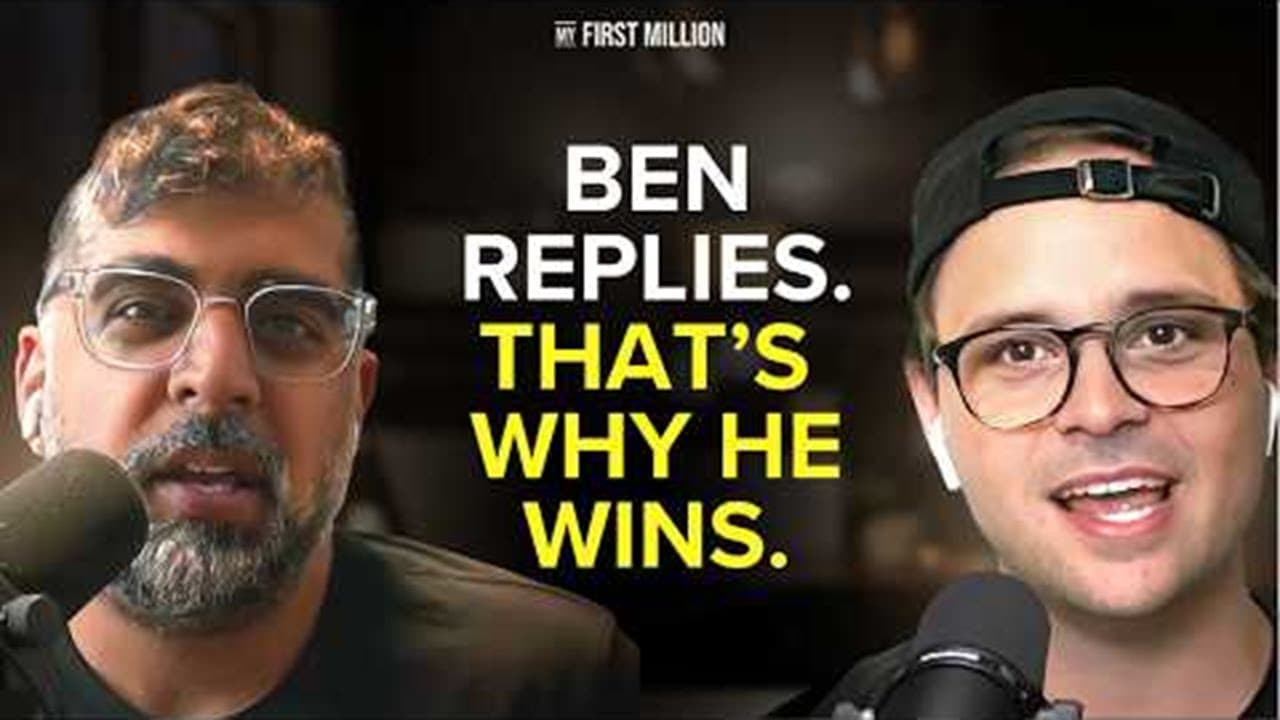
Create more luck by backing talented people early, entering rooms filled with relevant relationships, and running fast experiments instead of waiting for certainty. Shaan Puri and Ben Levy trace a five-year partnership that produced nine projects earning more than $1 million each, beginning with a public 90-day business-building sprint, while showing how belief, access, and repeated action create opportunities.
Transcript
all right we got Ben here and this is the real deal Ben this is Ben the business partner if you listen to every single episode of this podcast you hear me two hours a week i probably talk to Ben 20 hours a week yeah pretty much i feel like you have a 100 times more great stuff that never makes it anywhere it just goes into our text thread and dies ... Read More
Key Insights
- Shaan Puri and Ben Levy created nine separate projects that each earned more than $1 million during five years of working together. Their record frames repeated business success as the product of an ongoing partnership and multiple experiments, rather than one isolated winning idea.
- The All Access Pass was a 90-day public building experiment that sent listeners a daily email showing what Shaan worked on. Versions documented projects such as starting an ecommerce brand, raising a fund, or creating a course, and the initiative earned more than $1 million.
- Ben Levy’s former business earned $1 million annually from a single customer, Budweiser. Despite that revenue, he felt bored and unable to grow after trying every approach he could think of, which made a new partnership more attractive than preserving the existing arrangement.
- An early believer is someone who supports a person before results provide a logical reason for confidence. Shaan argues that this belief can be more important than cash at the beginning because it gives an aspiring entrepreneur confidence and an opportunity to participate.
- Expressing belief directly is part of Shaan and Ben’s approach to supporting talent. Instead of privately admiring promising people, they contact them and communicate their confidence, as illustrated by their encouragement of Billy Oppenheimer, George Mack, and Shaan’s former intern Ean.
- K Academy charged $13,000 for five days of basketball and attracted 150 participants aged 35 or older. Ben estimated approximately $2 million in revenue and described the camp as both a basketball experience and a potential introduction to future Duke athletics supporters.
- Strategic environments can concentrate valuable relationships around a shared interest. Ben attended K Academy partly because basketball appealed to him, but he also wanted to meet every participant, reasoning that someone spending $13,000 to play for five days was likely financially successful and potentially interesting.
- Business ideation can begin with deliberately unfinished concepts rather than polished plans. The episode explores six half-baked ideas involving courtside seats, lunch incentives, Birkins, a competition for post-economic people, a carpal tunnel brand, and a packaged version of the Coach K experience.
Install to Summarize YouTube Videos and Get Transcripts
Explore YouTube Video Summarizer or Get YouTube Transcript Extractor
Questions & Answers
Q: How did Shaan Puri and Ben Levy build nine million-dollar projects?
Shaan Puri and Ben Levy built nine projects that each earned more than $1 million across five years of working together. Their first project was the All Access Pass, a 90-day experiment in which Shaan emailed listeners every day about his work while pursuing a specific business goal. Their broader approach emphasizes repeated experimentation, complementary partnership, public accountability, relationship-building, and acting on ideas before every detail is settled.
Q: What was the All Access Pass business experiment?
The All Access Pass gave podcast listeners a daily view of Shaan Puri’s work during a 90-day business-building sprint. For three months, he sent an email each day explaining what he had worked on while attempting a defined project. Different versions involved starting an ecommerce brand, raising a fund, or creating a course. The unusual transparency turned the building process itself into a product, and the project earned more than $1 million.
Q: Why did Ben Levy leave a million-dollar business opportunity?
Ben Levy had a business earning $1 million a year from one customer, Budweiser, but revenue alone did not make the situation satisfying or expandable. He said he had spent about a year trying everything he could think of to grow it without finding an answer. Feeling bored and repeatedly hitting a wall, he chose to bet on Shaan Puri’s instincts, energy, and potential even though Shaan was not offering him more money.
Q: What is a first believer in entrepreneurship?
A first believer is someone who shows strong confidence in a person before that person has produced enough evidence to justify it. Shaan Puri describes this as blank-check belief and compares its role to getting minutes in a game from a coach. He says Michael Burch played that role by recruiting him for a job, naming him CEO, and trusting him despite Shaan being the youngest person at the company and not fully qualified.
Q: Why should entrepreneurs tell talented people they believe in them?
Shaan Puri and Ben Levy argue that belief should be communicated rather than kept private because direct encouragement can give someone confidence to pursue a larger path. They send explicit messages to people whose potential they recognize, including Billy Oppenheimer. Shaan also identifies George Mack and his former intern Ean as people they backed early. The conversation recommends thanking the person who first offered that kind of confidence to you.
Q: How can entrepreneurs create more luck through relationships?
The episode treats luck as something that can be influenced by entering environments where relevant, accomplished, or interesting people gather and then making an effort to meet them. Ben Levy applied this at K Academy, where he wanted to speak with every participant. His reasoning was that people willing to pay $13,000 for five days of basketball were likely financially successful, interesting, or both, making the camp valuable beyond the sport itself.
Q: What was the business model behind Coach K’s K Academy?
K Academy was a five-day basketball camp for people aged 35 or older, priced at $13,000 per participant. Ben Levy said the camp had 150 attendees, putting its approximate revenue at $2 million. He also viewed it as a top-of-funnel experience for people who might later support Duke athletics as boosters, alumni, or program supporters. For Ben, it additionally created time with his father and access to other attendees.
Q: What business ideas are discussed in the episode?
The episode introduces six half-baked business ideas rather than presenting them as completed companies. The concepts are courtside seats, Lunch Bounty, Birkins for everyone, Survivor for post-economic people, a cool carpal tunnel brand, and Coach K in a box. Their inclusion illustrates Shaan Puri and Ben Levy’s practice of discussing early concepts openly, exploring their appeal, and treating ideation as a repeatable activity that can precede testing and execution.
Summary & Key Takeaways
-
Shaan Puri and Ben Levy describe how their partnership began after Ben joined a mastermind for owners of businesses making more than $1 million annually. Although Ben had one customer, Budweiser, paying his business $1 million a year, he felt unable to grow and chose to bet on Shaan’s energy and instincts.
-
Their first collaboration, the All Access Pass, publicly documented Shaan’s work through daily emails during a 90-day sprint. Different versions followed attempts to launch an ecommerce brand, raise a fund, or create a course. The project earned more than $1 million and established their pattern of learning through visible experiments.
-
The conversation presents luck as something entrepreneurs can influence through relationships, environments, belief, and experimentation. It also introduces the barbell method and six early business concepts: courtside seats, Lunch Bounty, accessible Birkins, Survivor for post-economic people, a carpal tunnel brand, and Coach K in a box.
Read in Other Languages (beta)
Share This Summary 📚
Summarize YouTube Videos and Get Video Transcripts with 1-Click
Try YouTube Summary with ChatGPT & Claude or YouTube Transcript Generator
Explore More Summaries from My First Million 📚


Summarize YouTube Videos and Get Video Transcripts with 1-Click
Try YouTube Summary with ChatGPT & Claude or YouTube Transcript Generator