How to stay creative as AI disrupts jobs today
TL;DR
Internal certainty matters more than external. To navigate rapid AI-driven change, adopt an identity as a creator, develop transferable skills, and prepare for new roles that emerge as technology accelerates. Leaders should anticipate disruption, support people in shifting mindsets, and focus on growth rather than fear to maintain momentum.
Transcript
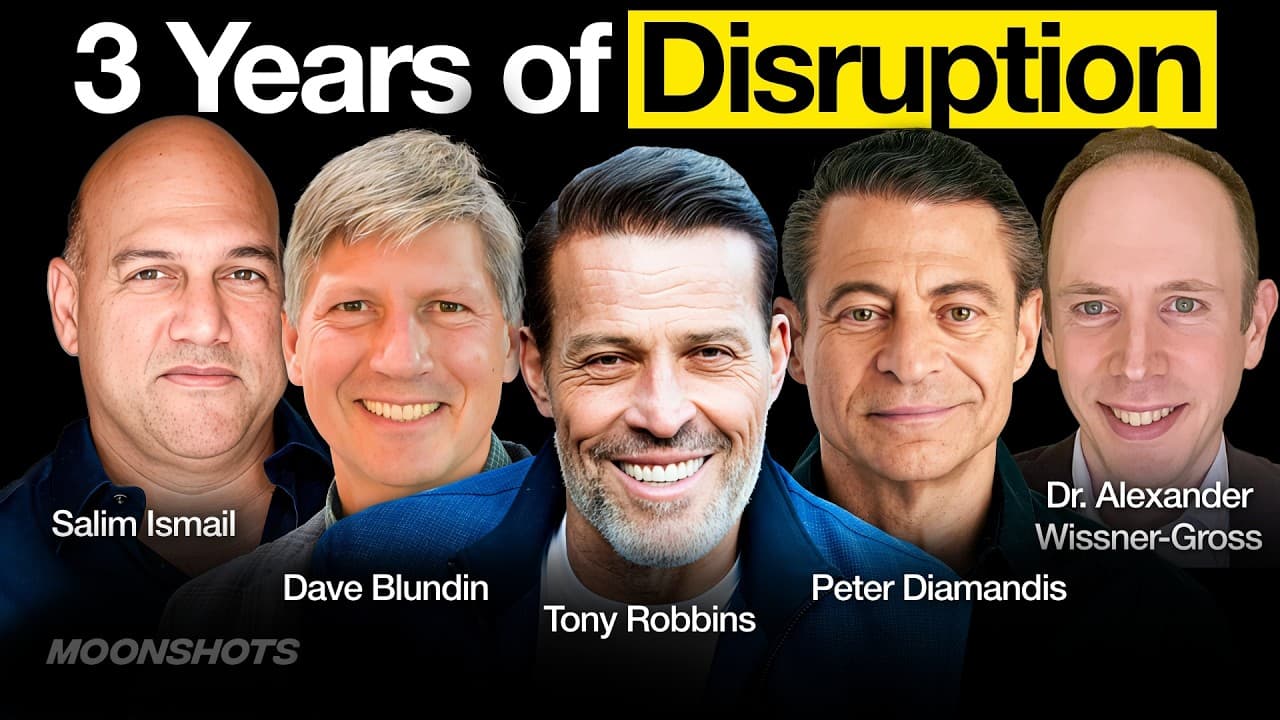
People ask me all the time, how do you provide certainty for people when the external world no longer offers certainty? There is no external certainty. So when those jobs are disrupted, what will people hang on to? The answer is >> one of the most famous people on the planet, Tony Robbins, the great Tony Robbins is here, my man. >> There's nothing ... Read More
Key Insights
- External certainty is an illusion and cannot be relied upon in a rapidly changing world.
- The speed of AI-driven disruption can cause nervous system shocks that require resilience and adaptation.
- A creator identity gives people agency, reducing stress by focusing on making and influencing outcomes.
- Neuroscience shows the brain is a predictive machine, so aligning expectations with reality reduces fear and panic.
- Leaders must anticipate disruption and help others retool rather than resist change.
- Historically, technology displaces jobs, but new roles and opportunities emerge for those who adapt.
- Three skills to master for the AI age include shifting from manager to creator, building internal certainty, and cultivating growth-oriented mindsets.
- Education, upskilling, and mindset shifts are critical to cushioning the social and psychological impact of disruption.
- More videos from this channel:
- More from this channel: Peter H. Diamandis
Install to Summarize YouTube Videos and Get Transcripts
Explore YouTube Video Summarizer or Get YouTube Transcript Extractor
Questions & Answers
Q: What is the core risk of AI disruption according to the discussion?
The core risk is speed of change that outpaces people’s ability to adapt, leading to panic, anger, and fear. When the environment shifts faster than an individual’s capacity to adjust, nervous system shocks occur, and historic patterns of behavior resurface as responses to uncertainty.
Q: How can someone maintain certainty when external conditions are unstable?
Certainty comes from an internal anchor rather than external conditions. By developing a creator identity, people regain a sense of agency and control over their actions, which reduces stress. This involves focusing on what you can create and influence rather than what you cannot control in the outside world.
Q: What does it mean to become a creator in the AI era?
Becoming a creator means shifting from managing circumstances to actively creating value and opportunities. It involves taking initiative, developing new skills, and building capabilities that allow you to generate outcomes regardless of external changes, thereby sustaining purpose and momentum even as technology evolves.
Q: Why is neuroscience mentioned in relation to AI and change?
Neuroscience is cited to explain that brains are predictive machines constantly trying to close the gap between expectation and reality. When predictions don’t match reality, stress and fear rise. Understanding this helps people reframe change and build internal mechanisms to cope with uncertainty.
Q: What historical patterns are used to frame AI disruption?
Historical patterns, like Luddites resisting machines and the societal upheages that followed, are used to illustrate that tech-driven disruption has happened before and will happen again. The takeaway is to learn from history, anticipate transitions, and prepare rather than deny inevitable changes.
Q: What should leaders do to help people during AI-driven change?
Leaders should anticipate disruption, communicate about likely timelines, and support people in retooling. They should provide pathways for upskilling, cultivate a mindset focused on growth, and help individuals translate disruption into new opportunities rather than pointing to threats alone.
Q: What practical steps can individuals take to stay relevant?
Individuals should adopt a creator mindset, build three core skills, and actively retool for emerging roles. This includes learning new competencies, expanding capabilities in line with technological trends, and cultivating resilience, curiosity, and a proactive approach to creating value in any environment.
Q: What is the role of optimism in facing AI disruption?
Optimism is framed as a moonshot or high-level belief that, while timelines may vary, progress is ongoing. The emphasis is not blind positivity but a confident stance that adapts quickly, embraces change, and seeks constructive ways to leverage technology for growth and contribution.
Summary & Key Takeaways
-
A broad shift is coming as AI accelerates change in the job market, demanding a new mindset focused on creativity and agency.
-
People should move from managing circumstances to creating opportunities, building internal certainty that does not rely on external stability.
-
The path forward combines a creator identity, practical skills, and an adaptive social and emotional framework to thrive in the AI era.
Read in Other Languages (beta)
Share This Summary 📚
Summarize YouTube Videos and Get Video Transcripts with 1-Click
Try YouTube Summary with ChatGPT & Claude or YouTube Transcript Generator
Explore More Summaries from Peter H. Diamandis 📚




Summarize YouTube Videos and Get Video Transcripts with 1-Click
Try YouTube Summary with ChatGPT & Claude or YouTube Transcript Generator