How to Monetize AI Videos Under YouTube Rules
TL;DR
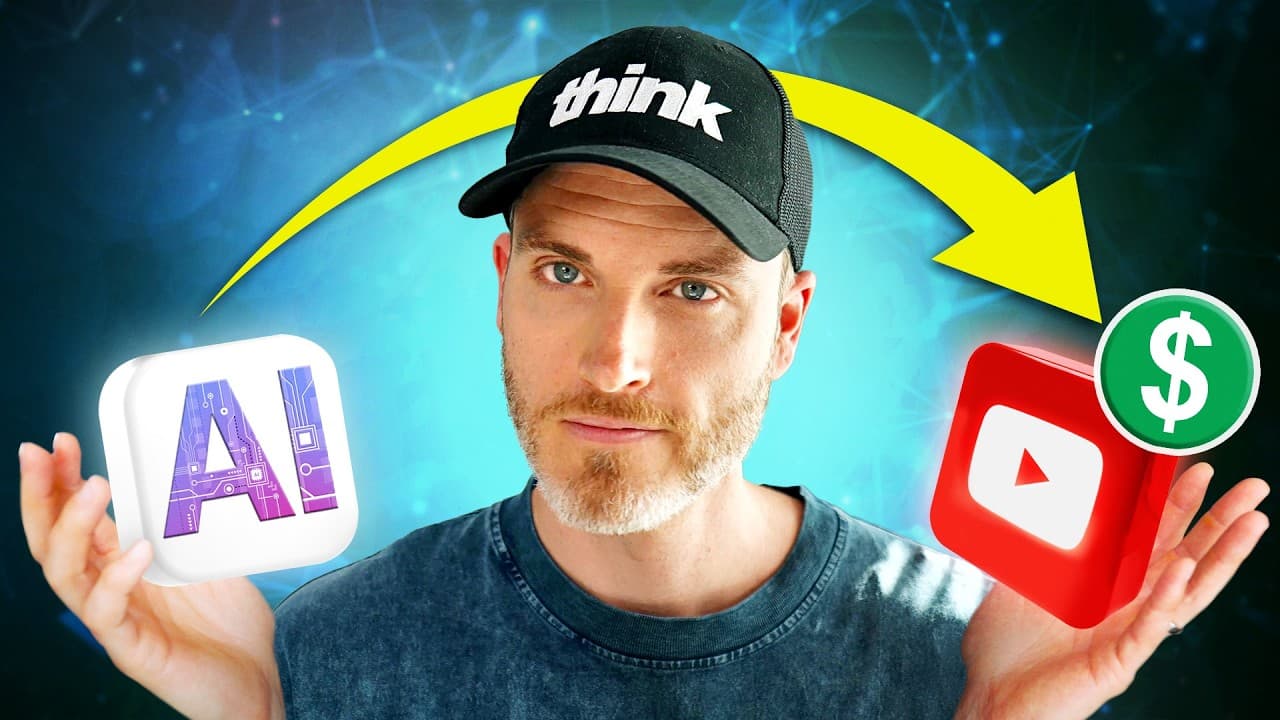
YouTube can monetize AI-generated videos when they are original rather than repetitive or republished from other creators. Strong scripts, intentional angles, accurate information, and suitable avatars separate purposeful AI content from generic output. AI tools can handle avatars, narration, music, captions, clips, translation, and formatting, but the creator remains responsible for the concept and prompts.
Transcript
So, I cloned myself using AI, uploaded two faceless videos to YouTube, and made money. And in this video, I'm going to be breaking it all down. But here's the catch. YouTube is cracking down on AI videos. And unless you know the new rules, your channel could be at risk. But if you get this right, you can tap into a $6 billion AI content industry th... Read More
Key Insights
- YouTube’s stated crackdown is described as targeting repetitive content, not AI-generated video as a category. The risky behavior includes taking already published material, clipping or repackaging it, and uploading it again without sufficient originality, while unique AI-assisted work can still qualify for monetization.
- AI-generated videos can earn YouTube revenue when they satisfy monetization requirements. The creator reports that two fully AI-generated Shorts produced real deposits, with one earning more than 80 cents and the other earning more than 40 cents, even though those amounts were small.
- The difference between AI slop and AI craft is intentional creative input. Generic scripts, generic avatars, inaccurate information, and copied ideas produce weak content, while strong scripts, thoughtful angles, timely subjects, and purposeful execution can attract viewers and build an audience.
- High-volume AI publishing can succeed when the output remains timely and distinctive. An entrepreneur named Verun is described as publishing more than 1,000 AI-generated news Shorts per month through a cloned avatar, with breaking-news-style updates reportedly generating millions of views and audience growth.
- AI twins work by cloning an authorized person’s appearance or voice from a suitable recording. The demonstrated workflow requires confirmation of cloning rights, a continuously visible face, quiet and well-lit recording conditions, appropriate equipment, and inclusion of the platform’s requested disclaimer.
- InVideo AI combines multiple production functions inside one workflow. The tool can draft scripts from prompts, present them through an AI twin, create vertical or standard formats, add narration, music, captions, and video clips, translate the result, adjust narration speed, and replace background music.
- Faceless channels can grow without recording or manually editing every upload. The demonstrated Heroes of the Bible channel used a virtual actor, and one Short titled Hidden Giants of the Bible received 11,000 views and added 71 subscribers overnight, while other shown uploads received additional views.
- AI actors can be used for product-focused UGC-style advertising as well as YouTube videos. The presented workflow selects an actor, adds a product link, and generates an advertisement, while the transcript says creators may earn commissions ranging from 10–20% on linked products.
Install to Summarize YouTube Videos and Get Transcripts
Explore YouTube Video Summarizer or Get YouTube Transcript Extractor
Questions & Answers
Q: Does YouTube ban or demonetize all AI-generated videos?
YouTube is not described as banning or automatically demonetizing every AI-generated video. The policy update discussed in the transcript focuses on repetitive content, including previously published material that is clipped, repackaged, and uploaded again. Original AI-assisted videos can still earn revenue, as illustrated by two fully AI-generated Shorts that produced monetization deposits for the creator.
Q: What is the difference between AI slop and AI craft?
AI slop consists of low-effort material built from generic scripts, generic avatars, false information, copied ideas, or repetitive content. AI craft uses automation while preserving deliberate human choices, including strong scripts, smart angles, accurate material, and a clear purpose for the audience. The production tool is only part of the process because prompts and editorial judgment shape the final quality.
Q: How can creators make AI videos eligible for YouTube monetization?
Creators should produce unique, original videos instead of republishing or lightly modifying content that already exists. The transcript emphasizes writing strong scripts, selecting thoughtful angles, and adding intention to the production. It also reports that two fully AI-generated Shorts earned money, supporting the central claim that AI use itself does not prevent monetization when the resulting content meets YouTube’s requirements.
Q: How do you create an AI twin for video production?
The demonstrated process begins by signing in to InVideo AI, opening AI Twins, and selecting an option such as recording an avatar, cloning a voice, or converting a YouTube video into an avatar. The user uploads a clear recording, confirms cloning rights and recording quality, includes the required disclaimer, selects the completed twin, and enters a prompt for the script and delivery.
Q: What can InVideo AI change after generating a video?
InVideo AI accepts natural-language editing instructions after generation. The demonstration translates an AI-twin video into Spanish, adjusts narration speed to 1.1 times the original rate, and replaces the background music with a trap hip-hop beat. The software also combines the avatar, voiceover, music, captions, generated video clips, and formatting, reducing the need to assemble those elements separately.
Q: Can a faceless AI YouTube channel gain views and subscribers?
A faceless channel can gain views and subscribers when its ideas and execution attract an audience. The creator’s Heroes of the Bible channel used a virtual actor without requiring the creator to appear on camera or manually edit the videos. One Short received 11,000 views and added 71 subscribers overnight, while other displayed uploads received 1,000 and 1,200 views.
Q: What recording conditions are required for cloning an AI avatar?
The demonstrated avatar setup asks the user to confirm four conditions before processing. The person must be cloning themselves or have permission to clone the featured individual, the face must remain clearly visible throughout the recording, the footage must be captured in a quiet and well-lit space with good equipment, and the recording must contain the required disclaimer.
Q: How can AI actors be used for product promotion?
AI actors can present UGC-style product advertisements without requiring the creator to perform on camera. The workflow described involves choosing an actor from the software’s library, supplying a product link, and generating an advertisement around that product. The transcript says linked products may pay creators commissions of 10–20%, while emphasizing TikTok Shop as one possible market for this approach.
Summary & Key Takeaways
-
YouTube’s policy update targets repetitive content, according to the account presented, rather than banning AI-generated videos as a category. The creator reports earning more than 80 cents from one fully AI-generated Short and more than 40 cents from another, demonstrating that qualifying AI content can receive actual YouTube monetization payments.
-
Successful AI content depends on originality and deliberate creative choices. Generic scripts, generic avatars, false information, copied clips, and soulless execution are described as AI slop. By contrast, purposeful AI craft combines strong writing, timely or distinctive angles, and intentional production, allowing automation to support content without replacing the creator’s editorial judgment.
-
InVideo AI is presented as an all-in-one production tool for AI twins, library actors, voiceovers, music, captions, generated clips, translations, and prompt-based edits. A faceless Bible channel created with the software produced a Short with 11,000 views and 71 new subscribers overnight, although the presentation is sponsored and contains affiliate links.
Read in Other Languages (beta)
Share This Summary 📚
Summarize YouTube Videos and Get Video Transcripts with 1-Click
Try YouTube Summary with ChatGPT & Claude or YouTube Transcript Generator
Explore More Summaries from Think Media 📚

Summarize YouTube Videos and Get Video Transcripts with 1-Click
Try YouTube Summary with ChatGPT & Claude or YouTube Transcript Generator