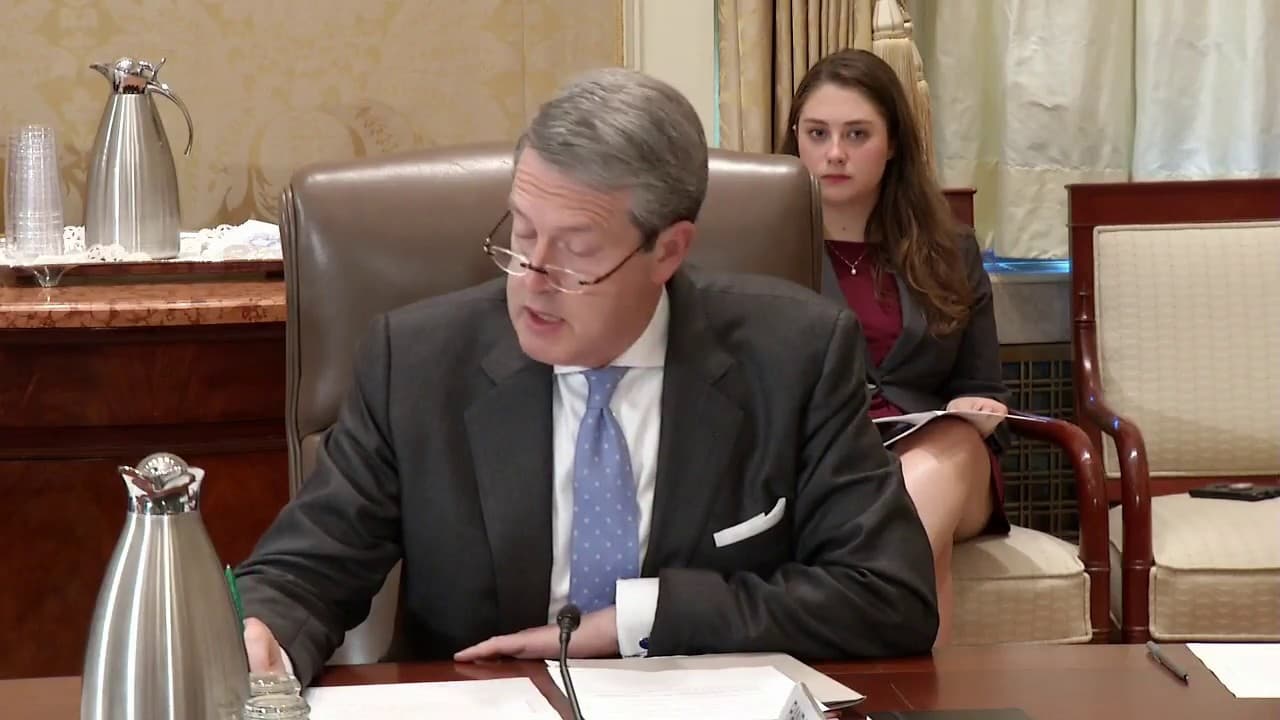
Open Board Meeting June 14, 2018
TL;DR
- The Federal Reserve considers and finalizes a rule to establish credit limits between large banks to enhance financial stability.
Transcript
Transcript of Open Board Meeting June 14, 2018 CHAIRMAN POWELL. Good afternoon, everyone. I'd like to welcome our guests here at the Federal Reserve and also our online viewers as well. Today we're here to consider a rule to establish single counterparty credit limits, restricting overall credit exposures between very large banks. This rule is requ... Read More
Key Insights
- 💳 Single counterparty credit limits are essential to mitigate contagion risks and strengthen financial stability.
- 🏦 The rule focuses on restricting credit exposures between large banks to prevent the spread of financial distress.
- 🤩 Tailored limits based on the size and systemic importance of institutions are key to safeguarding the financial system.
- 🌍 The rule aligns with international standards and previous regulatory frameworks to enhance resilience and compliance.
- 👋 Stringent limits for very large banks aim to reduce systemic risks and protect the economy in both good and tough times.
- 📏 Clear definitions and methodologies ensure transparency and simplicity in compliance with the rule.
- ❓ Ongoing efforts to monitor compliance and make necessary adjustments demonstrate commitment to sustaining an effective regulatory regime.
Install to Summarize YouTube Videos and Get Transcripts
Explore YouTube Video Summarizer or Get YouTube Transcript Extractor
Questions & Answers
Q: Why is the establishment of single counterparty credit limits important?
The limits are crucial to reduce the risks of contagion and financial instability caused by interconnectedness between large banking institutions.
Q: How do the credit limits vary for different sizes of firms?
The limits are tailored based on the size of the firm, with very large banks facing more stringent requirements compared to smaller institutions.
Q: What factors contributed to the decision to set exposure limits at 15% of Tier 1 capital for GSIB transactions?
Staff analysis indicated heightened systemic risks for exposures between GSIBs, justifying the stricter limit to mitigate risks to U.S. financial stability.
Q: How does the final rule align with international standards and previous regulatory frameworks?
The rule builds on traditional lending limits, aligns with Basel III, and ensures compliance with recent legislation to enhance financial stability.
Summary & Key Takeaways
-
The Federal Reserve considers a rule to establish single counterparty credit limits for large banks under Section 165 of the Dodd-Frank Act.
-
The rule aims to reduce risks of contagion and financial instability by limiting credit exposures between large banking institutions.
-
Stringent limits are set, tailored to the size and risk profile of the firms, with a focus on safeguarding the financial system.
Read in Other Languages (beta)
Share This Summary 📚
Summarize YouTube Videos and Get Video Transcripts with 1-Click
Try YouTube Summary with ChatGPT & Claude or YouTube Transcript Generator
Explore More Summaries from Federal Reserve 📚



Summarize YouTube Videos and Get Video Transcripts with 1-Click
Try YouTube Summary with ChatGPT & Claude or YouTube Transcript Generator