How to Learn Faster with 15 Science-Backed Strategies
TL;DR
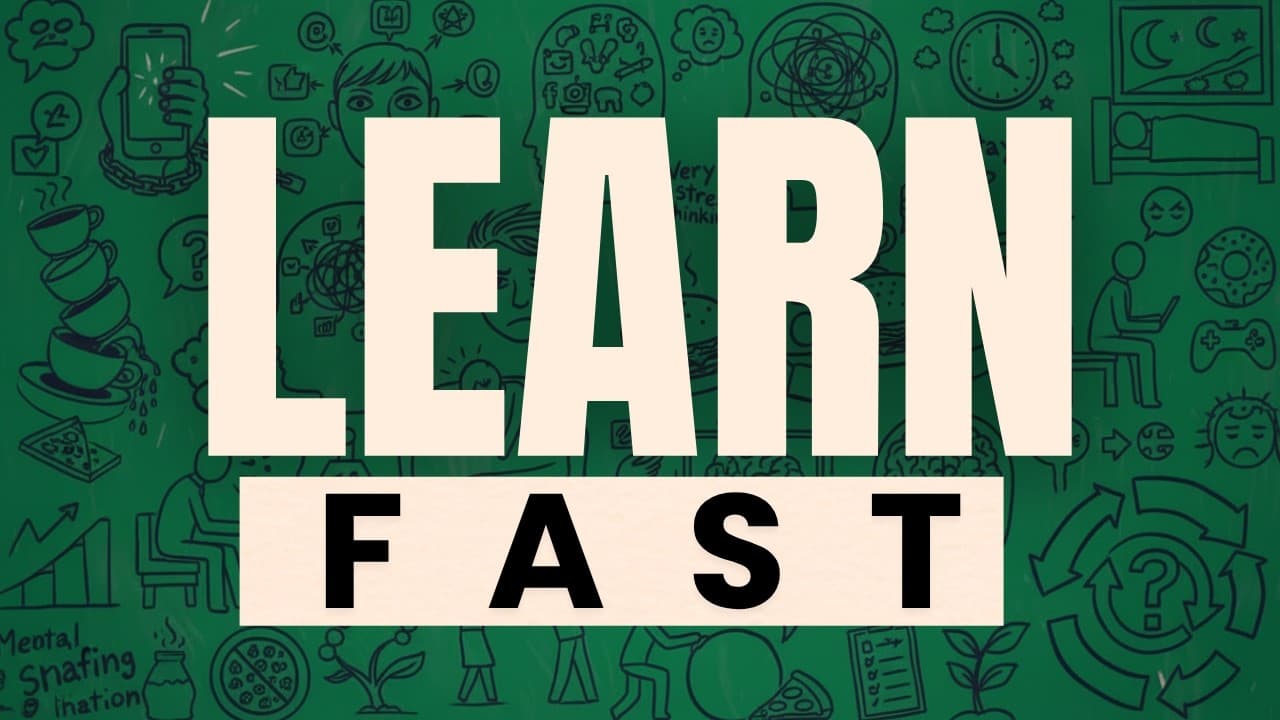
The video shows that effective learning relies on retrieval practice, spacing, and mixing topics rather than passive rereading. It recommends quizzing yourself, spacing sessions, varying problem types, embracing difficult material, teaching what you learn, engaging multiple senses, avoiding the illusion of knowing, adopting a growth mindset, making controlled mistakes, and understanding how ideas fit together. Apply these patterns to make learning durable and transferable.
Transcript
Learning isn't just for school. It's for survival. A surgeon can't Google the next step mid-operation. A pilot can't kind of remember what to do when an engine fails. This isn't just about experts. It's also about you. When you step into a final exam or stand up to pitch an important client, your brain can't just kind of remember. When life gets re... Read More
Key Insights
- The testing effect shows recall strengthens memory more than recognition, so practice retrieving information after reading.
- Spacing out study sessions leads to better long term retention than massed cramming, as the brain has to re-engage with material over time.
- Mixing different topics or problem types in one session improves mastery by forcing the brain to adapt to changing demands.
- Embracing desirable difficulties, or challenging tasks, enhances learning by pushing the brain to work harder and remember longer.
- Teaching or explaining concepts in simple terms reveals gaps in understanding and consolidates knowledge.
- Using all senses and mixing formats (read, watch, explain, draw) enhances encoding and retrieval.
- The illusion of knowing occurs when familiarity masks true recall; testing and retrieval practice reveal what you truly know.
- A growth mindset helps learners persist through hard problems and view challenges as opportunities to grow
- More videos from this channel:
- More from this channel: LITTLE BIT BETTER
Install to Summarize YouTube Videos and Get Transcripts
Explore YouTube Video Summarizer or Get YouTube Transcript Extractor
Questions & Answers
Q: How can I start using the testing effect in daily study
Begin by reading a chapter, then close the book and write down or recite the main ideas from memory. Quiz yourself regularly to identify gaps. Repeat retrieval over time, returning after breaks to strengthen recall. This practice makes memory stronger and more durable than rereading alone.
Q: Why should I space out study sessions
Spacing sessions prevents cognitive overload and helps memory consolidation. By revisiting material after a break, you force your brain to work a little harder to remember, which strengthens the memory trace. Short, frequent reviews spread over days or weeks outperform long, single sessions with the same total time.
Q: What does interleaving or mixing topics achieve
Mixing different topics or problem types in one session forces your brain to switch strategies, creating deeper understanding. It makes learning harder in the moment but improves your ability to distinguish concepts and apply the right tools in different situations.
Q: What are desirable difficulties and why are they beneficial
Desirable difficulties are challenges that make learning feel harder yet improve long term retention. When you struggle, your brain strengthens memory pathways, so embracing hard parts, such as explaining concepts or solving tougher problems, leads to more durable learning.
Q: How can I use teaching to enhance my learning
Try explaining what you learned in simple terms to someone else or to an imaginary audience. This process forces you to organize thoughts, identify gaps, and reframe ideas in your own words, which deepens understanding and reveals what you still need to study.
Q: What role do senses play in learning
Engage multiple formats beyond reading, such as visuals, audio, writing, and drawing. Matching the content to the most effective format helps encoding and retrieval, and using varied channels makes learning more flexible and memorable.
Q: What is the illusion of knowing and how can I avoid it
Familiarity with material can create overconfidence during rereading. To counter this, close the text and test recall without prompts. If you struggle to retrieve, that signals what to study more and ensures you truly know the material rather than just feel familiar.
Q: How does a growth mindset influence learning outcomes
Adopting a growth mindset means believing that abilities can be developed with effort. When faced with hard material, tell yourself you can improve with practice, stay persistent, and approach challenges as opportunities to grow, which over time leads to greater achievement.
Summary & Key Takeaways
-
A broad framework is presented that replaces rereading with active recall and spaced repetition to improve memory and transfer, supported by simple metaphors and practical steps.
-
The 15 strategies are introduced as a cohesive system, with emphasis on retrieval, spacing, interleaving, desirable difficulties, and teaching concepts to others, plus mindset and sense-making.
-
The video ends by encouraging consistent practice and applying the strategies across diverse subjects to build robust, lasting understanding.
Read in Other Languages (beta)
Share This Summary 📚
Summarize YouTube Videos and Get Video Transcripts with 1-Click
Try YouTube Summary with ChatGPT & Claude or YouTube Transcript Generator
Explore More Summaries from LITTLE BIT BETTER 📚



Summarize YouTube Videos and Get Video Transcripts with 1-Click
Try YouTube Summary with ChatGPT & Claude or YouTube Transcript Generator