How Can You Improve Your Note-Taking System?
TL;DR
To enhance your note-taking, focus on an efficient, frictionless capture process, and centralise all your notes in just one or two places. It's also vital to include resource tracking and a clear 'why' for each note to ensure effective recall and usability.
Transcript
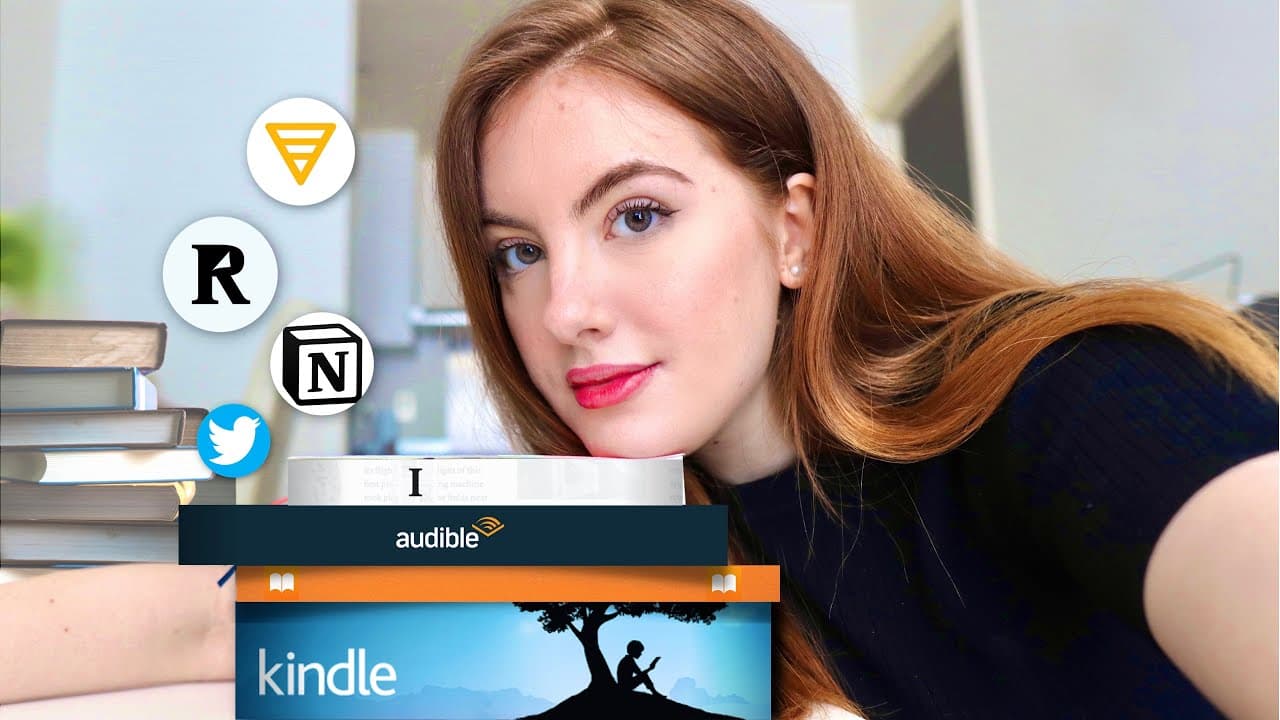
I consume a lot of stuff between physical books and audiobooks and Kindle books and podcasts newsletters online articles tweets online courses I am constantly surrounded by information that ranges from completely life-changing to very annoyingly I'm not sure if I'll ever need this but I don't want to let it go and it's very difficult to manage and ... Read More
Key Insights
- ℹ️ Frictionless note-taking is crucial for efficiently capturing information from various sources, regardless of the device or location.
- 💁 Centralizing all captured information in one or a few designated destinations helps avoid dispersion and facilitates easy retrieval and processing.
- 👻 Introducing levels of processing allows for filtering and prioritizing information based on its relevance and value.
- 👻 Keeping track of resources, such as the authors, books, studies, or web pages, provides credibility and allows for proper referencing.
- 💁 Clearly articulating the purpose or "why" behind each capture helps contextualize the information and enables effective recall and utilization.
- 📔 Different note-taking approaches are necessary for different mediums, such as digital books, audiobooks, physical books, online articles, and tweets.
- 🫠 Tools like read wise, Apple Notes, Instapaper, and Notion can streamline the note-taking process and aid in organizing and retrieving information.
Install to Summarize YouTube Videos and Get Transcripts
Explore YouTube Video Summarizer or Get YouTube Transcript Extractor
Questions & Answers
Q: What are the five personal principles of capture for efficient note-taking?
The five principles are: 1) Make the capture process frictionless and easy, 2) Keep all captured information in as few places as possible, 3) Implement levels of processing to filter and prioritize information, 4) Identify and track resources for each capture, and 5) Always have a clear purpose or "why" for capturing information.
Q: How does the speaker capture and process digital books?
The speaker uses an app called read wise, which automatically extracts highlights and notes from Kindle and Apple Books and organizes them into a central Notion page. Alternatively, they suggest exporting highlights and notes via email and manually copying them into a personal Notion library.
Q: What methods does the speaker use for note-taking while listening to audiobooks?
If the audiobook is exceptional or requires detailed note-taking, the speaker reads the physical book version alongside the audiobook, making manual highlights and notes. For less noteworthy audiobooks, they use the Apple Notes app on their phone to jot down key points or interesting thoughts while listening.
Q: What approach does the speaker take for note-taking from physical books?
The speaker underlines and takes notes directly in physical books. They then either download the online version of the book and manually highlight on the digital copy or use Readwise to scan the physical book and integrate the highlights into their Notion library.
Q: How does the speaker capture and process online articles?
The speaker shares the articles to Notion using the Notion Web Clipper or copies and pastes the relevant sections into a Notion page. They also use Instapaper to highlight and save longer articles, which automatically syncs with Readwise for integration into their Notion library.
Q: How does the speaker capture and organize information from Twitter?
The speaker saves interesting tweets and links directly in their in-app bookmarks on Twitter. They also share links to their Notion Links page, which serves as a centralized repository for various links and recommendations.
Q: Do the speaker's note-taking methods apply to other forms of media, like podcasts and YouTube videos?
The speaker briefly mentions that they capture information from podcasts and YouTube videos as well but suggests that those topics could be covered in a separate video.
Key Insights:
- Frictionless note-taking is crucial for efficiently capturing information from various sources, regardless of the device or location.
- Centralizing all captured information in one or a few designated destinations helps avoid dispersion and facilitates easy retrieval and processing.
- Introducing levels of processing allows for filtering and prioritizing information based on its relevance and value.
- Keeping track of resources, such as the authors, books, studies, or web pages, provides credibility and allows for proper referencing.
- Clearly articulating the purpose or "why" behind each capture helps contextualize the information and enables effective recall and utilization.
- Different note-taking approaches are necessary for different mediums, such as digital books, audiobooks, physical books, online articles, and tweets.
- Tools like read wise, Apple Notes, Instapaper, and Notion can streamline the note-taking process and aid in organizing and retrieving information.
- Shortform and other curated content platforms can provide concise summaries and key highlights of books, enhancing the accessibility and understanding of the main ideas.
Summary & Key Takeaways
-
The speaker consumes a vast amount of information from different sources and struggled to effectively manage and process it.
-
They developed principles for efficient note-taking, including frictionless capture, centralized storage, levels of processing, including resources, and having a clear purpose or "why" for each capture.
-
The speaker discusses their approach to capturing and processing digital books, audiobooks, physical books, online articles, and tweets.
Read in Other Languages (beta)
Share This Summary 📚
Summarize YouTube Videos and Get Video Transcripts with 1-Click
Try YouTube Summary with ChatGPT & Claude or YouTube Transcript Generator
Explore More Summaries from Elizabeth Filips 📚
Summarize YouTube Videos and Get Video Transcripts with 1-Click
Try YouTube Summary with ChatGPT & Claude or YouTube Transcript Generator