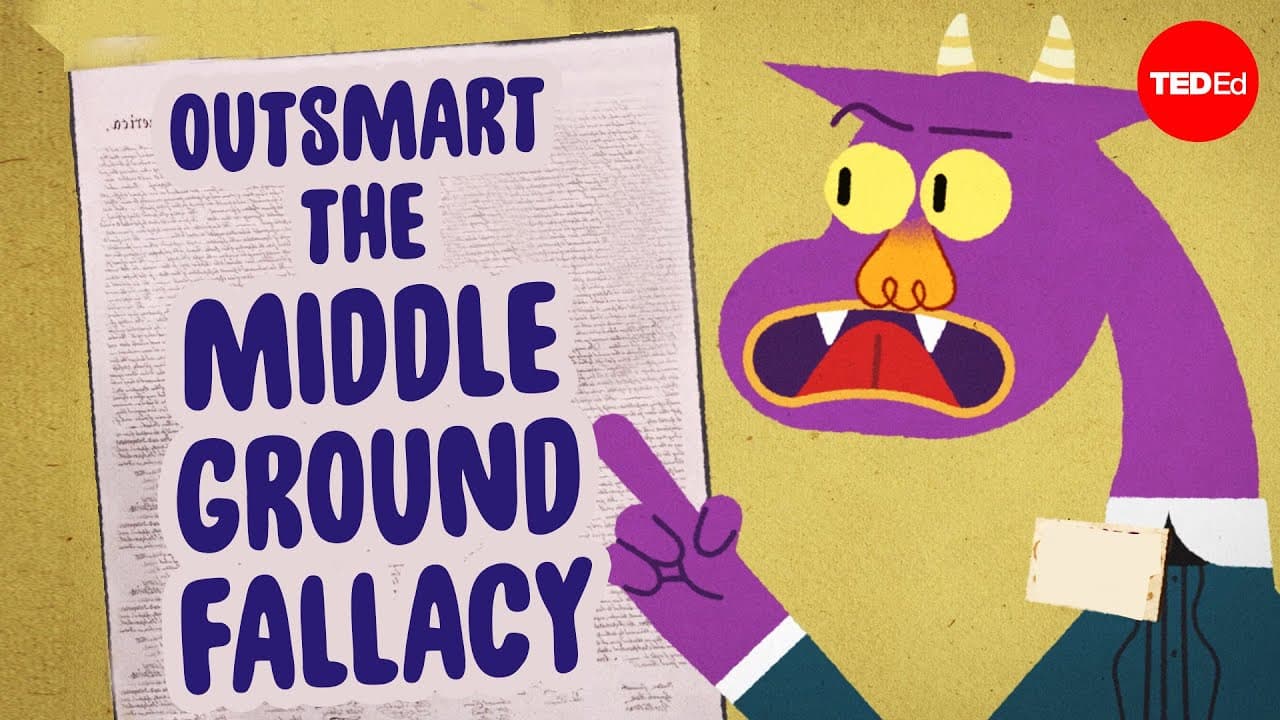
Can you outsmart the fallacy that divided a nation? - Elizabeth Cox
TL;DR
The Missouri Compromise as a flawed middle ground on slavery, leading to dire consequences.
Transcript
What, you want my milkshake? Here. “It’s 1819. As the United States Congress prepares to make Missouri the 24th state in the Union, Representative James Tallmage Jr. delivers a speech. He says slavery is morally wrong, calling it an ‘abomination’ and a ‘monstrous scourge.’ He insists that ‘the extension of the evil must now be prevented,’ and th... Read More
Key Insights
- ❓ The debates over slavery in 1819 exemplify the ethical and political challenges of compromising on morally indefensible issues.
- 💀 The Missouri Compromise revealed the dangers of trying to find a middle ground on deeply divisive moral issues like slavery.
- ❓ The Civil War demonstrated that some issues, like slavery, cannot be resolved through compromise alone.
- ❓ The insistence on the moral indefensibility of slavery highlights the flaws in compromise that overlook fundamental ethical principles.
- 🇺🇸 The history of slavery in the United States underscores the importance of confronting moral wrongs rather than seeking compromised solutions.
- 🥺 The failure to address the inherent immorality of issues like slavery through compromising can lead to dire consequences like civil wars.
- 🖕 The middle ground fallacy in compromising on slavery perpetuated systemic injustices and moral failings in American history.
Install to Summarize YouTube Videos and Get Transcripts
Explore YouTube Video Summarizer or Get YouTube Transcript Extractor
Questions & Answers
Q: What were the main arguments made during the debates over slavery in Congress in 1819?
In 1819, Representative Tallmage argued against the extension of slavery, while Representative Tyler believed it was a state's right to choose. Senator Thomas proposed the Missouri Compromise as a compromise solution.
Q: Why was the Missouri Compromise considered flawed?
The compromise tried to treat pro-slavery and anti-slavery views as equally valid, ignoring the moral indefensibility of slavery. This flawed approach ultimately led to dire consequences like the Civil War.
Q: How did the issue of slavery escalate to the Civil War?
Despite attempts at compromise, the issue of slavery remained unresolved, leading to increasing tensions between states. The election of Abraham Lincoln and his stance against the expansion of slavery triggered the secession of Southern states and the start of the Civil War.
Q: Why do some argue that compromise on morally indefensible issues is still wrong?
Compromising on issues like slavery, which are morally indefensible, perpetuates injustice and legitimizes wrongs. Recognizing the inherent immorality of certain issues is crucial to avoid further injustices.
Summary & Key Takeaways
-
In 1819, debates in Congress over slavery in new states like Missouri highlight moral objections and states' rights arguments.
-
Efforts like the Missouri Compromise tried to balance pro and anti-slavery positions, but the moral indefensibility of slavery was overlooked.
-
The Civil War erupted in 1861, showing that some issues, like slavery, cannot be resolved through compromise.
Read in Other Languages (beta)
Share This Summary 📚
Summarize YouTube Videos and Get Video Transcripts with 1-Click
Try YouTube Summary with ChatGPT & Claude or YouTube Transcript Generator
Explore More Summaries from TED-Ed 📚



Summarize YouTube Videos and Get Video Transcripts with 1-Click
Try YouTube Summary with ChatGPT & Claude or YouTube Transcript Generator