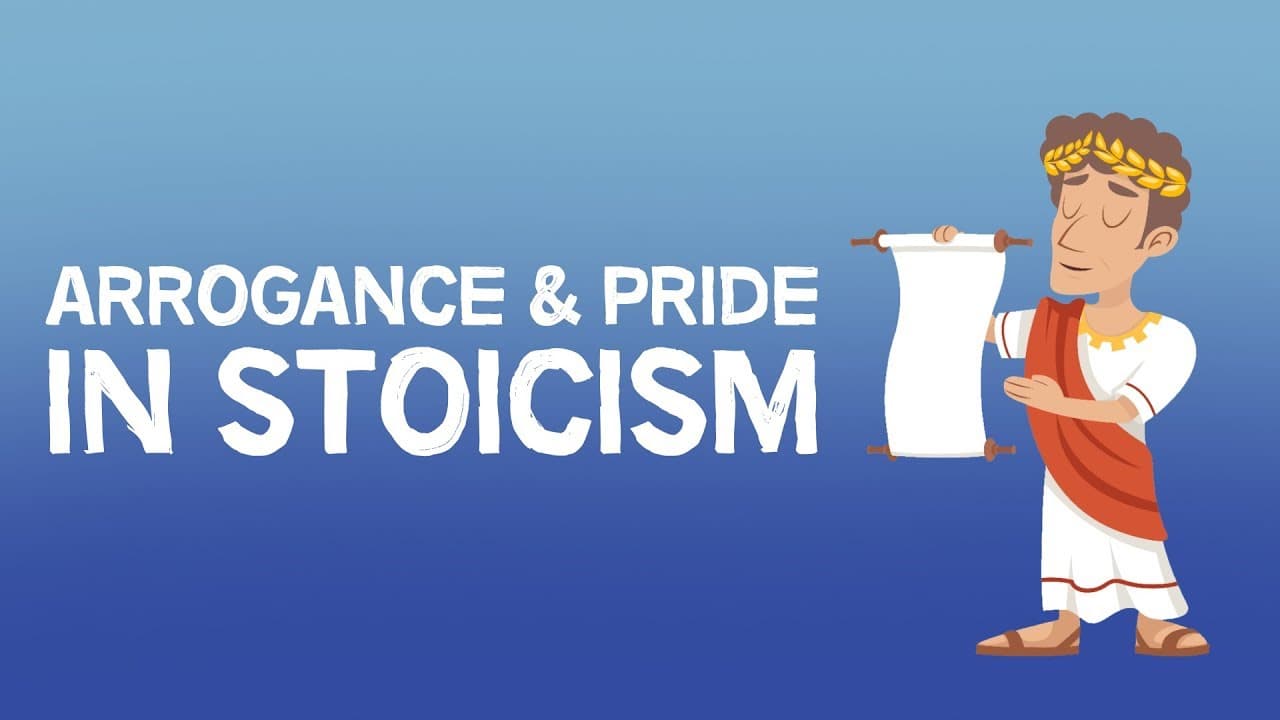
How to Balance Arrogance and Humility in Stoicism
TL;DR
To balance potential arrogance in stoicism with humility, focus on self-improvement without comparing yourself to others. Recognize your flaws and refrain from judgment, viewing each person as valuable despite differences. True stoicism emphasizes internal growth and virtues rather than seeking external validation or superiority over others.
Transcript
hello everyone welcome to the QA of June 2019 how are you all doing man oh man it's been so hot the last few days in the Netherlands I understand why they take afternoon naps in some warmer countries because when it's above 30 degrees outside you can't really do anything at least not here nevertheless I've been looking at the comments again and sel... Read More
Key Insights
- 🏳️🌈 Spiritual pride can distort the practice of stoicism, fostering arrogance instead of humility.
- 🤳 Stoics should aim to cultivate self-improvement without comparing themselves to others.
- ⚖️ Balancing stoicism with humility requires recognizing the flaws in oneself and refraining from judgment.
- ❓ Arrogance in stoicism stems from seeking reputation and superiority over others.
- 👻 Humility allows individuals to see value in every person, regardless of their flaws or differences.
- 💢 The contemporary era poses challenges to embodying traditional philosophies like stoicism, requiring adaptation and flexibility.
- ❓ True stoicism involves focusing on internal growth and virtues rather than external validation.
Install to Summarize YouTube Videos and Get Transcripts
Explore YouTube Video Summarizer or Get YouTube Transcript Extractor
Questions & Answers
Q: How does spiritual pride manifest in stoicism, and what distinguishes it from genuine spiritual growth?
Spiritual pride in stoicism often leads individuals to feel superior to others, creating a hierarchy that contradicts the philosophy's core principles of humility and compassion. Genuine spiritual growth focuses on self-improvement without comparisons.
Q: Can staying away from common topics and being unaffected by insults imply superiority in stoicism?
While it may seem like superiority, staying away from vulgar topics and ignoring insults can also be driven by a desire for personal growth and disengagement from negativity, rather than a sense of superiority.
Q: How does arrogance conflict with stoic virtues like accepting imperfections in others?
Arrogance in stoicism goes against the philosophy's emphasis on acceptance and compassion. By judging others and feeling superior, one deviates from true stoic virtues and fails to practice humility.
Q: What role does humility play in balancing stoicism and arrogance in the contemporary era?
In the modern world, humility is key to embodying stoic virtues effectively. Rather than seeking superiority, focusing on self-improvement and understanding others with compassion leads to a more authentic stoic practice.
Summary & Key Takeaways
-
Addressing a patron's question on the balance between potential arrogance in stoicism and contemporary humility.
-
Distinguishing spiritual pride from true spiritual growth and highlighting the ego's role in fostering arrogance.
-
Advocating for humility over arrogance in interpreting stoic principles and engaging with others.
Read in Other Languages (beta)
Share This Summary 📚
Summarize YouTube Videos and Get Video Transcripts with 1-Click
Try YouTube Summary with ChatGPT & Claude or YouTube Transcript Generator
Explore More Summaries from Einzelgänger 📚





Summarize YouTube Videos and Get Video Transcripts with 1-Click
Try YouTube Summary with ChatGPT & Claude or YouTube Transcript Generator