What Does the Internet Do to Your Brain, and Can You Reverse It?
TL;DR
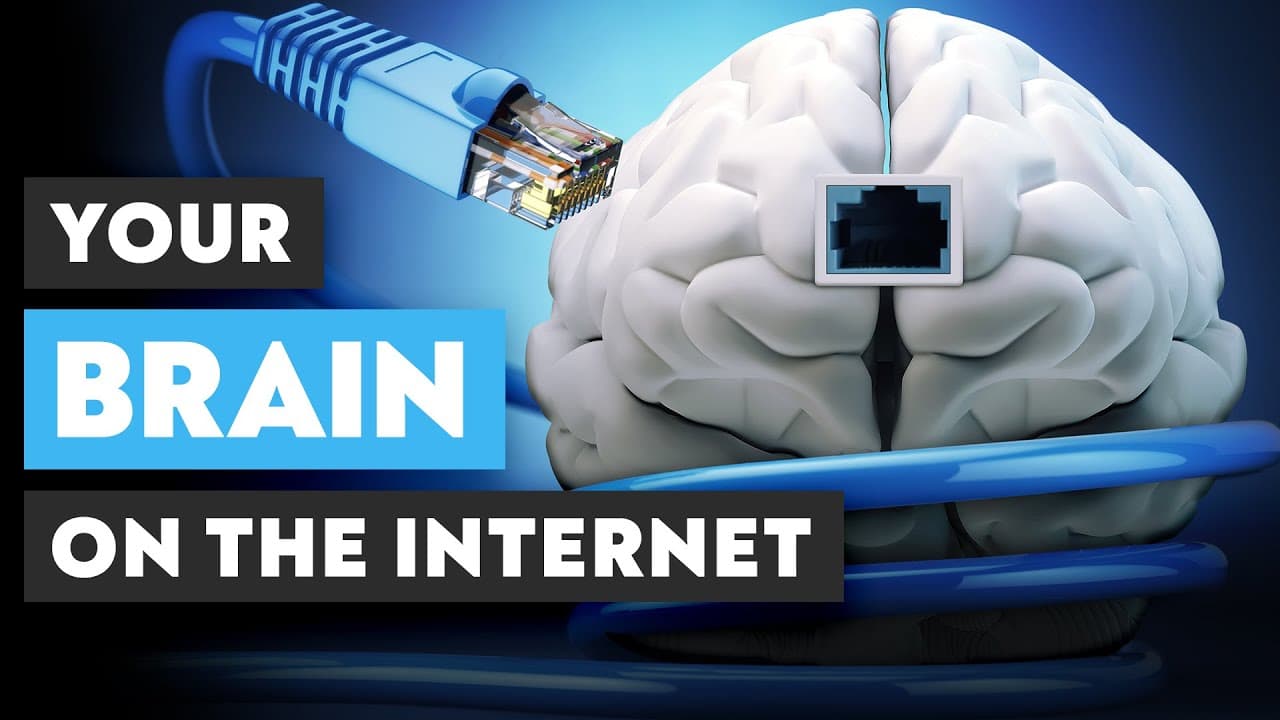
The internet can physically reconfigure the brain through neuroplasticity, strengthening habits such as browsing and distracted thinking while displacing skills such as deep reading. The effects are not necessarily permanent: reading books, having in-depth conversations, working without the internet, and focusing on one task for longer periods can rebuild sustained attention. Read on to understand why technology reshapes thought and which habits may reverse its most harmful changes.
Transcript
- Remember when our parents used to tell us that video games would rot our brains? Well, turns out they were wrong about that. Video games won't rot your brain and in some cases, it can actually be beneficial to play them. However if your particular set of parental units happened to use the term warp your brain, well, then they might have been on t... Read More
Key Insights
- 👻 Neuroplasticity allows the brain to change its physical configuration in response to various tasks and stimuli.
- 🤔 The internet promotes distracted thinking and multitasking, affecting our ability to concentrate and deeply engage in singular tasks.
- 🫠 Engaging in activities such as reading books, having in-depth conversations, and committing to singular tasks can help reverse the negative effects of the internet on the brain.
- 🥳 Limiting time spent on distraction-heavy parts of the internet and making environmental changes can also promote healthier internet habits.
Install to Summarize YouTube Videos and Get Transcripts
Explore YouTube Video Summarizer or Get YouTube Transcript Extractor
Questions & Answers
Q: What does the internet do to your brain?
Through neuroplasticity, the internet can change the brain’s physical configuration in response to repeated browsing and other online behaviors. It can strengthen distracted thinking while brain-map space formerly used for skills such as deep book reading is turned over to the skills practiced instead.
Q: What is neuroplasticity?
Neuroplasticity is the brain’s ability to change its physical configuration in response to tasks and stimuli. The transcript says this can happen through activities ranging from using a clock and playing a video game to using the internet.
Q: Why can internet use make deep reading more difficult?
The internet repeatedly grabs and scatters attention, reinforcing browsing and distraction rather than sustained focus. When deep-reading skills are no longer exercised, the brain-map space associated with them can be reassigned to the skills practiced more often.
Q: Can the internet’s harmful effects on attention be reversed?
The transcript says the most harmful changes can be prevented or at least reversed. Helpful practices include reading books without internet distractions, having in-depth conversations, working offline, and spending longer periods on one task.
Q: What habits can help rebuild sustained attention?
Spend time working without the internet, read books, have in-depth in-person conversations, and watch movies without distractions. Committing to one activity for longer periods helps exercise the mental pathways involved in top-down attentional control.
Q: How can you reduce online distractions?
Limit time on distraction-heavy parts of the internet and hide visual clutter on your desktop. Environmental changes like these reduce attention-grabbing cues and support longer periods of singular focus.
Q: How do technologies other than the internet reshape the brain and thought?
The transcript describes how clocks changed time from a seamless flow into measurable units such as hours, minutes, and seconds. It also says the Malling-Hansen writing ball changed the character of Friedrich Nietzsche’s writing, supporting his observation that writing equipment helps form thought.
Q: What evidence does the transcript give that repeated tasks physically change the brain?
It describes an experiment in which the sensor-cortex area controlling a violin player’s fingering hand was larger than that of people who had never played a musical instrument. Another experiment found that London cab drivers had a larger posterior hippocampus than a control group, reflecting the demands of navigating complex city streets.
Summary & Key Takeaways
-
Neuroplasticity refers to how the brain changes its physical configuration in response to tasks and stimuli, such as playing video games or using the internet.
-
The internet promotes distracted thinking and multitasking, which can negatively impact concentration and attention.
-
Reading books, having in-depth conversations, and engaging in singular tasks can help reverse the effects of the internet on the brain.
Read in Other Languages (beta)
Share This Summary 📚
Summarize YouTube Videos and Get Video Transcripts with 1-Click
Try YouTube Summary with ChatGPT & Claude or YouTube Transcript Generator
Explore More Summaries from Thomas Frank 📚






Summarize YouTube Videos and Get Video Transcripts with 1-Click
Try YouTube Summary with ChatGPT & Claude or YouTube Transcript Generator