How to Board a Surfacing U-boat at Sea in WW2
TL;DR
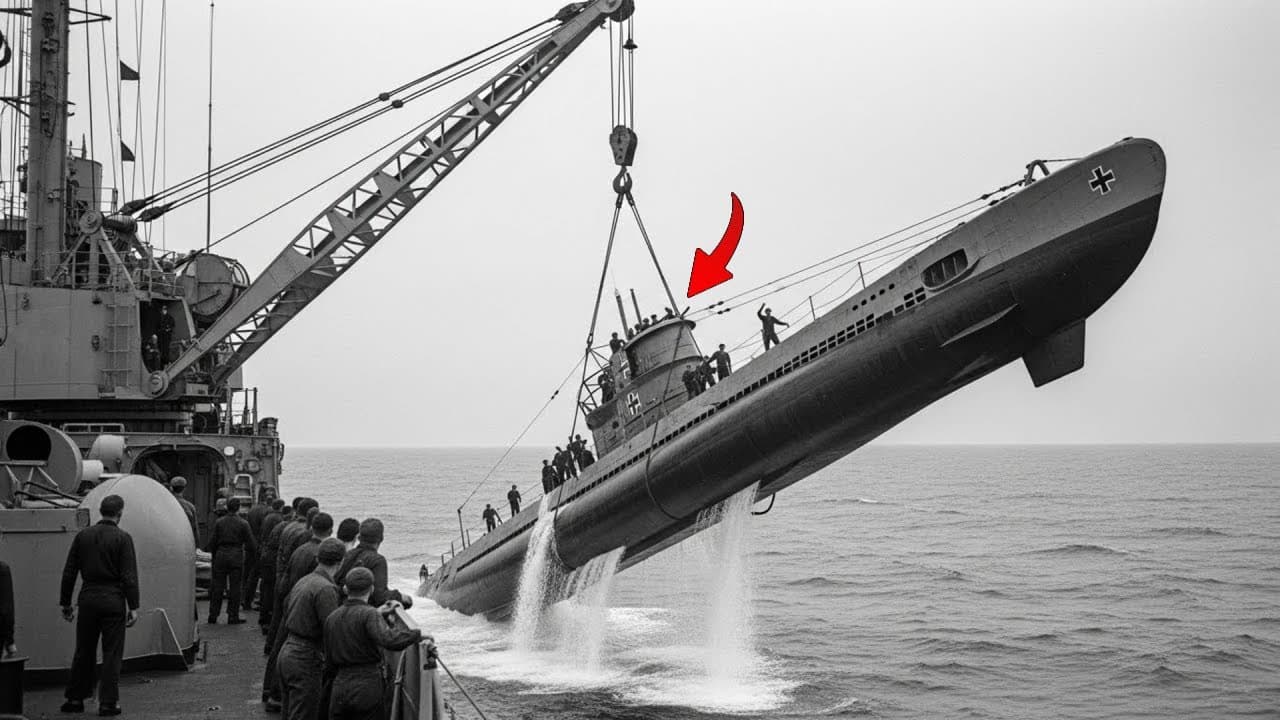
The boarding team trained for six weeks and executed a historic action to capture a damaged U-boat. Eight sailors led by Albert David boarded the submarine as it surfaced, aiming to retrieve intelligence rather than simply destroy it. The action marked a rare, non-destroyive victory and required careful planning despite imminent danger.
Transcript
At 11:15 on the morning of April 9th, 1944, Lieutenant Commander George Castleman stood on the bridge of USS Pillsbury watching a German submarine break the surface 700 yd off his starboard bow. 10 months commanding a destroyer escort, dozens of depth charge attacks, zero captures. The yubot that had just surfaced was U515, commanded by one of Germ... Read More
Key Insights
- Boarding a sinking submarine required novel training and authorization, because such actions had not occurred in over a century.
- The eight-man boarding party trained for six weeks to handle extraction under extreme time pressure and aboard a moving, circling submarine.
- The mission aimed to recover intelligence and technology rather than simply sink the enemy vessel.
- The U-boat was damaged and flooding, with demolition charges rigged to explode, making the capture extraordinarily risky.
- The operation relied on precise coordination between ships,航空 and the boarding team to intercept the submarine at the surface.
- The plan involved minimal use of force to wound the crew enough to deter resistance without sinking the sub.
- The mission demonstrated that intelligence value would justify and shape naval policy at the highest levels.
- The event remained classified for over a year and involved a rare instance of an at-sea capture in modern naval history
Install to Summarize YouTube Videos and Get Transcripts
Explore YouTube Video Summarizer or Get YouTube Transcript Extractor
Questions & Answers
Q: What sparked the decision to board the U-boat at sea?
The decision to board arose from the belief that capturing a submarine could yield extraordinary intelligence, including code books, Enigma machines, and torpedo technology. The plan sought to change the standard practice of destroying a submarine on sight and required authorization from the highest levels of naval command. This shift reframed the mission from aggression to intelligence gathering.
Q: Who led the boarding party and what was his background?
Lieutenant Junior Grade Albert David led the eight-man team. He was 41 years old, a former enlisted sailor who had risen through the ranks over 25 years. He served as the ship's assistant engineering officer, bringing expertise in machinery and valves, which was crucial for navigating and disabling the submarine’s systems during the capture.
Q: How long did the boarding party have once the submarine surfaced?
The submarine could be captured in a window of a few minutes as it surfaced and began to flood. German scuttling protocols could be triggered within minutes, so the team had minutes to locate and disarm demolition charges, close sea valves, and stabilize access to critical spaces before the U-boat sank.
Q: What training did the crew undergo before attempting the capture?
David and his men drilled daily on the whaleboat approach, practiced climbing over railings, and rehearsed jumping from a moving boat onto a submarine. They studied the general layout of a type 9 U-boat using intelligence photographs and drawings to navigate the cramped interior under near darkness.
Q: What risks did the operation face from the German crew and the environment?
The crew faced armed German sailors, a circling, fast-moving submarine, a slick deck with fuel oil, and potential detonation of demolition charges. If the sub stirred or began to dive, the boarding party could be overwhelmed or harmed, and the boat could go down with both teams aboard if not executed quickly.
Q: What was the strategic goal beyond catching a submarine surface?
The strategic goal was to capture the submarine and recover intelligence, not simply to destroy it. Captured materials could include code books, engines, and guidance technologies, which would enhance Allied cryptography and anti-submarine capabilities, potentially altering the Atlantic war effort.
Q: How did the Navy adapt its procedures to permit this mission?
The Navy created a special authorization and training plan for boarding a submarine, a procedure not used since 1815. This included coordinating with destroyer escorts, timing air support and surface fire, and ensuring eight sailors could board and remain aboard a sinking vessel while mitigating explosions.
Q: What was the outcome and long-term impact of the mission?
The mission succeeded in enabling a surface boarding action and gathering intelligence from the U-boat before it sank. The long-term impact included a shift in thinking about how to exploit captured enemy vessels for intelligence and a cautionary example of the risks involved when standard rules of engagement are challenged.
Summary & Key Takeaways
-
The video recaps a 1944 WW2 mission where American sailors boarded a sinking U-boat that was rigged with explosives. The mission required new training and authorization at high levels, as boarding had not been done since 1815. It demonstrates how strategy sometimes trumped brute force.
-
The boarding party practiced for weeks to disable scuttling measures, disarm charges, and locate critical equipment before the submarine sank. The operation was time sensitive, with the clock ticking as the vessel flooded and drifted.
-
The story highlights the balance between risk and reward, showing how intelligence value from the submarine could alter the wartime Atlantic war. The mission was kept secret for many years and remains a notable example in naval history
Read in Other Languages (beta)
Share This Summary 📚
Summarize YouTube Videos and Get Video Transcripts with 1-Click
Try YouTube Summary with ChatGPT & Claude or YouTube Transcript Generator
Explore More Summaries from WW2 Records 📚
Summarize YouTube Videos and Get Video Transcripts with 1-Click
Try YouTube Summary with ChatGPT & Claude or YouTube Transcript Generator