How to Build AI Ads and Win Client Work
TL;DR
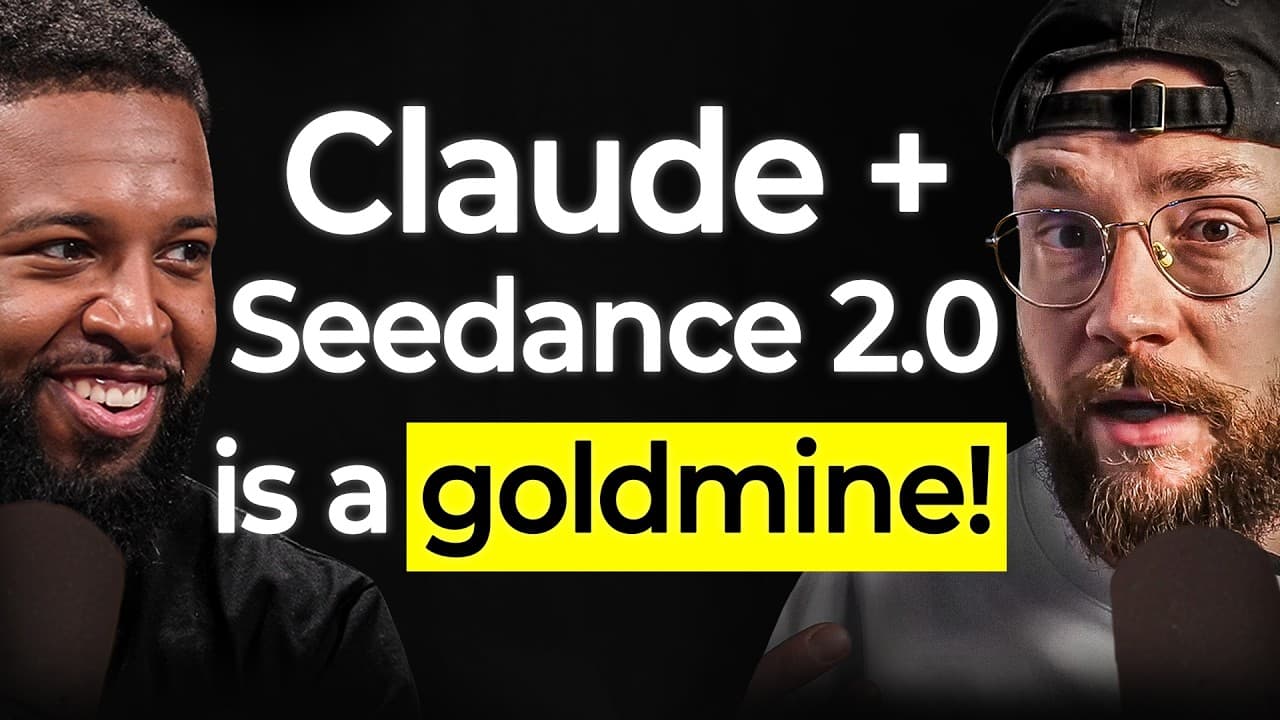
Combine AI image, video, and audio tools with skills you already have to create commercial assets, teach creative teams, and deliver finished projects for clients. Start by testing the tools inside familiar workflows, publish useful demonstrations, and build evidence of your abilities before relying on the income to leave a job.
Transcript
These four walls around me right now, my garden office is because of AI. When Cedance 2 dropped, I remember the first time I used it, I was I the first video generated, I sent to everyone. The rate at which the image and video models are progressing is just completely mind-blowing. You might have been stuck in a dead-end job, couldn't bring your id... Read More
Key Insights
- AI is a practical production tool that can improve established creative workflows, not merely a source of novelty content. Jack combined it with his visual-effects experience to work faster and achieve technical results that he could not produce as efficiently through his previous methods alone.
- Existing expertise is an advantage when adopting AI because it helps a creator judge output quality and integrate new tools into professional processes. Jack's decade in advertising and visual effects gave him the critical eye needed to pursue storytelling instead of settling for gimmicky results.
- AI integration can create substantial daily time savings within familiar work. Jack says his use of the tools saved at least two to three hours per day, giving him a clear reason to continue experimenting even when AI remained unpopular with some people in his industry.
- Public education can turn private experimentation into professional opportunities. Jack shared YouTube content about his workflows, gained attention through early material about Nano Banana, built a reputation, and was subsequently approached by platforms he already used for collaborations.
- Client demand for AI expertise spans three distinct service categories: education and consultation, the creation of individual assets, and production of finished work. This range allows practitioners to sell knowledge, intermediate materials, or complete deliverables according to a client's particular needs.
- AI asset creation can help filmmakers communicate projects before production. Jack created concept art and an entire storyboard for director Brett Bassock, who planned to use the short-film project in an effort to secure funding for a feature film.
- Self-employment became viable only after AI-related work generated solid income. Jack left his job when his earnings from content and related opportunities became better than his day-job income, turning long-standing interest in content creation into a sustainable independent career.
- Honest tool assessment is essential because rapid progress creates both opportunity and noise. Jack aims to state what AI systems handle well and poorly, using his advertising background to distinguish credible production applications from misleading or low-quality social-media demonstrations.
Install to Summarize YouTube Videos and Get Transcripts
Explore YouTube Video Summarizer or Get YouTube Transcript Extractor
Questions & Answers
Q: How can existing creative skills help with AI filmmaking?
Existing creative skills provide a foundation for judging AI output, identifying weak results, and fitting generated material into a professional workflow. Jack combined a decade of visual-effects and advertising experience with AI tools, which made him more efficient and enabled certain technical results he could not achieve as effectively before. His background also helped him focus on storytelling instead of gimmicky output.
Q: How did AI help Jack leave his nine-to-five job?
AI helped Jack improve his visual-effects workflow, save at least two to three hours per day, and produce educational YouTube content about his methods. Some early content about Nano Banana performed very well, strengthening his reputation and bringing collaboration offers from platforms he already used. He left his job after this work produced solid income that exceeded his day-job earnings.
Q: What AI services are clients willing to pay for?
Jack divides his client work into three areas: education and consultation, asset creation, and finished-product production. Education can involve workshops for individuals or entire creative teams. Asset work includes concept art and storyboards, while finished production combines elements such as AI-generated images, video, and audio into a deliverable rather than supplying only guidance or intermediate materials.
Q: How can someone start earning money with AI animation?
A practical starting point is to combine AI tools with abilities already developed through work or personal projects. Experiment inside a familiar workflow, evaluate what the tools do well and poorly, and publish demonstrations that teach others something useful. Jack's educational content built his reputation, attracted platform collaborations, and contributed to income, while his professional background helped him offer credible client services.
Q: Why should creators evaluate AI output critically?
Critical evaluation helps creators separate useful production capabilities from the large amount of noise surrounding AI on social media. Jack's visual-effects and advertising background allows him to recognize technical weaknesses and push the tools toward storytelling rather than novelty. He stresses being honest about both strengths and limitations, which is important when teaching teams or promising professional results to paying clients.
Q: What does AI asset creation include for filmmakers?
AI asset creation can include visual materials that help a filmmaker plan, explain, or support a project before final production. Jack describes creating concept art and an entire storyboard for aspiring filmmaker Brett Bassock. The materials supported a short film intended to help secure funding for a feature film, showing how generated assets can serve a broader production and financing process.
Q: How can sharing AI workflows lead to client opportunities?
Sharing useful workflows can demonstrate practical ability, educate potential customers, and establish a reputation in a developing field. Jack began publishing YouTube content to teach people how to integrate AI into creative work. Early content about Nano Banana performed particularly well, and platforms he was already using later approached him about collaborations, helping turn his experimentation into paid professional activity.
Q: When should someone consider quitting a job for AI work?
Jack's experience suggests considering the move after paid AI work demonstrates that it can support self-employment. He took the plunge when the income he was making had become better than his day-job earnings. Before that point, he built expertise by integrating AI into existing work, published educational content, developed a reputation, and attracted collaborations rather than leaving solely because the technology seemed promising.
Summary & Key Takeaways
-
Jack moved from a decade-long career in visual effects and advertising into self-employment after incorporating AI into his daily work. The technology helped him produce more technically efficient results, save at least two to three hours per day, publish educational content, develop a reputation, and earn more than he made at his job.
-
His client services fall into three sections: education and consultation, asset creation, and finished-product production. Examples include teaching creative teams how to integrate AI, producing concept art and a complete storyboard for a filmmaker seeking funding, and combining generated images, video, and audio into completed creative work.
-
The recommended path begins with curiosity, experimentation, and skills a person already possesses. Jack emphasizes honest evaluation because AI tools have both strengths and weaknesses. His experience suggests that useful demonstrations can attract audiences, platform collaborations, agencies, and clients, but leaving employment should follow proven demand and dependable income rather than excitement alone.
Read in Other Languages (beta)
Share This Summary 📚
Summarize YouTube Videos and Get Video Transcripts with 1-Click
Try YouTube Summary with ChatGPT & Claude or YouTube Transcript Generator
Explore More Summaries from The Calum Johnson Show 📚




Summarize YouTube Videos and Get Video Transcripts with 1-Click
Try YouTube Summary with ChatGPT & Claude or YouTube Transcript Generator