How to Build AI Playbooks for Business Work
TL;DR
Start by documenting a repeatable playbook, not by trying to build a complex AI agent. Clear step-by-step instructions let AI complete work in the way you expect, including inbox management, meeting rescheduling, business development, payment-link delivery, marketing, and content tasks. The tools have become easier to use, but organizing your work and thinking operationally remain the essential skills.
Transcript
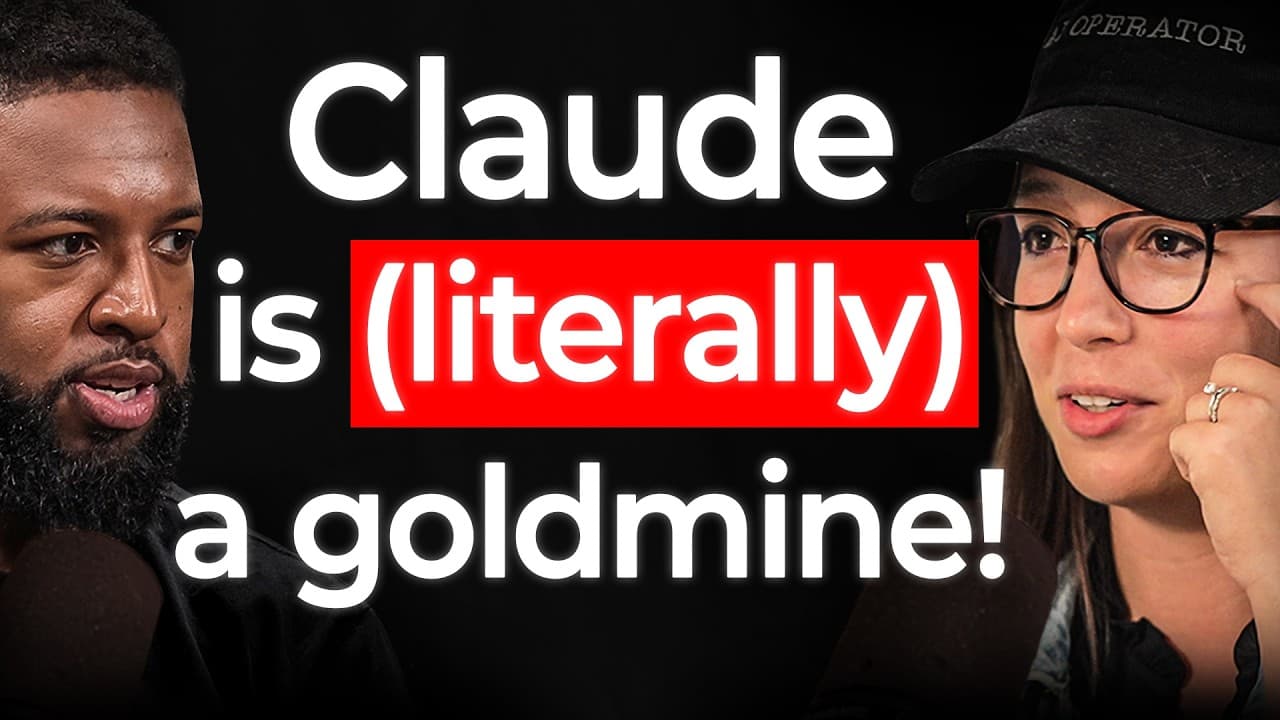
It is so doable to get AI to do more for you. My AI did over 8 hours of work without me having to be the one driving it. Things from [music] like managing all my inboxes, rescheduling meetings, they found like new business, sent out like the [music] right Stripe link to someone, so like made money technically for me. >> But you said the biggest [mu... Read More
Key Insights
- A playbook is a set of step-by-step instructions that tells AI how work should be completed. Woods recommends building a first playbook before attempting to create a first agent because documented processes provide the structure an agent needs to produce expected results.
- AI-assisted operations are accessible to people without engineering or computer science backgrounds. Woods taught herself what she knows about AI, later worked on Facebook's AI research team, and now focuses on showing ambitious, nontechnical people how to apply AI to their work.
- AI can perform practical administrative and commercial tasks when workflows are clearly defined. Woods reports that her AI managed inboxes, rescheduled meetings, found new business opportunities, and sent an appropriate Stripe payment link while she was unavailable because of illness.
- The hardest part of adopting AI is the thinking required to organize work. Although tools have become easier to use, users still need to identify repeatable processes, clarify how those processes should operate, and express their expectations in instructions AI can follow.
- Operational work is organized so that recurring activities happen consistently and predictably. Woods contrasts this structure with chaotic work, arguing that AI becomes more useful when people first define how tasks should be performed and what a successful result should look like.
- Language models can support business functions involving written language. Woods initially recognized their potential when early systems could respond to prompts, draft emails, produce marketing copy, and help small business owners spend less time on administrative and promotional work.
- AI adoption has become substantially more practical as the tools have improved. Woods says the change was especially noticeable during the six to nine months before the conversation, making the current generation of tools easier for ordinary users to apply operationally.
- Playbooks can increase a team's capacity by making established processes executable through AI. Woods says one playbook tripled the number of projects completed by her team, demonstrating that documented workflows can affect throughput rather than merely accelerate isolated writing tasks.
- More videos from this channel:
- More from this channel: The Calum Johnson Show
Install to Summarize YouTube Videos and Get Transcripts
Explore YouTube Video Summarizer or Get YouTube Transcript Extractor
Questions & Answers
Q: How do you start using AI agents in a business?
Start by choosing a repeatable business process and writing a playbook for it as clear, step-by-step instructions. The playbook should describe how you want the work completed, allowing AI to follow an established method instead of responding to an isolated prompt. Woods argues that this operational foundation should come before trying to build a sophisticated agent or multi-agent system.
Q: What is an AI playbook for business workflows?
An AI playbook is a documented sequence of instructions for completing a recurring task in the way a person or team expects. Whenever AI follows the playbook, it can reproduce that process with greater consistency. The concept shifts attention away from the technical label of an agent and toward the practical instructions, decisions, and expectations required to perform useful work.
Q: Why should you build a playbook before an AI agent?
A playbook defines the work that an AI agent is supposed to perform, including the sequence of steps and the expected way of working. Without that structure, building an agent does not solve the harder operational problem. Woods identifies this as a common mistake: people ask how to build their first agent when they should first document a process the agent can reliably follow.
Q: What business tasks can AI agents handle?
The examples presented include managing inboxes, rescheduling meetings, identifying new business opportunities, sending the appropriate Stripe payment link, drafting emails, producing marketing copy, and supporting content work. Woods reports that her AI performed more than eight hours of work while she was sick. These examples concern language-based and operational tasks that can be expressed through clear processes and instructions.
Q: Can nontechnical people build useful AI workflows?
Nontechnical people can use the current generation of AI tools if they learn how to structure their work and provide clear instructions. Woods emphasizes that she did not have an engineering background or computer science degree and taught herself what she knows about AI. Her approach is specifically intended to show ambitious, nontechnical users that practical AI-assisted operations are achievable with existing tools.
Q: What is the hardest part of working effectively with AI?
The hardest part is the human thinking needed to organize work, not simply operating the tools. Users must understand their processes, identify repeatable activities, decide how each activity should run, and translate those expectations into instructions. Woods says experienced AI users have developed this operational way of thinking over time, while newer users should make it their main priority.
Q: What does operating with AI mean?
Operating with AI means organizing work so recurring tasks happen consistently, predictably, and according to defined expectations, with AI carrying out some of the execution. Woods describes operations as making work function the same way each time instead of feeling chaotic. AI becomes part of that system by following documented playbooks and taking appropriate tasks off the human operator's plate.
Q: How can AI playbooks increase team productivity?
AI playbooks can increase productivity by converting established work methods into instructions that AI can repeatedly execute. This reduces the need for a person to drive every step and can expand the amount of work a team completes. Woods says one playbook tripled the number of projects handled by her team, while another AI setup completed more than eight hours of work during her sick day.
Summary & Key Takeaways
-
Rachel Woods argues that people who feel behind with AI should focus less on complex agent systems and more on a practical framework for organizing work. Her core method is playbooking: turning a recurring process into step-by-step instructions that AI can follow consistently and complete with less direct human involvement.
-
Woods describes AI as an operational partner capable of handling practical business activities. During one sick day, her AI completed more than eight hours of work, including managing inboxes, rescheduling meetings, identifying new business, and sending the appropriate Stripe link. The example illustrates the value of clearly structured workflows.
-
The discussion connects Woods's experience on Facebook's AI research team with her background as an entrepreneur. She says current tools make AI-assisted operations accessible to nontechnical users, but successful adoption still depends on human thinking: selecting repeatable work, defining expected outcomes, documenting instructions, and creating systems that reduce operational chaos.
Read in Other Languages (beta)
Share This Summary 📚
Summarize YouTube Videos and Get Video Transcripts with 1-Click
Try YouTube Summary with ChatGPT & Claude or YouTube Transcript Generator
Explore More Summaries from The Calum Johnson Show 📚




Summarize YouTube Videos and Get Video Transcripts with 1-Click
Try YouTube Summary with ChatGPT & Claude or YouTube Transcript Generator