How to Build a Brand That Sells in the AI Era
TL;DR
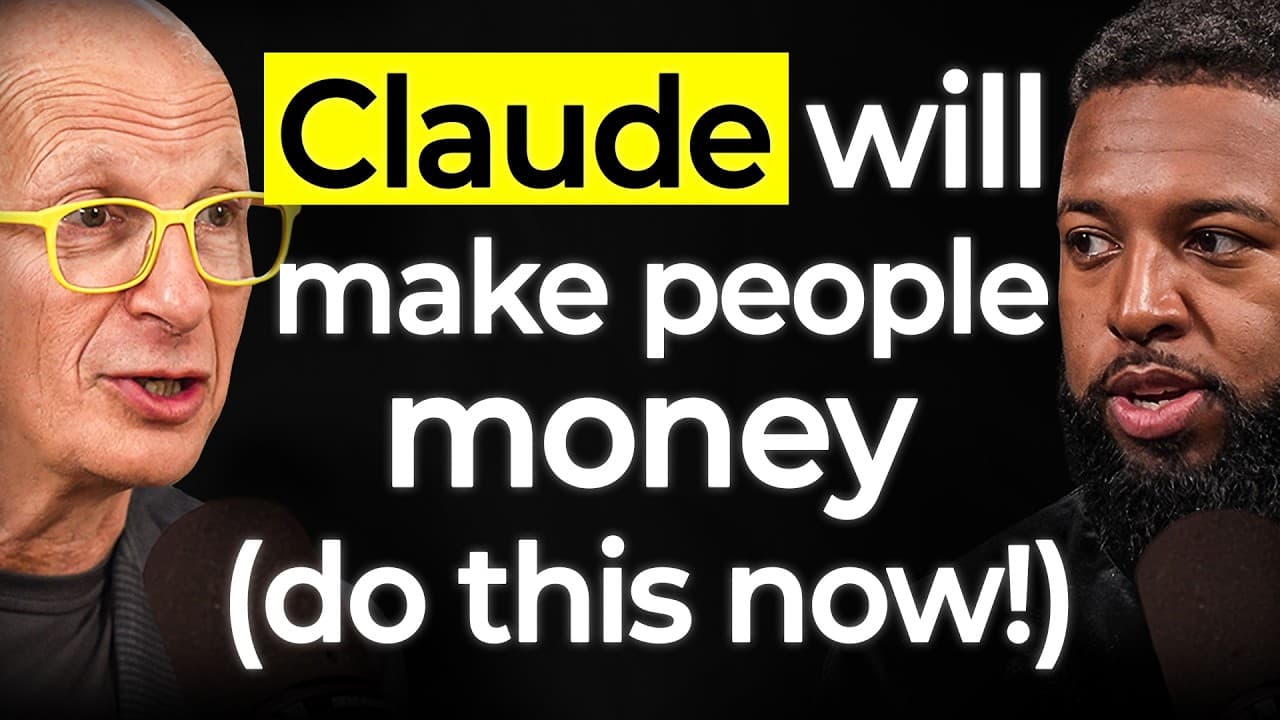
Marketing is the work of telling a true story that helps specific people reach a desired outcome and willingly share it. As AI makes software, apps, and workflows easier to build, differentiation depends increasingly on empathy, trust, status, affiliation, scarcity, and solving the buyer’s actual problem instead of promoting average products or competing mainly on price.
Transcript
There's all these things we can build with AI. Claude could look at your spreadsheets and teach you what's wrong with your production processes, [music] and that would be worth a million dollars to you. >> At this point, you're basically synonymous with marketing. And you've written over 20 best-selling books. How can someone get their ideas to spr... Read More
Key Insights
- Marketing is telling a true story that helps people reach a destination they already value and want to discuss with others. It is not merely hustling, interrupting people, buying more advertising, creating hype, or repeatedly trying to capture attention without first delivering meaningful value.
- AI is lowering the technical barriers to producing software, applications, workflows, and other tools. The resulting marketing challenge is not simply proving that something can be built, but showing that it solves a customer’s problem well enough to earn attention, trust, adoption, and voluntary sharing.
- Empathy and trust are human capabilities that technological shortcuts do not automatically improve. A creator should seek recognition for understanding and solving another person’s problem, not merely for mastering the tools used to produce a technically impressive product or service.
- Average offerings give customers little reason to talk about them. When similar sellers compete primarily through price, each cheaper alternative pressures the others to cut further, leaving businesses with mediocre products, limited pride in their work, and customers who feel little attachment.
- A remarkable customer experience can support a higher price when buyers receive more value than they believe they paid for. The experience itself becomes part of marketing when it creates enthusiasm, encourages customers to return, and gives them a story they are eager to share.
- Human motivation includes freedom from fear, status, and affiliation. Growth becomes possible when a marketer understands how an offering helps customers obtain one or more of these desired outcomes and presents the solution in language that makes customers recognize what they wanted.
- The real customer is not necessarily the product’s creator, user, or apparent audience. Seth Godin learned that publishing editors judged proposals according to what they could explain to bosses, discuss with pride, and offer to bookstores, which were their immediate customers.
- Useful rejection contains evidence that learning is occurring. Seth Godin received 800 consecutive rejections, but the letters became longer and more detailed, eventually inviting additional proposals. That progression helped reveal that his ideas reflected his preferences rather than the purchasing criteria of publishing editors.
- More videos from this channel:
- More from this channel: The Calum Johnson Show
Install to Summarize YouTube Videos and Get Transcripts
Explore YouTube Video Summarizer or Get YouTube Transcript Extractor
Questions & Answers
Q: What is marketing in the age of AI?
Marketing is telling a true story that helps people reach an outcome they already want and feel motivated to share with others. In the age of AI, making software, applications, workflows, and businesses can become easier, but earning attention does not happen automatically. Effective marketing still depends on empathy, trust, understanding human motivations, and solving a clearly recognized customer problem.
Q: How can a brand get its ideas to spread?
A brand can encourage ideas to spread by creating something specific people value enough to discuss voluntarily. The offering should help them gain freedom from fear, status, or affiliation, which are presented as central human desires. A true story should connect the offering to that desired change, while the product and customer experience must give people a credible reason to return and recommend it.
Q: Why do technically impressive AI products fail to sell?
Technically impressive AI products can fail when their creators focus on what they built instead of the customer’s unresolved problem. AI may enable nontechnical people to produce software, apps, or workflows, but it does not supply empathy or trust. Buyers care more about whether a product helps them reach a meaningful outcome than whether its creator overcame a difficult technical challenge.
Q: How do you know whether you have a marketing problem?
A marketing problem may be present when a business is not busy enough, its ideas are not spreading, customers are frustrated, or customers are not achieving what they hoped to achieve. Seeing a way to improve the situation also creates a marketing responsibility. The solution begins by identifying the people affected, understanding their desired outcome, and building something that genuinely addresses it.
Q: Why is competing mainly on price dangerous?
Competing mainly on price can start a race to the bottom. A mediocre seller may attract some demand until another seller offers a similar product for less, forcing the first seller to reduce prices again. The result can be mediocre work, limited pride, and weak customer loyalty. A stronger position comes from creating distinctive value and an experience worth discussing.
Q: How can a business avoid making an average product?
A business can avoid average work by serving a defined group with an experience that clearly matters to them. Instead of making a generic offering for average people, it can solve a particular problem, deliver more value than customers believe they paid for, and create reasons to return. The goal is to make the product and experience notable enough that customers willingly tell others.
Q: Who is the real customer when selling a product?
The real customer is the person whose purchasing criteria determine whether the offer advances, and that person may differ from the eventual user. In Seth Godin’s book-packaging example, publishing editors considered what they could tell their bosses, discuss at cocktail parties, and present to bookstores. Understanding those concerns mattered more than proposing books based only on what he personally wanted to read.
Q: What can repeated rejection teach a marketer?
Repeated rejection can reveal whether a marketer is learning more about the buyer’s worldview. Seth Godin received 800 consecutive rejection letters, yet the responses gradually became longer, more detailed, and more encouraging about future proposals. Those changes showed progress and helped him recognize that he had been designing proposals around his own preferences instead of the editors’ professional motivations and customers.
Summary & Key Takeaways
-
Marketing succeeds when it begins with the customer’s desired outcome rather than the creator’s ability to make something. AI can reduce technical barriers and help nontechnical people build software, apps, and workflows, but it does not automatically create demand. Earning attention still requires empathy, trust, and a solution people consider worth discussing.
-
Average products for average audiences struggle to generate conversation because customers have little reason to distinguish or recommend them. Competing through lower prices can create a continuing race to the bottom. A stronger alternative is to provide an experience whose value exceeds its price and makes customers eager to return and tell others.
-
Seth Godin’s early book-packaging experience shows why identifying the actual buyer matters. His proposals reflected books he wanted to read, but publishing editors evaluated what they could defend to bosses, discuss proudly, and sell to bookstores. Progress came from studying improving rejection letters and understanding the worldview of the purchasing decision-maker.
Read in Other Languages (beta)
Share This Summary 📚
Summarize YouTube Videos and Get Video Transcripts with 1-Click
Try YouTube Summary with ChatGPT & Claude or YouTube Transcript Generator
Explore More Summaries from The Calum Johnson Show 📚





Summarize YouTube Videos and Get Video Transcripts with 1-Click
Try YouTube Summary with ChatGPT & Claude or YouTube Transcript Generator