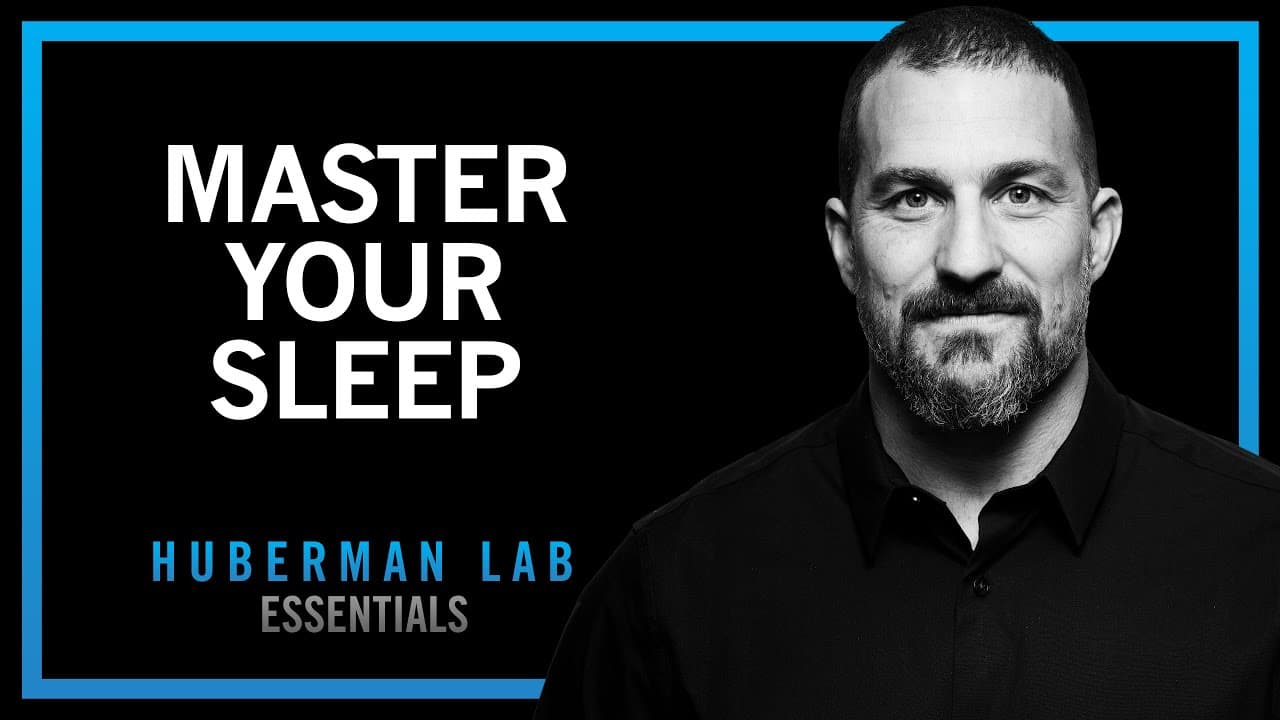
How Can You Improve Sleep and Stay More Alert? | Huberman Lab Essentials
TL;DR
Improve sleep and wakefulness by managing the two main forces that govern them: adenosine-driven sleep pressure and the circadian clock, which is strongly regulated by sunlight. Morning light helps synchronize cortisol and melatonin rhythms, while limiting bright light at night reduces disruption. Yoga nidra, non-sleep deep rest, magnesium, and theanine may also support relaxation and sleep quality. Read on for the specific mechanisms and practical tools.
Transcript
ANDREW HUBERMAN: Welcome to Huberman Lab Essentials, where we revisit past episodes for the most potent and actionable science based tools for mental health, physical health, and performance. [MUSIC PLAYING] I'm Andrew Huberman, and I'm a professor of neurobiology and ophthalmology at Stanford School of Medicine. Today's podcast episode is all abou... Read More
Key Insights
- Adenosine is a molecule that builds up during wakefulness, creating a sleep drive.
- Caffeine blocks adenosine receptors, temporarily preventing sleepiness.
- Circadian rhythms, governed by light, regulate sleep-wake cycles.
- Morning light exposure is crucial for setting the body's internal clock.
- Cortisol and melatonin are key hormones in regulating sleep and wakefulness.
- Viewing sunlight at sunrise and sunset helps maintain healthy circadian rhythms.
- Bright light exposure at night can disrupt sleep by delaying melatonin release.
- Yoga nidra and non-sleep deep rest practices can enhance relaxation and sleep quality.
Install to Summarize YouTube Videos and Get Transcripts
Explore YouTube Video Summarizer or Get YouTube Transcript Extractor
Questions & Answers
Q: How can you improve sleep and stay more alert when awake?
Manage light exposure to support your circadian rhythm: seek morning sunlight and limit bright light at night. Yoga nidra or non-sleep deep rest can support relaxation, while magnesium and theanine may also aid sleep quality.
Q: How does morning sunlight affect sleep and wakefulness?
Morning sunlight helps set the internal clock that regulates when you feel sleepy and awake. Consistent morning light supports properly timed cortisol and melatonin rhythms, promoting daytime alertness and better sleep.
Q: What role does adenosine play in sleepiness?
Adenosine builds up in the nervous system and body the longer you remain awake, creating sleep drive or sleep hunger. After eight, nine, or ten hours of deep, restful sleep, adenosine should be low; after 10, 15, or more waking hours, it should be much higher.
Q: Why does caffeine make you feel awake and sometimes cause a crash?
Caffeine binds to adenosine receptors and blocks the signal that would normally make you feel sleepy. When caffeine wears off, adenosine can bind to those receptors, sometimes with greater affinity, producing an especially tired feeling or crash.
Q: What is the circadian force that regulates sleep?
The circadian force comes from an internal clock that controls when you tend to feel sleepy or awake across an approximately 24-hour cycle. Light, particularly sunlight, is the most powerful influence described for timing that cycle.
Q: How do cortisol and melatonin coordinate the sleep-wake cycle?
A pulse of cortisol early in the waking period helps alert the body and starts a biological timer. About 12 to 14 hours later, melatonin is released from the pineal gland, supporting the transition toward sleep.
Q: Why should bright light be limited at night?
Bright light at night can disrupt the circadian clock and delay melatonin release, making it harder to fall asleep. Limiting nighttime light helps preserve healthy sleep timing and supports better alertness during wakefulness.
Q: How can yoga nidra and non-sleep deep rest support sleep?
Yoga nidra is a guided practice involving breathing and body awareness that helps shift the body from heightened alertness toward relaxation. As a form of non-sleep deep rest, it can improve the ability to relax, fall asleep, and return to focused wakefulness.
Summary & Key Takeaways
-
Morning light exposure is essential for setting your internal clock, which regulates sleep and wakefulness. This exposure helps synchronize cortisol and melatonin rhythms, promoting better sleep and alertness. Avoid bright lights at night to prevent disruption of these rhythms.
-
Adenosine builds up during the day to create a sleep drive, while caffeine blocks its receptors, enhancing alertness. Circadian rhythms, influenced by light, are crucial for timing sleep and wakefulness, with morning sunlight being a primary regulator.
-
Yoga nidra and non-sleep deep rest are effective practices for improving relaxation and sleep quality. Supplements like magnesium and theanine can support better sleep, but light exposure and lifestyle changes are the primary factors in optimizing sleep and alertness.
Read in Other Languages (beta)
Share This Summary 📚
Summarize YouTube Videos and Get Video Transcripts with 1-Click
Try YouTube Summary with ChatGPT & Claude or YouTube Transcript Generator
Explore More Summaries from Andrew Huberman 📚
Summarize YouTube Videos and Get Video Transcripts with 1-Click
Try YouTube Summary with ChatGPT & Claude or YouTube Transcript Generator