How to Stay Calm During Any Difficult Conflict
TL;DR
Staying calm in conflict requires creating distance from emotions, anticipating likely reactions, controlling your breathing, and acting from a clear purpose. Label what you feel without identifying with it, prepare for possible responses, inhale for four seconds and exhale for six, then keep every word and decision aligned with your real goal rather than your wounded ego.
Transcript
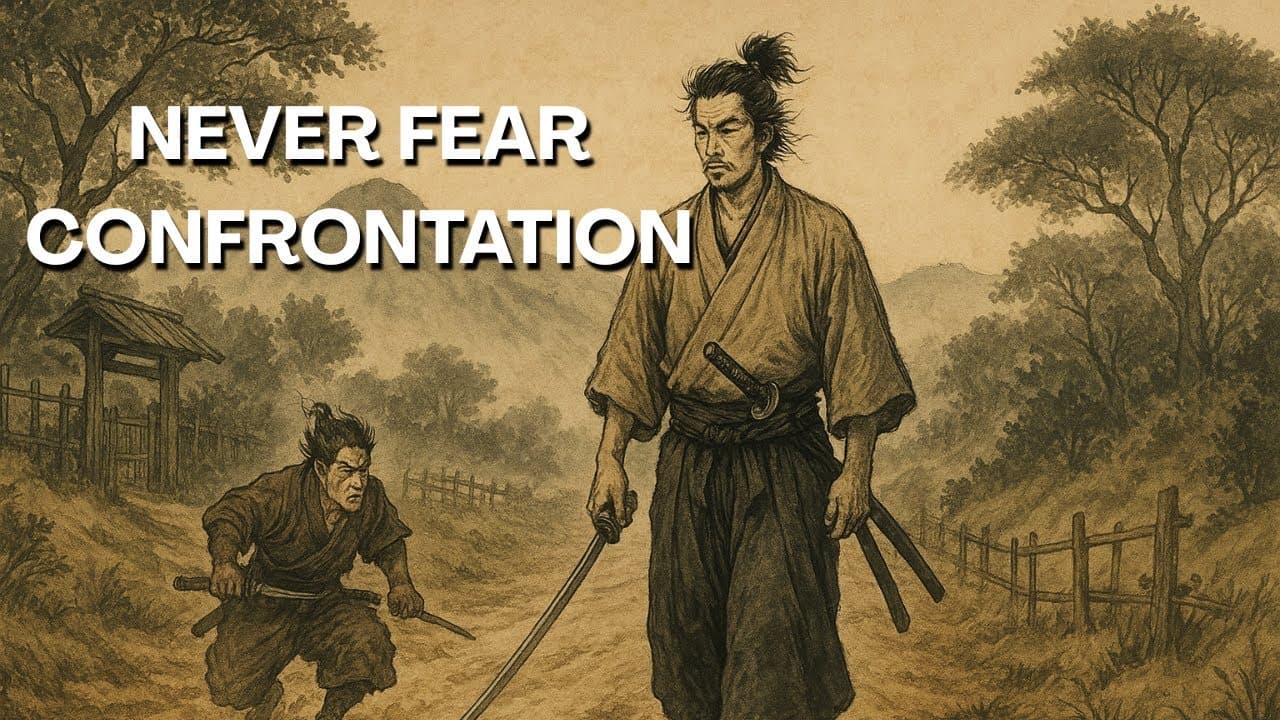
The most feared individual in any fight is not the one with the giant muscles, nor the one who makes the most noise. It's the one who remains absolutely silent. Sounds strange, right? But this revelation changed the life of a legendary warrior forever. And it's about to revolutionize yours, too. I'll tell you about Miiamoto Mousashi, the most letha... Read More
Key Insights
- Emotional distance is the ability to observe an internal reaction without allowing it to direct behavior. Describing the experience as "I am feeling angry" separates personal identity from temporary emotion and creates room for a conscious response.
- Emotion labeling is a practical method for interrupting impulsive reactions. Mentally naming anger or frustration during a confrontation can create psychological space, calm the internal storm over time, and preserve the ability to choose words and actions deliberately.
- Anticipatory awareness is preparation based on recognizable patterns rather than mind reading. Anger tends to follow repeated paths, fear narrows available choices, and impatience exposes weaknesses, so considering likely reactions before a conversation reduces destabilizing surprise.
- Three preparation questions can clarify the territory of a difficult interaction. Ask about the other person's likely emotional state, what the person truly wants, and the three reactions most likely to occur before entering the conversation.
- Strategic breathing is presented as a bridge between physical and mental control. Slow, controlled breathing activates the body's calming system, while rapid, uneven breathing accompanies fear, anger, stress, and reduced clarity of reasoning.
- The four-six breathing cycle is a brief method for reducing tension. Inhale through the nose for four seconds, hold briefly, and exhale through the mouth for six seconds, repeating the cycle two or three times if needed.
- Purposeful action is behavior directed toward a defined objective instead of ego, anger, or retaliation. A clear goal prevents disagreements from drifting into accusations, old resentments, accumulated hurts, and attempts to win at any cost.
- A one-sentence purpose is an emotional anchor during conflict. Goals such as resolving a misunderstanding without causing more pain, defending a position respectfully, or protecting personal peace can keep words and decisions aligned with the desired outcome.
Install to Summarize YouTube Videos and Get Transcripts
Explore YouTube Video Summarizer or Get YouTube Transcript Extractor
Questions & Answers
Q: How can I stay calm during a heated conflict?
Create emotional distance by noticing and labeling what you feel, then prepare for the other person's probable reactions. Use one controlled breath by inhaling through your nose for four seconds, holding briefly, and exhaling through your mouth for six seconds. Finally, repeat your real objective mentally so your response serves that purpose instead of anger, fear, or wounded ego.
Q: What is emotional distance during an argument?
Emotional distance is the ability to observe anger, fear, or frustration without becoming controlled by it. Instead of thinking, "I am angry," tell yourself, "I notice that I am feeling angry." This language creates space between you and the emotion. That space supports deliberate choice without requiring you to deny, ignore, or suppress what you genuinely feel.
Q: How does labeling emotions improve self-control?
Labeling an emotion changes your relationship to the immediate reaction. Saying that you notice anger or frustration treats the feeling as a passing internal event rather than your entire identity. The resulting mental space makes it easier to avoid impulsive words, actions, and decisions. With repeated practice, that space can expand and provide greater control during confrontations.
Q: How should I prepare for a difficult conversation?
Pause for 30 seconds and ask three questions before beginning. Consider the person's likely emotional state, what the person truly wants from the interaction, and the three reactions most likely to occur. This anticipatory awareness prepares your mind for probable emotional patterns, reduces the shock of unexpected behavior, and supports focus and clarity when tension begins to rise.
Q: What is anticipatory awareness in conflict?
Anticipatory awareness is the practice of recognizing probable behavior patterns before a confrontation. It is not presented as mind reading or controlling another person. It involves noticing that anger repeats familiar paths, fear limits choices, and impatience reveals weaknesses. Mapping likely reactions helps you understand the emotional territory, experience less surprise, and remain calmer under pressure.
Q: What breathing technique can reduce tension quickly?
Inhale deeply through your nose while counting to four, hold the breath briefly, and then exhale through your mouth while counting to six. One controlled cycle can reduce tension and clear your thoughts, while two or three repetitions can spread the calming effect through the body. The technique can be used in arguments, tense meetings, or before difficult news.
Q: Why is a clear purpose important during conflict?
A clear purpose prevents the interaction from being directed by ego, anger, fear, or the desire to retaliate. Without a defined objective, a disagreement can drift into accusations, old resentments, and accumulated hurts. Remembering the real goal keeps words and actions focused on resolution, respectful self-defense, or personal peace instead of merely trying to win the argument.
Q: How can I define my goal before an argument?
Ask yourself, "What is my real goal here?" Then answer in one direct sentence that can function as an emotional anchor. You might aim to resolve a misunderstanding without causing more pain, defend your position without disrespecting anyone, or protect your peace. Repeat that purpose mentally whenever emotions rise so your behavior remains aligned with the intended outcome.
Summary & Key Takeaways
-
Emotional distance begins by observing anger, fear, or frustration instead of becoming absorbed by it. Saying, "I notice that I am feeling angry," creates a mental space in which deliberate choice becomes possible. The goal is not to deny or suppress emotion, but to prevent emotion from controlling words, actions, and decisions.
-
Anticipatory awareness reduces the emotional surprise that often causes panic. Before a difficult conversation, consider the other person's likely emotional state, underlying goal, and three probable reactions. Recognizing patterns in anger, fear, and impatience helps the mind prepare for the interaction with greater focus, clarity, and emotional stability.
-
Strategic breathing and purposeful action restore control during tense moments. Inhale through the nose for four seconds, hold briefly, and exhale through the mouth for six seconds. Then recall your one-sentence objective so that your behavior serves resolution, respectful self-defense, or personal peace instead of anger, retaliation, or ego.
-
Key Insights
-
Q_and_A
Read in Other Languages (beta)
Share This Summary 📚
Summarize YouTube Videos and Get Video Transcripts with 1-Click
Try YouTube Summary with ChatGPT & Claude or YouTube Transcript Generator
Explore More Summaries from Presence & Path 📚





Summarize YouTube Videos and Get Video Transcripts with 1-Click
Try YouTube Summary with ChatGPT & Claude or YouTube Transcript Generator