Recent updates for the tensile testing machine
TL;DR
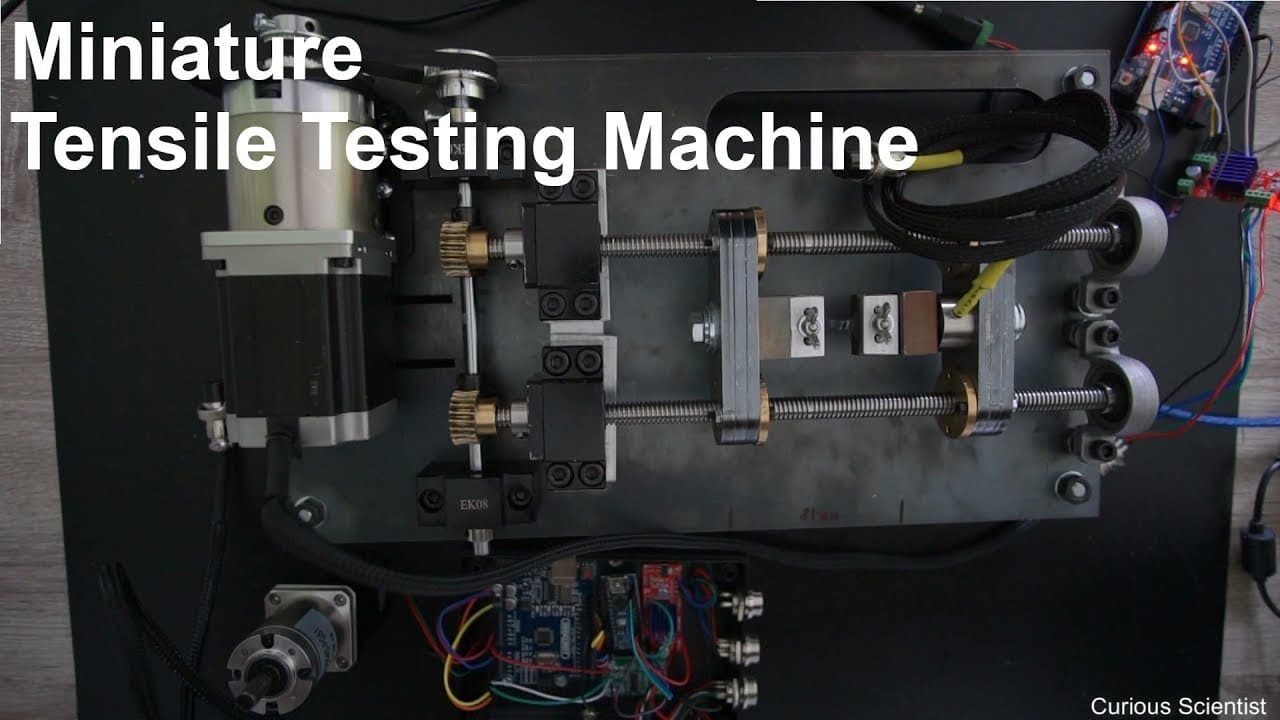
This video showcases recent improvements to a tensile testing machine's design and functionality.
Transcript
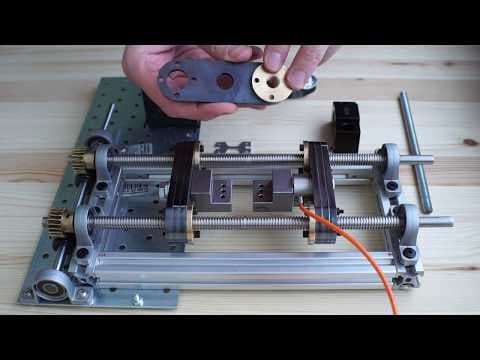
welcome everyone in this video I'm going to show you the recent updates of my tensile testing machine so as you can see that the structure is quite new so as compared to the previous part where I was using these extruded aluminum profiles now I'm using a huge six millimeter thick steel plate it's cut by laser and then I designed all the holes and e... Read More
Key Insights
- ✋ Transitioning from aluminum to steel significantly enhances the machine’s ability to handle higher loads and improves stability.
- 🧑🦼 The upgrade to a NEMA 23 motor not only increases torque but also improves operational speed, which is vital for testing efficiency.
- ✋ Utilizing CAD software for design and manufacturing ensures high levels of accuracy and customization for machine components.
- 👻 The implementation of modular circuitry with Arduino allows improved control and integration of sensors for enhanced monitoring.
- 🪡 The current load cell has a capacity limitation, indicating a need for future upgrades for increased testing versatility.
- 🥺 Detailed attention to mechanical connections, such as grinding lead screws, secures stable operation under load and prevents slipping.
- 🎨 The approach to design, including potential adjustments in corner rounding and stiffness, highlights the importance of iterative improvements in engineering projects.
Install to Summarize YouTube Videos and Get Transcripts
Explore YouTube Video Summarizer or Get YouTube Transcript Extractor
Questions & Answers
Q: What materials were upgraded in the tensile testing machine?
The tensile testing machine was upgraded from extruded aluminum profiles to a six-millimeter thick steel plate. The new design offers enhanced durability and stability, essential for withstanding higher forces during tensile tests. The CAD design ensured precision in the cut and hole placements, maintaining strict tolerances necessary for operational efficiency.
Q: How does the new motor improve the machine's performance?
The new NEMA 23 motor provides greater torque than the previously used stepper motor, enabling faster operation with a higher output speed. The motor operates at a 1:15 gear ratio rather than 1:251, allowing for over three times the speed compared to the previous configuration, essential for effective and efficient tensile testing.
Q: What are the plans for further enhancements to the machine?
Future enhancements include integrating a linear potentiometer to measure displacement accurately, optimizing bearing spacers for rigidity, and modifying the motor mounting to improve alignment. These changes aim to refine the machine's performance in testing, ensuring reliable measurements and stability under load.
Q: What challenges are currently faced with the design?
The current design has challenges, such as insufficient rigidity due to gaps between bearing supports and sharp corners that were not properly rounded. The speaker plans to create custom aluminum spacers and redesign the corners for better handling and safety in future iterations of the tensile testing machine.
Summary & Key Takeaways
-
The speaker upgraded the tensile testing machine's structure from aluminum profiles to a robust six-millimeter thick steel plate, designed using CAD software, improving overall rigidity and performance.
-
A NEMA 23 motor replaced a smaller stepper motor, enabling significantly higher torque and speed due to a new gear ratio, enhancing testing efficiency.
-
Future improvements include adding a displacement sensor, optimizing bearing spacers, and refining the motor mounting bracket for better alignment and stability during testing.
Read in Other Languages (beta)
Share This Summary 📚
Summarize YouTube Videos and Get Video Transcripts with 1-Click
Try YouTube Summary with ChatGPT & Claude or YouTube Transcript Generator
Explore More Summaries from Curious Scientist 📚
![Building a coil winder [Part 6] - A few improvements thumbnail](/_next/image?url=https%3A%2F%2Fi.ytimg.com%2Fvi%2F3eyxG_g2iUA%2Fhqdefault.jpg&w=750&q=75)
Summarize YouTube Videos and Get Video Transcripts with 1-Click
Try YouTube Summary with ChatGPT & Claude or YouTube Transcript Generator