How to Reproduce the GPT-2 Model with PyTorch
TL;DR
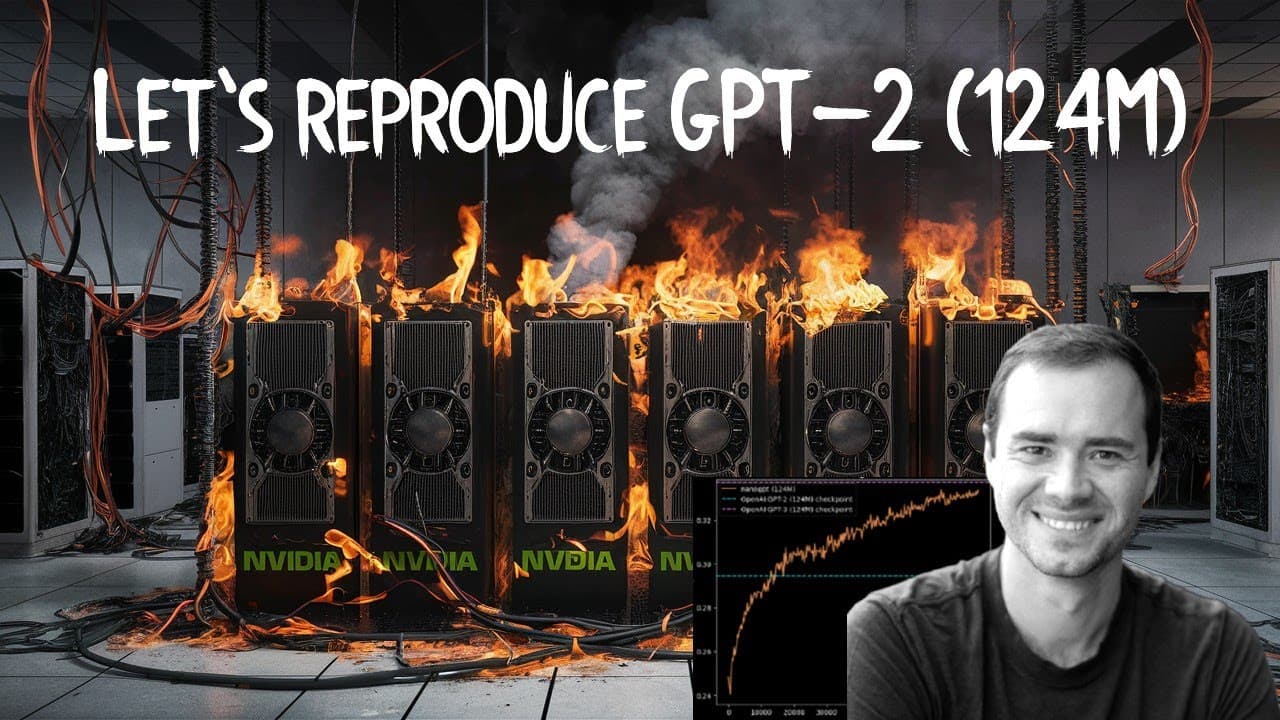
You can reproduce the GPT-2 model with 124 million parameters using PyTorch and Hugging Face Transformers by following specific coding steps. This involves loading the original model, initializing it, and training it from scratch, allowing for effective text generation and performance optimization.
Transcript
hi everyone so today we are going to be continuing our Zero to Hero series and in particular today we are going to reproduce the gpt2 model the 124 million version of it so when openi released gpt2 this was 2019 and they released it with this blog post on top of that they released this paper and on top of that they released this code on GitHub so o... Read More
Key Insights
- 👨💻 The GPT2 model released by OpenAI in 2019 can be reproduced using the code and resources provided by OpenAI.
- 👨💻 Reproducing the GPT2 model requires careful attention to model size, parameter configurations, and code implementation.
- 👤 PyTorch and the Hugging Face Transformers library provide a user-friendly environment for reproducing and training the GPT2 model.
- 👻 Reproducing the GPT2 model allows for better understanding, modification, and optimization of the model's performance.
- 💦 The GPT2 model includes various components such as attention, multi-headed attention, and MLP blocks, which work together to generate high-quality text.
Install to Summarize YouTube Videos and Get Transcripts
Explore YouTube Video Summarizer or Get YouTube Transcript Extractor
Questions & Answers
Q: What is the purpose of reproducing the GPT2 model?
Reproducing the GPT2 model allows researchers to understand and modify the model, as well as explore its capabilities and limitations. It also enables the training of new models that can potentially perform better than the original GPT2 model.
Q: What is the significance of the different models in the GPT2 miniseries?
The GPT2 miniseries consists of models of different sizes, with the largest model being the GPT2 with 1,558 million parameters. These models exhibit better performance in downstream tasks as their size increases.
Q: How can the GPT2 model be trained from scratch?
To train the GPT2 model from scratch, one needs to initialize the model with random weights and optimize it using a training dataset. The weights can be initialized using the default parameters in PyTorch, and the training process involves iterating over batches of data and updating the model's weights using an optimizer.
Q: What is the purpose of the positional embeddings in the GPT2 model?
The positional embeddings in the GPT2 model encode the position of each token in the sequence. They allow the model to understand the order and context of the tokens, enabling it to generate coherent and contextually relevant text.
Summary & Key Takeaways
-
The GPT2 model with 124 million parameters was released by OpenAI in 2019.
-
The model can be reproduced using the code provided in OpenAI's GitHub repository and the Hugging Face Transformers library.
-
By following the steps outlined in the content, it is possible to load the model, generate text, and train the model from scratch.
Read in Other Languages (beta)
Share This Summary 📚
Summarize YouTube Videos and Get Video Transcripts with 1-Click
Try YouTube Summary with ChatGPT & Claude or YouTube Transcript Generator
Explore More Summaries from Andrej Karpathy 📚

Summarize YouTube Videos and Get Video Transcripts with 1-Click
Try YouTube Summary with ChatGPT & Claude or YouTube Transcript Generator