Scott Bessent on Ukraine Peace Talks and China Chip Sales
TL;DR
A bilateral meeting between Putin and Zelensky is the likely next step to end the war, following Trump's Alaska summit and White House talks with European leaders. Russia's war economy, with 20%+ inflation and over 25% of GDP tied to military buildup, plus secondary tariffs on India for buying sanctioned Russian oil, are the economic levers pushing Putin toward a deal.
Transcript
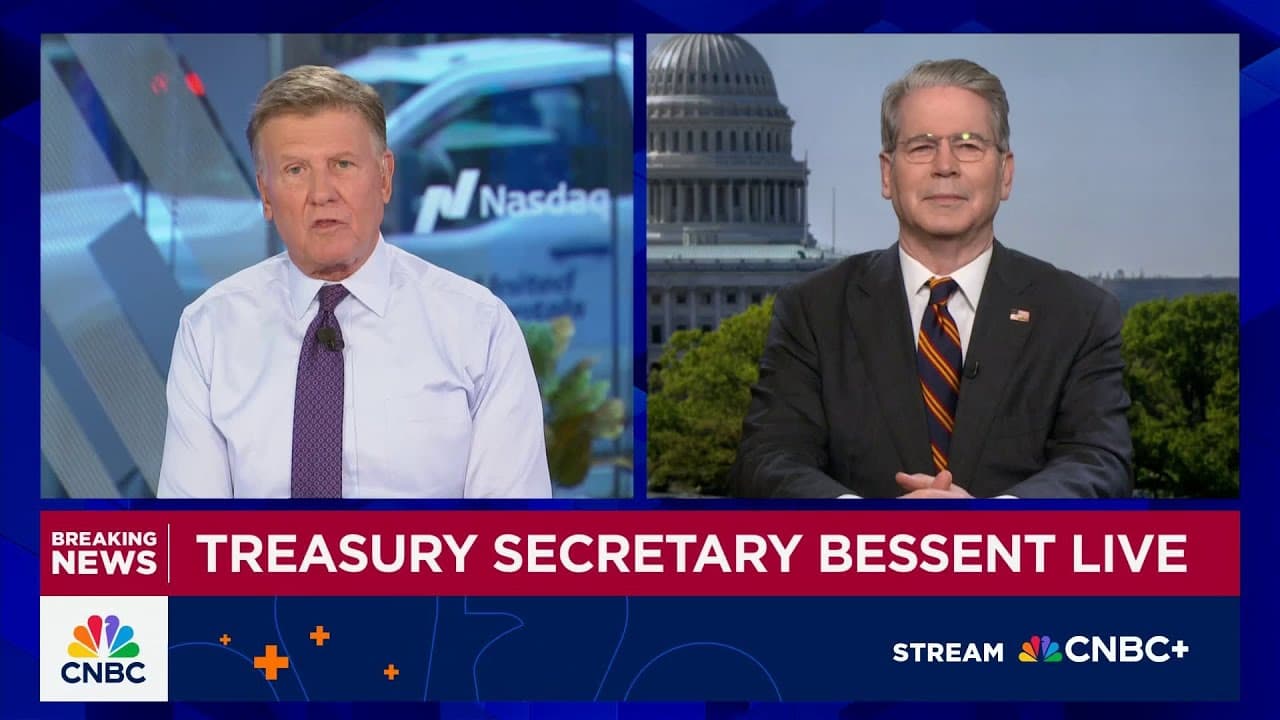
To be more than just sleep. Trapeze. I mean, I'm going to get a anyway. Joining us now, Treasury Secretary Scott Bessent. You never know what you're going to hear before you come on. Mr. Treasury Secretary, it's always a pleasure to have you on. Good morning. >> Morning, Joe. >> We have talked in the past about whether you wear different hats. A... Read More
Key Insights
- The Alaska summit was framed as a show of force by President Trump, who invited Putin to land Russia once owned, displayed military hardware, and staged a flyover, compared to showing an uncontrollable neighbor your gun case.
- A bilateral meeting between Putin and Zelensky is described as the only way to end the conflict, following an hour-and-a-half Oval Office meeting with Zelensky, talks with European leaders, and a culminating call with Putin.
- Russia's economy is a war economy with 20%-plus inflation, and more than 25% of GDP comes from military buildup, making economic pressure a key tool to make Putin want the conflict to end.
- The US plans to raise tariffs on India as secondary tariffs, penalizing the purchase of sanctioned Russian oil, while runoff from frozen Russian assets currently finances the war.
- The Digital Services Tax is called unfair because it specifically targets American internet companies, and is levied at the national level by countries like Italy, France, and Spain, not by Germany or Poland.
- H20 chips are now far down the Nvidia stack and not a national security risk, with the goal of making the US standard the global standard to prevent a Huawei Belt and Road from excluding US technology.
- A potential US stake in Intel would convert existing grants and possibly increase investment to stabilize domestic chip production, with no plan to force companies to buy Intel chips.
- Roughly 99% of the world's advanced chips are made in Taiwan, which Bessent calls the single point of failure for the global economy, driving the push to onshore chips, pharma, steel, and rare earths.
Install to Summarize YouTube Videos and Get Transcripts
Explore YouTube Video Summarizer or Get YouTube Transcript Extractor
Questions & Answers
Q: What happened at the Alaska summit between Trump and Putin?
According to Bessent, the Alaska summit was a show of force by President Trump. Trump invited President Putin to land that the Russians used to own, displayed a huge amount of military hardware, and staged a flyover. Bessent compared it to inviting your uncontrollable neighbor to your house and showing him your gun case, framing it as a deliberate demonstration of strength ahead of subsequent meetings with Zelensky and European leaders.
Q: What is the likely next step to end the Russia-Ukraine war?
Bessent's strong belief is that there will be a bilateral meeting between President Putin and President Zelensky, which he calls the only way to end the conflict by getting the two sides talking. This follows a meeting with Zelensky and his team in the Oval Office for about an hour and a half, a session with European leaders led by Trump, and a culminating call with Putin.
Q: How is the state of Russia's economy being used as leverage?
Bessent says one way to make Putin want the conflict to end is on the economic side. Russia's economy has 20%-plus inflation and is a war economy, with more than 25% of GDP coming from military buildup, making it very imbalanced. Additionally, runoff from frozen Russian assets is being used to finance the war, and the US has planned to increase secondary tariffs on India for buying sanctioned Russian oil.
Q: What is the Digital Services Tax and why does the US oppose it?
The Digital Services Tax (DST) is described by Bessent as an unfair tax where some European countries tax American internet companies. He calls it unfair because it is very specific to US companies. It is levied at the national level, with Italy, France, and Spain having it while Germany, Poland, and others do not. The US worries it sets a global standard that countries like India, Turkey, and Brazil then adopt.
Q: Why is the US allowing Nvidia and AMD to sell H20 chips to China?
Bessent argues H20 chips are now pretty far down the Nvidia stack and are not a national security risk. The industry has made a strong case for China and the rest of the world, including the global South, to develop the US standard as the global standard. He warns the last thing the US wants is a Huawei Belt and Road, where Huawei sells chips to the rest of the world and US technology is excluded, referencing how isolated Japanese cell phone technology once became.
Q: What would a US stake in Intel involve?
Bessent explained that a potential stake would be a conversion of the grants and possibly an increase in investment into Intel to help stabilize the company for chip production in the US. He emphasized there is no talk of trying to force companies to buy from Intel. This contrasts with the Biden administration, which he says tried to pressure big tech companies to buy Intel chips, though some said the chips were not good enough.
Q: Why does the Treasury Secretary consider Taiwan a single point of failure?
Bessent states that the single point of failure for the global economy is that 99% of the advanced chips in the world are made in Taiwan. For national security reasons, he says the US has to stop that single point of failure. He frames this within a broader push to onshore critical industries including chips, pharma, steel, and rare earths, citing Covid as a beta test for what being cut off from key industries looks like.
Q: What is the status of the search for Jay Powell's replacement as Fed Chair?
Bessent said the administration has announced 11 very strong candidates for the role. He planned to meet with them probably right around Labor Day to start narrowing the list to present to President Trump, describing the group as incredible. The question was raised alongside recent PPI numbers and whether the timing supports a 50 basis point cut, or at least 25 basis points, at the next meeting.
Summary & Key Takeaways
-
Bessent recapped the Alaska summit as a deliberate show of force by Trump, followed by a productive hour-and-a-half Oval Office meeting with Zelensky, talks with European leaders, and a call with Putin. He believes a direct bilateral meeting between Putin and Zelensky is the only path to ending the conflict.
-
Economic pressure is central to pushing Putin toward peace: Russia runs a war economy with over 20% inflation and more than 25% of GDP tied to military spending. The US plans higher secondary tariffs on India for buying sanctioned Russian oil, while frozen Russian asset runoff funds the war.
-
On tech, Bessent defended allowing H20 chip sales to China as low-risk, arguing the US standard should become the global standard. He described a possible Intel stake as converting grants to stabilize chip production, citing Taiwan's 99% share of advanced chips as a national security single point of failure.
Read in Other Languages (beta)
Share This Summary 📚
Summarize YouTube Videos and Get Video Transcripts with 1-Click
Try YouTube Summary with ChatGPT & Claude or YouTube Transcript Generator
Explore More Summaries from CNBC Television 📚
Summarize YouTube Videos and Get Video Transcripts with 1-Click
Try YouTube Summary with ChatGPT & Claude or YouTube Transcript Generator