How to Launch an Online Course Successfully
TL;DR
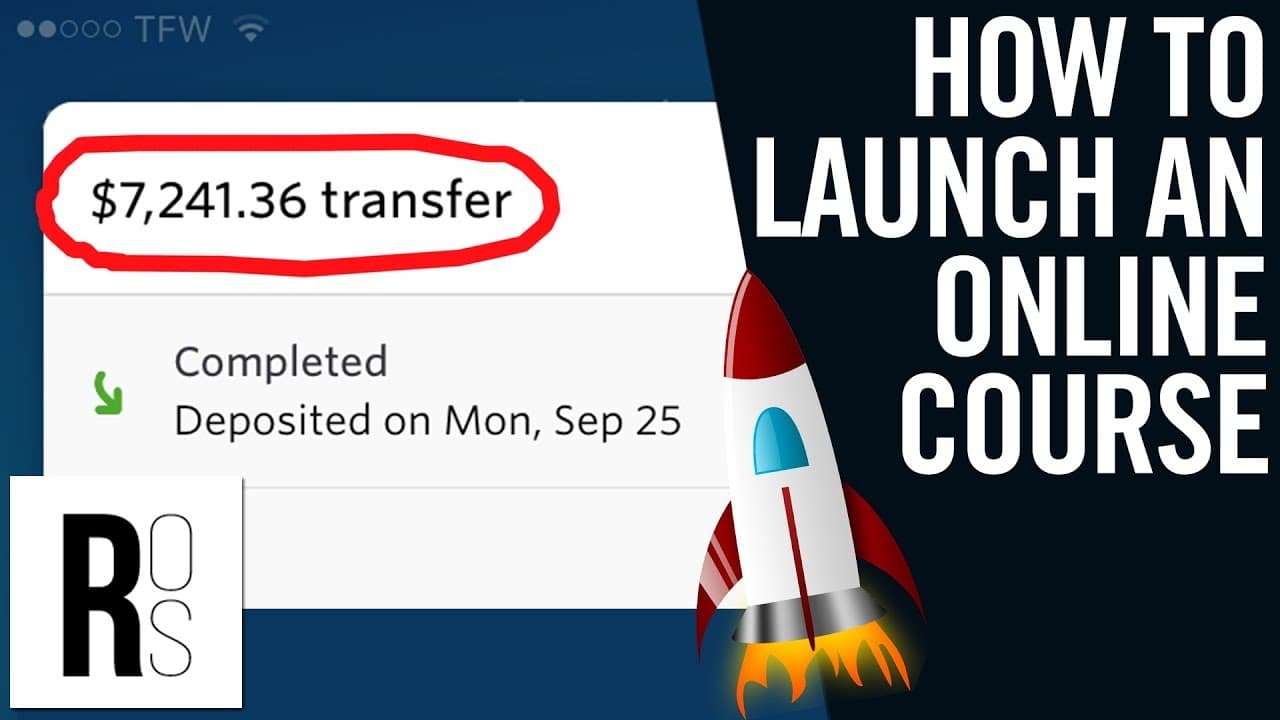
A successful online course launch requires a written plan that moves through preparation, audience excitement, and a focused launch period. Build credibility through valuable content, engage personally with followers, grow an email list with a free resource, and promote across social platforms. The creator reports earning about $7,000 during his first launch weekend, despite releasing the course before it was completely finished.
Transcript
What's going on, you guys? I hope you are having a great day. So yesterday, I put out a video talking about how to create an online course, and I got a lot of really good feedback from you. Um, I thought that this was kind of a niche topic, but it seems like a lot of people are very interested in this and possibly creating an online course. And so ... Read More
Key Insights
- A successful course launch is a sequential campaign rather than a single announcement. The creator divides the process into preparation, hype, and launch phases, arguing that each phase should have specific actions documented in a written plan before enrollment opens.
- Credibility is built by regularly publishing valuable material through blogs, podcasts, or YouTube videos. Consistent teaching helps a creator become an authority within a chosen topic and gives potential students evidence that the paid course may be useful.
- Audience engagement is part of launch preparation because personal interaction strengthens relationships. Responding in comment sections can show followers that the creator recognizes them as people rather than treating them only as views, subscribers, or other audience statistics.
- An email list is presented as essential to a successful course launch. The creator recommends offering a free resource through a landing page, collecting email addresses in exchange, and using that direct communication channel as a major component of the promotional campaign.
- Social media profiles expand the channels available for course promotion. A creator with a YouTube audience can also develop Instagram, Facebook, and Twitter profiles so that course announcements and launch excitement are not limited to a single platform.
- A course does not necessarily need to be complete before enrollment opens. The creator launched his investing course when it was about 60% finished, after the scale of producing and editing the 12-hour program had reduced his motivation.
- Gradual lesson delivery can create time to finish an unfinished course. The creator suggests completing about 25% of the material and using Teachable to drip lessons over time, while continuing to create the remaining content after students enroll.
- Demand can be tested before extensive course production begins. The proposed approach is to create a polished sales page and introductory video, open enrollment before producing all the material, and refund interested buyers if demand is insufficient and the creator chooses not to proceed.
Install to Summarize YouTube Videos and Get Transcripts
Explore YouTube Video Summarizer or Get YouTube Transcript Extractor
Questions & Answers
Q: How do you launch an online course successfully?
A successful launch starts with a written plan organized into preparation, hype, and launch phases. During preparation, publish useful content, engage with followers, collect email addresses through a free resource, strengthen social media profiles, and create at least part of the course. Next, build audience interest before opening enrollment. Finally, follow a coordinated seven-day launch outline instead of relying on one casual announcement.
Q: What are the three phases of an online course launch?
The three phases are preparation, hype, and launch. Preparation includes building credibility, an email list, social media profiles, and the course itself. The hype phase is intended to create interest among followers who are open to buying but are not yet convinced. The launch phase is the focused enrollment period, which the creator recommends organizing with a written seven-day schedule of promotional actions.
Q: How can a creator prepare for a course launch months in advance?
Preparation can begin one, two, or three months before the planned launch. The creator recommends regularly publishing valuable blogs, podcasts, or YouTube videos, responding to audience comments, building an email list through a free resource, and developing profiles on Instagram, Facebook, or Twitter. Course production also belongs in this phase, although the creator says the complete program does not necessarily need to be finished before enrollment begins.
Q: Why is an email list important for launching a course?
An email list gives the creator a direct channel for communicating with potential students during the launch. The suggested method is to offer a free resource on a landing page and ask visitors to provide an email address in exchange. The creator used Mailchimp for this process and describes email as a major component of launch success, warning that creators who ignore it may miss a valuable promotional opportunity.
Q: How can content and comments build credibility before a launch?
Regularly publishing useful blogs, podcasts, or YouTube videos demonstrates knowledge and helps a creator become an authority within a particular topic. Comment engagement adds a relational element by showing audience members that the creator notices and cares about them as individuals. Together, valuable content and personal interaction build trust before the creator asks followers to pay for a course, membership site, or similar educational product.
Q: Does an online course need to be finished before launch?
An online course does not necessarily need to be complete before enrollment opens, according to the creator's strategy. He launched his stock market investing course when it was roughly 60% finished. Another suggested option is to complete about 25% and release lessons gradually through Teachable while producing the remainder. Any early launch should clearly communicate when additional material will become available to enrolled students.
Q: How can you test demand for an online course idea?
Demand can be tested by creating a polished sales page and an introductory video, then opening enrollment before all course material has been produced. If people enroll, their interest can justify committing to full production. If no meaningful interest appears, the creator suggests deciding not to continue and refunding anyone who paid. This approach is presented as a way to assess interest before completing a large production effort.
Q: How much did the creator earn from his first course launch?
The creator reports generating about $7,000 in sales during the first weekend after launching his course in September 2017, while the title gives the more specific figure of $7,241. He considered the result successful but believed he had left potential sales unclaimed because his promotion was not aggressive enough. He uses that experience to support louder promotion, urgency, scarcity, and more deliberate launch planning.
Summary & Key Takeaways
-
The proposed launch strategy has three phases: preparation, hype, and launch. Preparation can begin months before enrollment opens, while the hype phase gives potential students reasons to become interested. The launch phase follows a written seven-day outline designed to coordinate promotional activity instead of relying on a single announcement.
-
Preparation focuses on establishing authority by publishing useful blogs, podcasts, or YouTube videos and engaging with audience comments. It also includes building an email list by exchanging a free resource for email addresses and strengthening profiles on platforms such as Instagram, Facebook, and Twitter alongside the creator's primary channel.
-
The creator launched a 12-hour investing course when roughly 60% was complete and earned about $7,000 during the first weekend. He suggests that creators can release lessons gradually through Teachable, continue producing material after enrollment begins, or test demand with a sales page and introductory video before completing the entire course.
Read in Other Languages (beta)
Share This Summary 📚
Summarize YouTube Videos and Get Video Transcripts with 1-Click
Try YouTube Summary with ChatGPT & Claude or YouTube Transcript Generator
Explore More Summaries from Ryan Scribner 📚
Summarize YouTube Videos and Get Video Transcripts with 1-Click
Try YouTube Summary with ChatGPT & Claude or YouTube Transcript Generator