What Are the Key Aspects of Successful AI Product Development?
TL;DR
Successful AI product development focuses on integrating AI in ways that enhance customer workflows and provide tangible value. Essential aspects include prioritizing trust and ethics, ensuring technical accuracy, and maintaining a seamless user experience. Additionally, it's important to adopt flexible pricing strategies that reflect the AI's value while supporting sustained user adoption.
Transcript
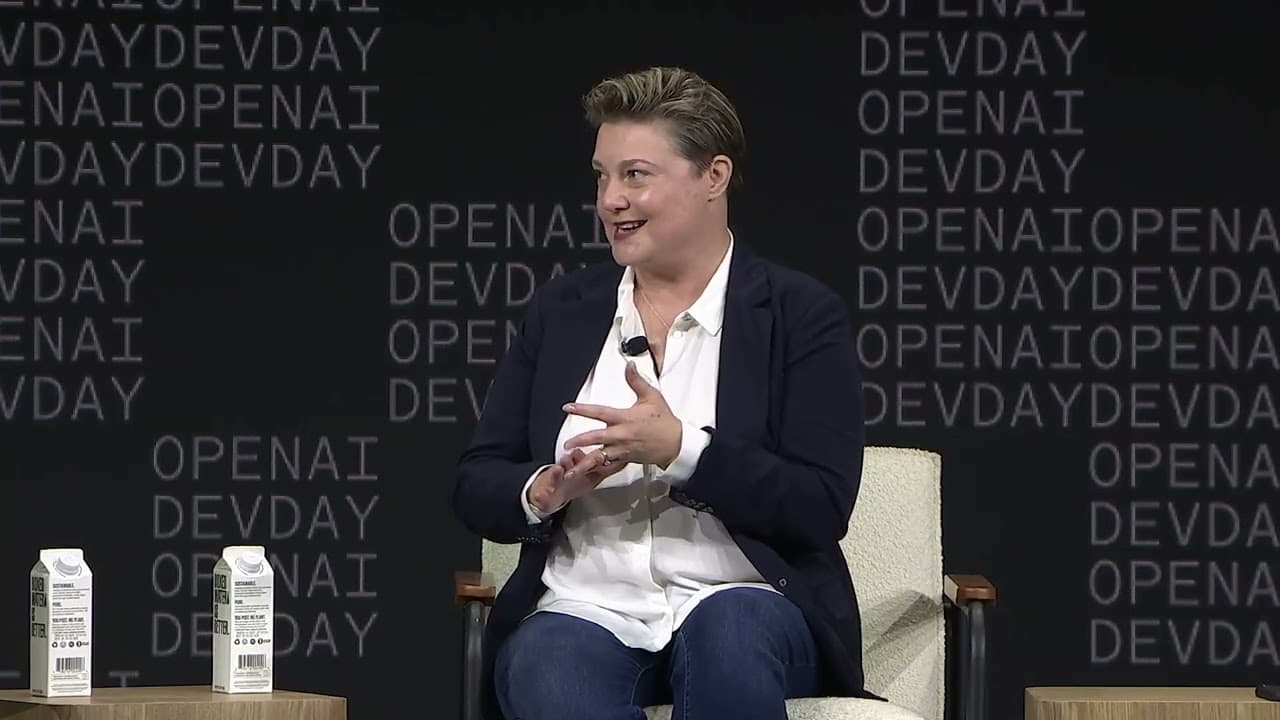
[music] All right. Hello everyone. My name is Aliisa Rosenthal. I'm the head of sales here at OpenAI. Which means I have the privilege of working with our customers and partners every day all day to help them figure out how to integrate AI into their products for their end users and within their own organizations. I have a few esteemed customers jo... Read More
Key Insights
- 🤝 The business of AI is about integrating AI outside of coding, focusing on customer management, experience, pricing, and go-to-market strategies.
- 💡 Building a product with AI requires figuring out the final mile, alignment across the organization, and accounting for potential gaps in the product's capabilities.
- 💻 AI products should integrate seamlessly into workflows, providing value and enhancing productivity, while also maintaining a strong focus on user experience.
- 🔍 Developing AI ethically and responsibly requires ongoing evaluation, staying abreast of research, and ensuring that trust is at the core of AI development.
- 💲 Pricing AI products involves considering trade-offs, such as the value it brings to customers, the cost of the AI technology, and experimentation with different pricing models.
- 💬 Chatbots are popular, but there is a need for more innovative AI user experiences beyond text-based interfaces, focusing on ease of use and integration into existing workflows. ⏰ Time to value and sustained adoption are important metrics for measuring the success of AI products, as they indicate how quickly users derive value and continue to use the product.
- ⚡️ The future of AI product development lies in responsibly integrating AI into all aspects of business, anticipating and leading changes in collaboration and creativity workflows, and embracing the acceleration of research and advancements in the field.
Install to Summarize YouTube Videos and Get Transcripts
Explore YouTube Video Summarizer or Get YouTube Transcript Extractor
Questions & Answers
Q: What are some of the challenges specific to building AI products compared to traditional software development?
Building AI products presents challenges such as determining the final stage, managing non-deterministic processes, and aligning AI with customer workflows and expectations. Unlike traditional software development, AI products require ongoing evaluation and adaptation throughout the development process.
Q: How do the panelists prioritize ethics and responsible AI practices in their organizations?
The panelists emphasize the importance of responsible AI development and integration. They prioritize accuracy, safety, user empowerment, and sustainability in their AI initiatives. They also continually evaluate their AI models and seek customer feedback to ensure trust and ethical use of AI.
Q: How do the panelists approach pricing AI products?
The panelists consider factors such as the cost of AI models and the value they bring to customers when determining pricing. They also experiment with different pricing strategies and adjust them based on customer feedback and the evolving value proposition of their products.
Q: How are the panelists using AI internally to enhance their own job roles?
The panelists use AI tools like code interpreters and chatbots to improve their productivity and creativity in their roles. They leverage AI technologies to streamline internal processes and accelerate tasks, ultimately benefiting their organizations and customers.
Q: What metrics do the panelists use to measure the success of their AI products or initiatives?
The panelists emphasize the importance of sustained adoption and user feedback as key metrics for measuring the success of their AI products. They value users' time and experience, aiming to provide efficient and valuable solutions that meet customer needs and expectations.
Q: What are the panelists' final thoughts on the future of AI product development?
The panelists highlight the exponential growth and acceleration of AI research and development. They stress the need for organizations to start building and experimenting with AI now to stay ahead of the curve. They also emphasize the importance of responsible integration, aligning AI with customer workflows, and continuously improving AI models to deliver enduring, successful AI products.
Summary & Key Takeaways
-
The panelists discuss the challenges of building AI products, including the difficulty of reaching the final stage and the non-deterministic nature of AI development.
-
They emphasize the importance of integrating AI in a way that aligns with the customer's workflow and adds value without sacrificing the user experience.
-
The panelists also highlight the need to prioritize trust, ethics, and responsible AI practices and the constant evaluation and improvement of AI models to ensure accuracy and safety.
Read in Other Languages (beta)
Share This Summary 📚
Summarize YouTube Videos and Get Video Transcripts with 1-Click
Try YouTube Summary with ChatGPT & Claude or YouTube Transcript Generator
Explore More Summaries from OpenAI 📚






Summarize YouTube Videos and Get Video Transcripts with 1-Click
Try YouTube Summary with ChatGPT & Claude or YouTube Transcript Generator