How Did Mormon Settlers Build Early Utah?
TL;DR
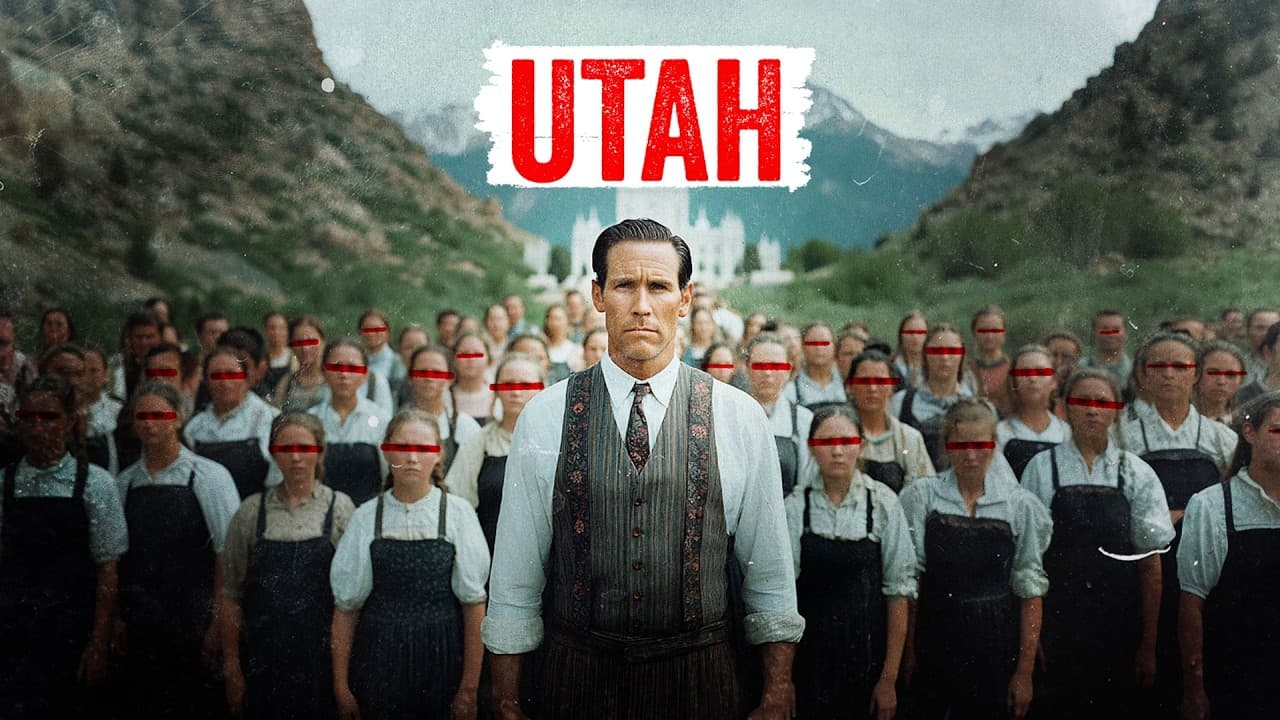
Mormon settlers built communities in the Mountain West quickly through centralized leadership, coordinated labor, irrigation, communal resource sharing, and a shared religious vision of Zion. After the United States acquired the region from Mexico in 1848, their increasingly theocratic society and enormous proposed State of Deseret created growing tension with the federal government.
Transcript
(intense dramatic music) - It started with the murder of their prophet in Illinois. Joseph Smith, leader of 26,000 Mormons, father to 14 children, husband to 40 wives. The prophet, seer, and revelator was dead, and the Mormons were under attack. So they fled. They found safety in the mountains of Mexico where they would go on to build their own uto... Read More
Key Insights
- Joseph Smith's murder in Illinois left 26,000 followers without their founding prophet and intensified the community's insecurity. The Mormons responded by fleeing roughly 1,000 miles to remote mountains that were then part of Mexico, where they hoped to practice their religion beyond American government control.
- Zion was designed as both a spiritual ideal and a physical settlement pattern. Mormon builders followed plans associated with Joseph Smith, placing a temple at the center of a carefully ordered grid and reproducing that model as Brigham Young directed members to establish additional communities.
- The beehive represented coordinated labor, discipline, and commitment to a shared objective. The settlers connected this symbol to Deseret, identified in Mormon scripture as an ancient word for honeybee, and later used Deseret as the name of their proposed state.
- Mormon settlement depended on infrastructure suited to arid land. Community members built ditches, canals, and reservoirs to support agriculture, while also mining metals and developing industries. Their willingness to share surpluses reflected an aspiration to eliminate poverty and place the community above the individual.
- Expansion across the Mountain West displaced Native people in many cases. Some encounters involved treaties and peaceful arrangements, while others involved violence, making Indigenous displacement an essential part of the settlement story alongside the pioneers' celebrated productivity and cooperation.
- European missionary work helped the Mormon population grow, especially along England's west coast and in Wales. Members in Salt Lake pooled money to help converts cross the ocean and continent, linking missionary success, migration, settlement, and multigenerational stories of religious sacrifice.
- The Mormon community increasingly resembled a theocratic society because Brigham Young served as both prophet and governmental leader. The church directed construction and economic activity while the settlements developed schools, newspapers, currency, factories, distinctive symbols, and even the Deseret Alphabet.
- The proposed State of Deseret was far larger than modern Utah. Its claimed borders included parts of modern Arizona, California, Colorado, Idaho, New Mexico, Oregon, Wyoming, and Utah, but the federal government rejected the proposal as it expanded control over its newly acquired western territory.
Install to Summarize YouTube Videos and Get Transcripts
Explore YouTube Video Summarizer or Get YouTube Transcript Extractor
Questions & Answers
Q: Why did Mormon pioneers migrate to the Mountain West?
Mormon pioneers migrated after Joseph Smith was murdered in Illinois and their community came under attack. They made a grueling journey of roughly 1,000 miles into remote mountains that were then part of Mexico. Their goal was to escape persecution and build Zion, a religious society where they believed they could practice freely, follow prophetic leadership, and prepare for the Second Coming of Jesus Christ.
Q: How did Mormon settlers build communities so quickly?
Mormon settlers built rapidly through centralized direction, coordinated labor, religious motivation, and a strong commitment to communal welfare. They followed a repeatable city plan, placed temples at settlement centers, and constructed irrigation works needed for farming arid land. They also mined metals, built mills and factories, and shared surplus resources, allowing their network of communities to expand north and south from Salt Lake.
Q: What did Zion mean to early Mormon settlers?
Zion was both a promised religious society and a practical model for organizing community life. Settlers sought to become a people of one heart and one mind, with no poor among them and communal needs taking priority over individual interests. Physically, they expressed the ideal through planned settlements built on grids, usually with a holy temple occupying the central position.
Q: Why did Mormons use the beehive and Deseret as symbols?
The beehive symbolized an industrious community whose members cooperated toward a common goal. Mormon settlers saw themselves as disciplined workers building Zion through obedience, sacrifice, and collective effort. According to the account, the Book of Mormon identifies Deseret as an ancient word for honeybee. The community therefore adopted Deseret as a foundational symbol and as the name of its proposed state.
Q: How did Mormon settlement affect Native people?
The expanding network of Mormon settlements displaced Native people in many cases. Brigham Young sent church members north and south to establish communities, develop land, and repeat the same planned settlement pattern. The resulting encounters were not uniform. Some displacement and territorial arrangements occurred through treaties and peaceful dealings, while other encounters involved violence. The account presents this displacement as part of western development.
Q: How did European converts contribute to Mormon Utah?
Missionaries, particularly those working in England and Wales, persuaded European converts to join the effort to build Zion in the American West. Mormon members in Salt Lake pooled money to help pay for converts' travel across the ocean and continent. After difficult migrations, these families joined existing settlements and contributed labor, while their sacrifices became foundational stories within Mormon faith and pioneer heritage.
Q: What was the proposed State of Deseret?
The State of Deseret was an enormous state proposed by Mormon leaders after their settlements came under United States authority. Its claimed territory included parts of modern Arizona, Southern California, Colorado, Idaho, New Mexico, Oregon, Wyoming, and Utah. Church leaders drafted a constitution and lobbied for approval, hoping to preserve religious autonomy, but the federal government rejected the proposal.
Q: Why did tensions grow between the Mormons and the United States?
Tensions grew because the United States acquired the region from Mexico in 1848 and gradually exerted more authority in the West. The Mormon settlements had developed a complex, church-directed economy and government under prophetic leadership, making the society appear increasingly theocratic and independent. Their attempt to secure the vast State of Deseret intensified federal concerns, even though officials valued their effectiveness in settling western land.
Summary & Key Takeaways
-
After Joseph Smith was murdered in Illinois, Mormon pioneers traveled roughly 1,000 miles to the remote mountains of Mexico. Under Brigham Young, they sought refuge from persecution and began constructing Zion, a religious society inspired by Smith's plans and organized around temples, orderly settlement grids, communal sacrifice, and obedience.
-
The settlers expanded north and south from Salt Lake, constructing towns, irrigation systems, reservoirs, mines, mills, and factories. Their coordinated work transformed arid territory while sometimes displacing Native people through treaties or violence. Missionary success in Europe also brought converts whose journeys and sacrifices became central to Mormon pioneer identity.
-
When the United States acquired the region from Mexico in 1848, the Mormon settlement network fell under federal authority. Church leaders proposed the enormous State of Deseret, covering all or part of several modern states. The federal government rejected it, partly amid concerns about an independent theocratic society led by a prophet.
Read in Other Languages (beta)
Share This Summary 📚
Summarize YouTube Videos and Get Video Transcripts with 1-Click
Try YouTube Summary with ChatGPT & Claude or YouTube Transcript Generator
Explore More Summaries from Johnny Harris 📚





Summarize YouTube Videos and Get Video Transcripts with 1-Click
Try YouTube Summary with ChatGPT & Claude or YouTube Transcript Generator