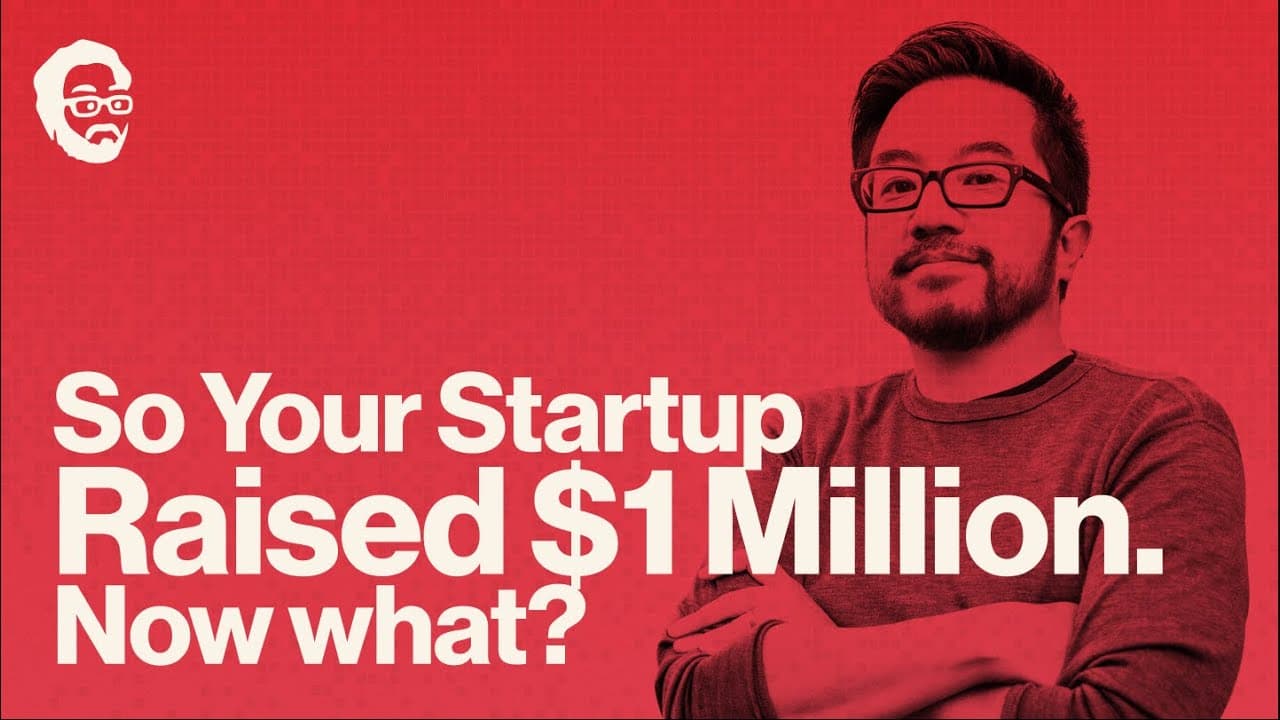
Startup Next Steps after Raising Your First Million | from a Forbes Top 100 VC | Office Hours Ep. 2
TL;DR
After raising startup funding, founders should treat every dollar as an investment, build a 24-month operating plan, and prioritize retention before pursuing faster growth. The plan should track monthly revenue, costs, and cash while working backward from the next funding milestone; for many companies, the growth benchmark discussed is at least 3X per year. Read on for specific spending tests, planning steps, and responses to setbacks.
Transcript
so you just raised 10 million dollars and the series a just hit your bank account what do you do from there founders sometimes do stupid things like run out and buy a dozen cars with it come on haven't you heard of a lease or they'll raise everyone's salary to 200 000 a year no matter who it is and what they do for the team those companies died if ... Read More
Key Insights
- 🤨 Raising funds is just the starting point for founders; they need to have a clear plan for maximizing the impact of the funds.
- ⚾ Every expenditure should be justified based on its potential return on investment and contribution to the company's growth.
- 🤩 Retention should be a top priority, as customer satisfaction and engagement are key indicators of product-market fit.
- 👨💼 Building a sustainable business requires a focus on profitability and becoming cash flow positive.
- ❓ Founders should be prepared to make tough decisions, such as layoffs or pivoting, to ensure the survival and success of their startup.
- 🌱 Planning for potential setbacks or a stall in growth is essential; founders should have contingencies in place to handle unexpected challenges.
- 👨💼 Regularly updating the operating plan and using it as a barometer of the business's progress can help identify issues and make informed decisions.
Install to Summarize YouTube Videos and Get Transcripts
Explore YouTube Video Summarizer or Get YouTube Transcript Extractor
Questions & Answers
Q: What should founders do after raising their first million?
Founders should adopt an investment mindset, make an operating plan, focus on retention before growth, and prepare for setbacks. Raising money is the starting point; the goal is to use the capital to reach meaningful milestones such as more customers or revenue.
Q: How should founders decide whether to spend raised funds?
For every dollar, founders should ask how and when it will come back to the company. A cost should have a credible business case tied to outcomes such as increased sales, stronger hiring, or better customer conversion.
Q: What should a startup operating plan include?
The operating plan should break down revenue, costs, and the company’s bank balance for every month over the next 24 months. Founders should list required hires, roles, headcount, and expected average salaries while ensuring the available capital can fund the path to the next goal.
Q: How should founders plan for their next funding round?
They should define what reaching the next stage requires and work backward from that milestone. The plan should identify how much growth is needed and whether monthly revenue, costs, and cash support the journey to the next round.
Q: How fast should a venture-backed startup grow?
The transcript says companies need to grow at least 3X per year, which is about 10% per month. It also describes the SaaS path associated with Neeraj Agrawal of Battery Ventures: triple, triple, double, double, double over five years after reaching $1 million in net revenue.
Q: Why should founders focus on net revenue rather than GMV?
Net revenue is the money the company can use to pay salaries and offset expenses. The transcript distinguishes it from GMV and uses net revenue when discussing growth and venture-capital milestones.
Q: Should founders prioritize retention or growth after raising money?
They should prioritize retention before growth. Customer satisfaction and continued engagement indicate whether the business has product-market fit, while acquiring more customers is not sustainable if existing customers do not stay.
Q: What should founders do if growth stalls or plans fail?
Founders should consider becoming cash-flow positive, reducing expenses through layoffs, slowing growth to conserve resources, or pivoting. They should use the operating plan as a barometer, update it regularly, and make difficult decisions early enough to protect the company’s survival.
Summary
In this video, the speaker discusses what founders should do when they receive funding for their startup. The main points covered are getting the right mindset, creating a plan, focusing on retention before growth, and navigating through unexpected challenges.
Questions & Answers
Q: Why is it important for founders to have the right mindset when they receive funding?
When founders receive funding, it is crucial for them to remember that the money belongs to the company, not to them personally. They must act as good stewards of the investment and make decisions that will generate more money for the company. It is their fiduciary duty to further the interests of the company.
Q: What should founders consider before spending the funding on extravagant purchases?
Instead of splurging on cars or increasing salaries drastically, founders should consider whether each expense will generate a return on investment. Every dollar spent should be analyzed to determine how it will come back to the company and when. This mindset ensures that the funding is used wisely and effectively.
Q: How can founders make a plan to utilize the funding effectively?
It is essential to create an operating plan that breaks down revenue, costs, and the company's financial situation for the next 24 months. This plan serves as a to-do list with financial information attached to it. It helps founders think through hiring needs, office space, and revenue streams. The plan should be treated as a living document and updated regularly as circumstances change.
Q: How can founders determine the right amount of growth to focus on?
For most companies, a minimum of 3x revenue growth per year is necessary to succeed. This rate of growth ensures that the company can reach significant milestones and potentially go public. Founders can learn from successful software-as-a-service (SaaS) companies' paths, where growth was a key factor in their success.
Q: Why is retention important in the early stages of a startup?
Retention measures how many customers stick with the company over time. Good retention indicates that the product or service is satisfying the customers' needs. Before focusing on growth, it is crucial to ensure that there is a solid base of retained customers. Without retention, the company is like a leaky bucket, unable to sustainably grow.
Q: How can founders determine their retention rates?
User retention, which measures how many customers are still using the product after a certain period, can be calculated based on historical data. By analyzing the retention rate over time, founders can estimate future retention rates. Net revenue retention, which measures how much revenue is retained over 12 months, is critical for enterprise companies with high customer acquisition costs.
Q: Should founders prioritize growth or retention?
It is recommended to prioritize retention over growth. If customers are not retained, pouring more customers into the top of the funnel becomes futile. Retention shows that the product or service is working and satisfying customers' needs. Once retention is established, growth can be pursued with a solid foundation.
Q: What should founders do if growth stalls or they face unexpected challenges?
If growth stalls or challenges arise, founders should first aim to become default alive, which means making money and surviving without raising more funding. If that is not feasible, they might need to slow down, make cutbacks, and create a plan to become default alive. Exploring a pivot, seeking an extension of the last funding round, or talking to investors about the situation are other potential solutions.
Q: Why is it important to consider options and pivot if necessary?
Not everything goes according to plan in startup journeys. If founders encounter challenges or if their original idea or market proves unworkable, pivoting may be necessary. It may involve changing the product or target market. Considering options and being open to pivoting can help founders find a viable path forward.
Q: What is the main takeaway from this video?
The main takeaway is that founders should approach funding as an opportunity to grow and build their startup into a successful business. By having the right mindset, creating a plan, focusing on retention, and navigating challenges effectively, founders can maximize the impact of the funding they receive. It is vital to invest the money wisely and aim for long-term sustainability.
Summary & Key Takeaways
-
To effectively utilize raised funds, founders need to shift their mindset towards being good stewards of the money and investing it in initiatives that generate more revenue.
-
Founders should create an operating plan that includes a breakdown of costs, revenue streams, and financial projections for the next 24 months.
-
Prioritizing retention over growth is essential to build a sustainable business, as customer satisfaction and long-term engagement are indicators of product-market fit.
-
In case of setbacks or a stall in growth, founders should explore options like becoming cash flow positive, implementing layoffs, or even considering a pivot to ensure the survival and success of the business.
Read in Other Languages (beta)
Share This Summary 📚
Summarize YouTube Videos and Get Video Transcripts with 1-Click
Try YouTube Summary with ChatGPT & Claude or YouTube Transcript Generator
Explore More Summaries from Garry Tan 📚





Summarize YouTube Videos and Get Video Transcripts with 1-Click
Try YouTube Summary with ChatGPT & Claude or YouTube Transcript Generator