How does a weak payroll report affect unemployment rates
TL;DR
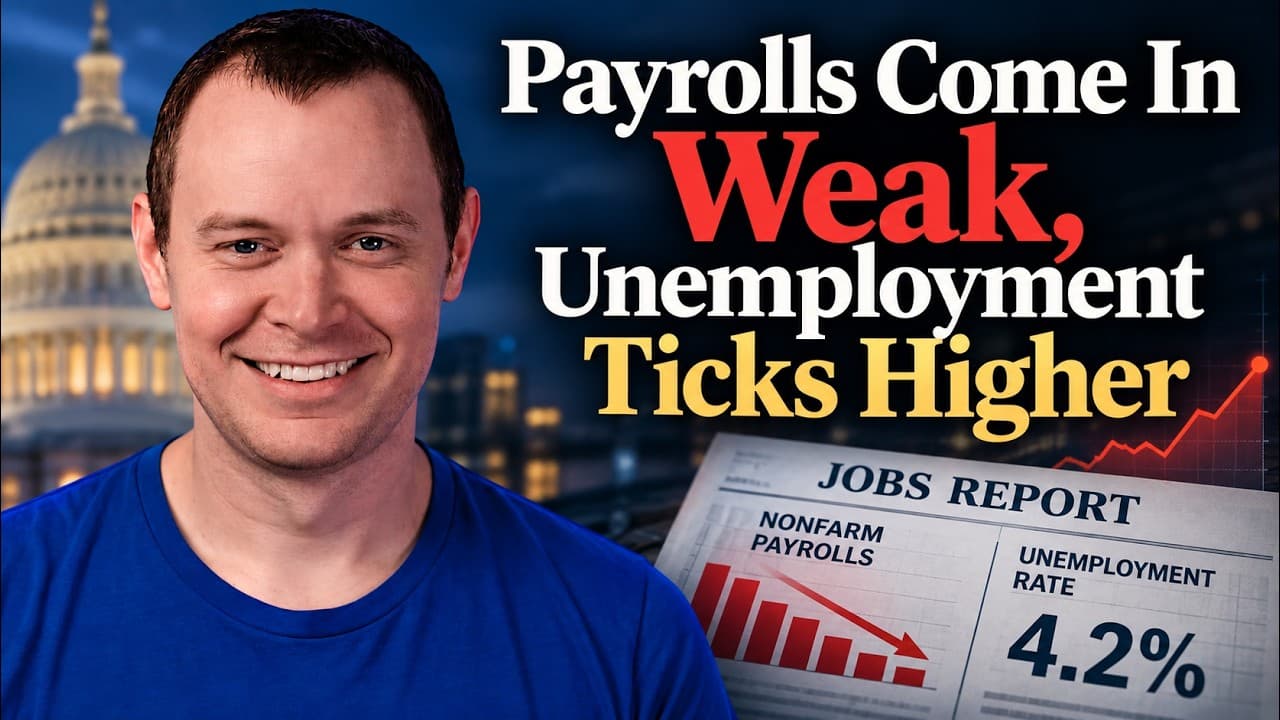
Unemployment rose slightly mainly due to more people entering the labor force and higher participation, not because of mass layoffs. Hiring remains weak while job openings stay soft, and youth unemployment is notably higher, signaling a split in labor market conditions across age groups. The market reacts to the mix of soft payrolls and ongoing inflation concerns.
Transcript
Hey everyone and thanks for jumping back into the macroverse. Today we're going to talk about the most recent labor market report and we're going to go through uh what that looks like. We'll also talk a little bit about yields uh and a few other things. If you guys like the content, make sure you subscribe to the channel, give the video a thumbs up... Read More
Key Insights
- Unemployment rate rose to 4.2 percent due to higher labor force participation rather than mass layoffs.
- Hires and total non-farm payrolls came in far below expectations, signaling weaker hiring momentum.
- Labor force participation rate increased from 61.4 to 61.8, lifting unemployment despite limited job growth.
- New entrants to the labor force rose from 702,000 to 818,000, reaching highs not seen in over a year.
- 16 to 19 year olds saw unemployment rise, illustrating youth labor market weakness.
- 20 to 24 year olds remained affected as unemployment stayed elevated around 8 percent.
- 25 to 54 year olds showed relatively stable unemployment around 3.6 percent.
- Credit spreads widened while long-term yields rose, signaling rising perceived risk despite stock market strength.
Install to Summarize YouTube Videos and Get Transcripts
Explore YouTube Video Summarizer or Get YouTube Transcript Extractor
Questions & Answers
Q: What caused the unemployment rate to rise even though layoffs decreased?
The unemployment rate increased primarily because more people entered the labor force and participation rose. While layoffs and discharges were down, and overall job losers fell, the larger pool of participants seeking work pushed the rate higher. This reflects a shift in who is seeking employment rather than a surge in job losses, signaling a more competitive job market for newcomers.
Q: How did labor force participation change and what effect did it have?
Labor force participation rose from 61.4 percent to 61.8 percent, reversing a previous downtrend. This larger participation rate contributed to the higher unemployment rate because more people actively looked for work, increasing the denominator used to calculate unemployment. It indicates a broader engagement in the job market rather than an improvement in hiring alone.
Q: What does the payrolls number tell us about hiring momentum?
Total non-farm payrolls came in at 29,000, well below consensus estimates, indicating weak hiring momentum despite other mixed signals. This softness suggests that employers remained cautious, and economic growth may be insufficient to sustain robust job creation, which can influence future wage pressures and inflation dynamics.
Q: Why is youth unemployment a critical takeaway from this report?
Youth unemployment, especially for ages 16-19, rose notably, highlighting a weak start for younger entrants into the labor force. This matters because it signals vulnerability for new graduates and students trying to enter the job market, potentially affecting long-term earnings trajectories and the overall supply of experienced workers.
Q: How do these data points relate to inflation expectations and yields?
Even with softer payrolls, yields rose and credit spreads widened, suggesting traders remain concerned about inflation risks. The mixed signals indicate that the market expects persistent inflation pressures and central bank policy adjustments, which can impact borrowing costs, credit risk assessments, and intermarket dynamics between equities and fixed income.
Q: What does the report imply about different age cohorts in the labor market?
The report shows a split in labor market health by age group: unemployment is higher for younger workers, while those aged 25 to 54 show relatively stable unemployment around a low level. This suggests that the macro environment is uneven, benefiting some cohorts while challenging others, particularly new entrants to the labor force.
Q: How should investors interpret the soft payroll data in the context of a high stock market?
Investors should view soft payrolls as a signal of slower hiring momentum amid ongoing inflation concerns, rather than a guaranteed downturn. The stock market can remain resilient near highs due to other supportive factors, but continued weakness in payroll growth may eventually pressure earnings and valuations if inflation persists or if rates rise further.
Q: What long-term trends should watchers monitor after this report?
Watch for the labor force participation trend, especially among younger workers, as it can determine future unemployment rates even when job growth improves. Additionally, monitor wage growth, inflation pressures, and central bank policy signals, since these factors will shape credit spreads, yields, and overall economic trajectory in the coming months.
Summary & Key Takeaways
-
The unemployment rate rose to 4.2 percent driven by higher labor force participation rather than a surge in layoffs. Hiring remains weak and job openings have stayed relatively soft, indicating a cautious labor market. Youth unemployment is disproportionately higher, underscoring a split in market conditions by age.
-
Total non-farm payrolls came in at 29,000, well below consensus expectations, signaling softness in new hiring despite a robust stock market environment. The data suggests that while some cohorts struggle to find work, others continue to perform, affecting overall unemployment dynamics.
-
Credit spreads widened as yields rose, yet the stock market stayed near all-time highs, highlighting a disconnect between credit risk and equity performance amid mixed macro signals.
Read in Other Languages (beta)
Share This Summary 📚
Summarize YouTube Videos and Get Video Transcripts with 1-Click
Try YouTube Summary with ChatGPT & Claude or YouTube Transcript Generator
Explore More Summaries from Benjamin Cowen 📚





Summarize YouTube Videos and Get Video Transcripts with 1-Click
Try YouTube Summary with ChatGPT & Claude or YouTube Transcript Generator