How Could a US Shutdown Affect Bitcoin in 2025?
TL;DR
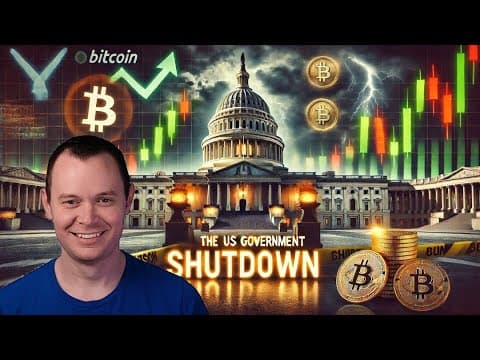
A prolonged US government shutdown can pressure markets by reducing economic activity, delaying official data, disrupting travel, and increasing uncertainty. Reopening could restore liquidity and improve market conditions, but Bitcoin investors still face major risks from an uncertain December rate decision, rising inflation concerns, and the possibility that expected policy easing does not occur.
Transcript
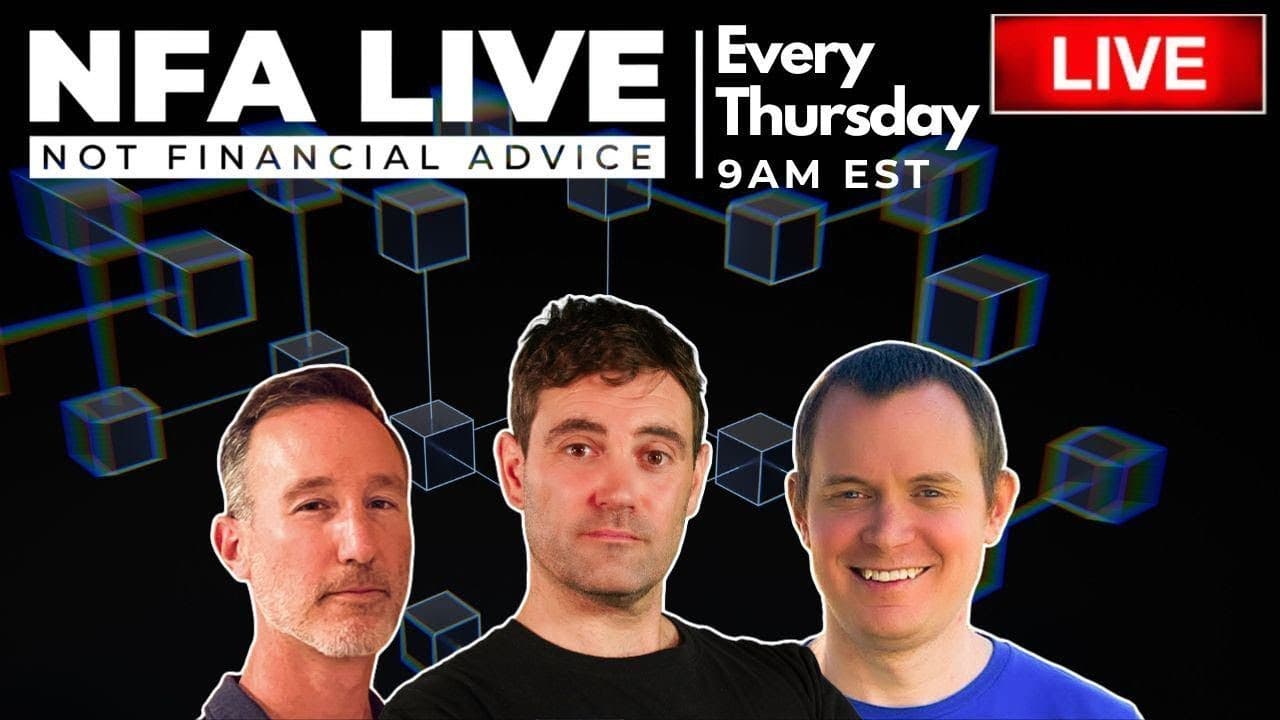
Hey everyone and thanks for jumping back into the cryptoverse. Here we are with NFA Live. I know we're at a very abnormal time. Uh but we split the difference between Freedom Freedom Time and those that are not on Freedom Time. So uh thanks for being here, Guy. How's it going? All right. Thanks, Ben. Yes, once I realized uh that Freedom Time was in... Read More
Key Insights
- The US government shutdown is affecting markets by reducing services, interrupting pay for federal employees, restricting air travel, and creating uncertainty that discourages investors from making large commitments.
- Reduced air travel can weaken economic activity because fewer flights mean less consumer spending and less business activity. Operational delays also arise when essential employees, including air traffic controllers, must continue working without normal pay.
- Missing government data makes monetary policy decisions more difficult because the Federal Reserve lacks the usual inflation, labor market, and GDP updates. The Atlanta Fed estimate cited in the discussion placed real third-quarter GDP growth at 4%.
- Market uncertainty is discouraging heavier investment because investors generally dislike ambiguity and unknown outcomes. At the same time, activity on prediction platforms remains strong, suggesting that speculative behavior continues even while broader positioning becomes more cautious.
- Government reopening could support markets by releasing delayed liquidity and restarting suspended economic and administrative activity. The speakers frame this as a conditional possibility based on the assumption that the shutdown has been suppressing crypto and other markets.
- A December rate cut is not guaranteed because Powell explicitly pushed back against the market's automatic expectation of further easing. The cited FedWatch probability rose from 62% earlier in the day, but expectations do not determine the FOMC's decision.
- Powell may prefer a cautious policy stance because inflation had ticked higher despite meeting expectations. His term as Fed chair ends in May 2026, and the speakers believe he may want to preserve his legacy as an inflation fighter.
- A Bank of Japan rate increase could create another challenge for crypto investors if it occurs in December. The discussion presents a delay until 2026 as preferable for market conditions, although no specific decision or schedule is confirmed.
Install to Summarize YouTube Videos and Get Transcripts
Explore YouTube Video Summarizer or Get YouTube Transcript Extractor
Questions & Answers
Q: How does a US government shutdown affect Bitcoin markets?
A US government shutdown can affect Bitcoin indirectly by reducing economic activity, delaying official data, interrupting government services, and increasing uncertainty. The speakers argue that investors dislike unknown conditions and may avoid taking large market positions. Crypto-specific effects can also include delayed SEC work, such as progress on potential spot altcoin ETF approvals.
Q: Why does delayed government data matter to the Federal Reserve?
Delayed government data deprives the Federal Reserve of timely inflation, labor market, and GDP information that would normally inform forecasts and interest-rate decisions. Without those updates, policymakers must choose whether to act with incomplete evidence or remain cautious. The discussion suggests that this uncertainty makes the December rate decision unusually difficult to anticipate.
Q: Will the Federal Reserve cut interest rates in December?
A December rate cut remains uncertain. Prediction markets and the cited FedWatch tool continued to favor a cut, with the displayed probability rising after standing at 62% earlier that day. However, Powell had pushed back against assuming a cut automatically, and disagreement within the FOMC could support holding rates steady until better data becomes available.
Q: What could happen if the Federal Reserve does not cut rates?
If the Federal Reserve holds rates steady after investors have priced in a cut, the speakers expect markets could react negatively and experience a significant decline on the announcement day. The risk comes from the gap between expectations and policy. They therefore suggest that listeners consider the possibility of no cut when planning their market exposure.
Q: Why might Powell oppose another interest-rate cut?
Powell might oppose another cut because inflation had ticked higher, even though the reported figure met expectations, and because incomplete data makes additional easing harder to justify. The speakers also suggest that his approaching departure as Fed chair in May 2026 may encourage him to protect his legacy by avoiding policies that could let inflation accelerate.
Q: Could reopening the government help Bitcoin and other markets?
Reopening could help markets if the shutdown has been restricting liquidity, delaying government activity, and suppressing confidence. The speakers expect resumed services, data publication, legislation, and agency work to improve conditions and potentially restart market momentum. They present this as a reasonable possibility rather than a guaranteed Bitcoin rally, since other monetary risks would remain.
Q: How is the shutdown affecting air travel and the economy?
The shutdown is contributing to flight reductions and delays because aviation depends on federal workers such as air traffic controllers. One participant reported delays while flying from Puerto Rico to Texas and advised allowing 50% more travel time. Fewer flights can also reduce spending and business activity, extending the disruption beyond airports into the broader economy.
Q: Why is a Bank of Japan rate increase a risk for crypto?
The speakers identify a possible Bank of Japan rate increase as an additional source of market risk, particularly if it occurs in December alongside uncertainty about Federal Reserve policy. They do not claim that an increase is confirmed. Instead, they express hope that any move will be delayed until 2026 to avoid an especially difficult period for crypto investors.
Summary & Key Takeaways
-
The discussion links the record US government shutdown to weaker economic activity, unpaid federal workers, reduced government services, air travel disruptions, and delayed legislation. Crypto markets may also feel the effects because uncertainty discourages investment and reduced SEC activity delays potential spot altcoin ETF approvals during already difficult market conditions.
-
Missing inflation, labor, and GDP updates complicate the Federal Reserve's December decision. Powell pushed back against assuming another rate cut, while prediction markets still favored one. The speakers argue that cutting could worsen inflation, but holding rates steady could trigger a sharp market reaction if investors have already priced in easing.
-
The speakers see reopening the government as a possible positive catalyst because delayed activity and liquidity could return to markets. They also identify a potential Bank of Japan rate increase as another risk. Powell's approaching May 2026 end as Fed chair may encourage him to protect his inflation-fighting legacy by favoring caution.
-
Key Insights
Read in Other Languages (beta)
Share This Summary 📚
Summarize YouTube Videos and Get Video Transcripts with 1-Click
Try YouTube Summary with ChatGPT & Claude or YouTube Transcript Generator
Explore More Summaries from Benjamin Cowen 📚




Summarize YouTube Videos and Get Video Transcripts with 1-Click
Try YouTube Summary with ChatGPT & Claude or YouTube Transcript Generator