How Can a Scientist’s 2025 Data-Tracking Blueprint Improve Health and Sports Performance?
TL;DR
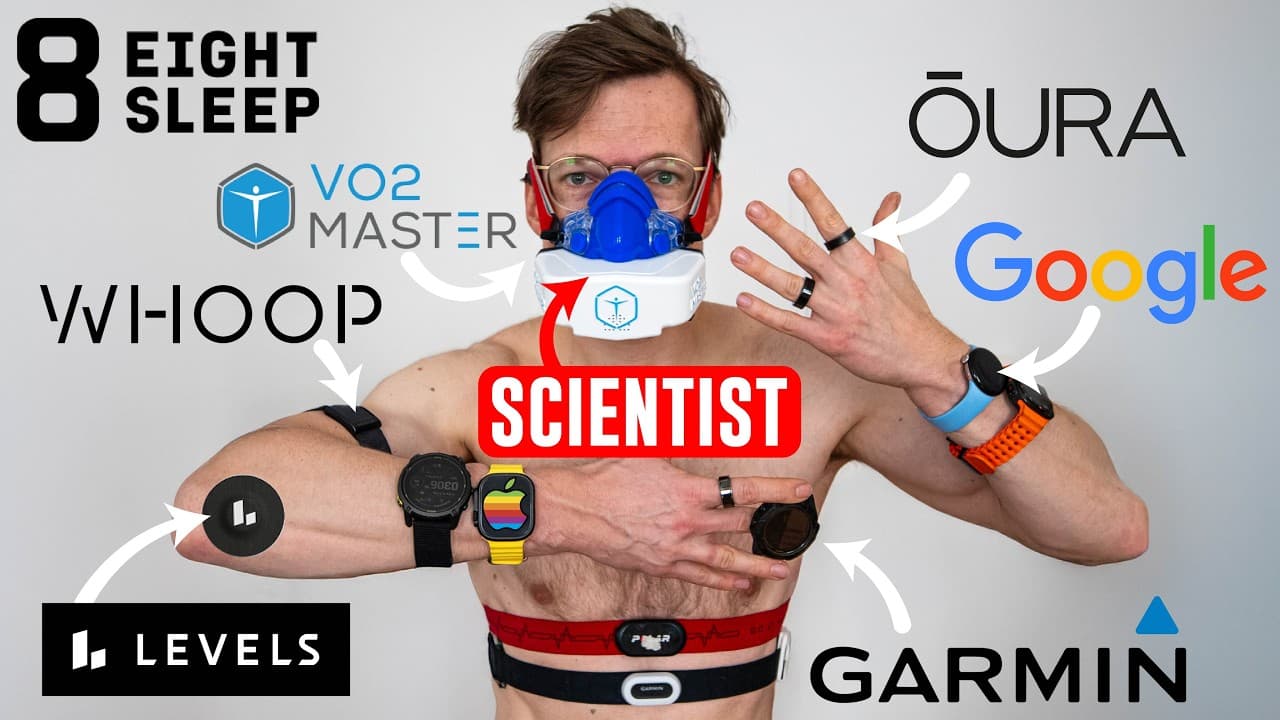
Improve health and sports performance by setting measurable goals, tracking relevant data, and adjusting your routine with tools suited to each goal. The scientist’s 2025 blueprint targets a VO2 max of 60–63 or higher, a body weight of 73 kg without increasing body fat, a 6:30 a.m. wake time, steadier energy, and a first half-marathon. Read on to see how each goal is measured and supported.
Transcript
I don't know about you but there are a few things I'd like to improve about my health and sports abilities in 2025 oh let's get this off that's better like I said I want to work on my health and sports abilities in 2025 and because I've been testing health and sports devices on this channel for several years I'm in the fortunate position that I own... Read More
Key Insights
- SMART goals are essential for achieving health and fitness objectives systematically.
- VO2 max is a key indicator of aerobic fitness and can be tracked using devices like the VO2 Master Analyzer.
- Gaining muscle requires consistent gym workouts and adequate protein intake, which can be tracked using nutrition apps.
- Continuous glucose monitors (CGMs) help maintain stable energy levels by tracking blood glucose variations.
- Sleep quality can be improved by monitoring with devices like the Oura Ring and Whoop Strap, aiming for an optimal sleep score.
- Running goals, such as a half-marathon, can be achieved through structured training programs using apps like Runna.
- Heart rate tracking is crucial for optimizing workout intensity, with chest straps providing the most reliable data.
- Using data from health devices allows for personalized adjustments and better long-term health outcomes.
Install to Summarize YouTube Videos and Get Transcripts
Explore YouTube Video Summarizer or Get YouTube Transcript Extractor
Questions & Answers
Q: How can data be used to improve health and sports performance?
Start with specific, measurable goals and select devices or apps that track the relevant indicators. The speaker combines smartwatches, smart rings, glucose monitors, VO2 max analyzers, heart-rate straps, smart scales, and a smart bed into a personal tracking system.
Q: What health and fitness goals are included in the scientist’s 2025 tracking blueprint?
The five goals are to maintain or improve VO2 max, gain muscle, improve nutrition for steadier energy, wake earlier while sleeping enough, and run a first half-marathon. Each goal is paired with measurements or tools that can show progress over time.
Q: How are SMART goals applied to health tracking?
The blueprint uses a simplified version of SMART goals: specific, measurable, achievable, relevant, and time-bound. This systematic approach turns broad health ambitions into targets such as reaching 73 kg or waking at 6:30 a.m.
Q: What is the VO2 max goal, and how is it measured?
More than 10 summer measurements with the VO2 Master Analyzer placed the speaker’s VO2 max between 60 and 63. The 2025 goal is to remain within that range or improve beyond it.
Q: What is the plan for gaining muscle mass?
The speaker aims to increase average weight from just under 69 kg to 73 kg, a gain of about 4 kg, while keeping body fat stable. The plan centers on completing enough appropriate gym workouts, eating enough, and keeping macros on target.
Q: How will weight and body composition progress be tracked?
The Withings Body Scan is used for frequent weight measurements and body-fat estimates, which were usually just under 8%. Because the speaker is unsure of its absolute accuracy, a DEXA scan is planned, while the scale’s long-term trends are considered sufficient for ongoing tracking.
Q: How does the Levels app support nutrition and energy tracking?
The Levels app is used to track blood glucose while the speaker investigates energy peaks and crashes, especially at work. It also supports food and nutrition logging, including barcode scanning, which makes tracking faster and easier for the speaker.
Q: What are the sleep and running targets for 2025?
The sleep-related target is to shift the usual 7:15 a.m. wake time earlier by about 45 minutes to 6:30 a.m. while still getting enough sleep. The running target is to complete a first half-marathon, which requires investing considerably more time in running.
Summary & Key Takeaways
-
The video outlines a comprehensive plan to enhance health and sports performance in 2025 using data-driven tools. Key goals include maintaining VO2 max, gaining muscle, stabilizing energy levels, improving sleep, and running a half-marathon. Various smart devices and apps are employed to track progress and adjust strategies effectively.
-
Smart devices like watches, rings, and glucose monitors play a crucial role in tracking health metrics. By systematically using these tools, individuals can tailor their fitness plans to meet specific goals, ensuring measurable and achievable progress in health and sports abilities.
-
The speaker emphasizes the importance of a systematic approach to health improvement, using SMART goals and data from various devices to track and enhance fitness. This method allows for personalized adjustments and long-term health benefits, making it easier to achieve fitness objectives.
Read in Other Languages (beta)
Share This Summary 📚
Summarize YouTube Videos and Get Video Transcripts with 1-Click
Try YouTube Summary with ChatGPT & Claude or YouTube Transcript Generator
Explore More Summaries from The Quantified Scientist 📚
Summarize YouTube Videos and Get Video Transcripts with 1-Click
Try YouTube Summary with ChatGPT & Claude or YouTube Transcript Generator