How to Enhance AI with Agents and RAG
TL;DR
Enhancing AI applications involves leveraging agentic workflows and retrieval-augmented generation (RAG) to address limitations of large language models (LLMs). Techniques like prompt engineering, chaining, and using multi-agent systems can optimize AI performance by improving context handling, accuracy, and user interaction. These methods enable AI to perform complex tasks autonomously, integrate external data sources, and improve user experience in practical applications.
Transcript
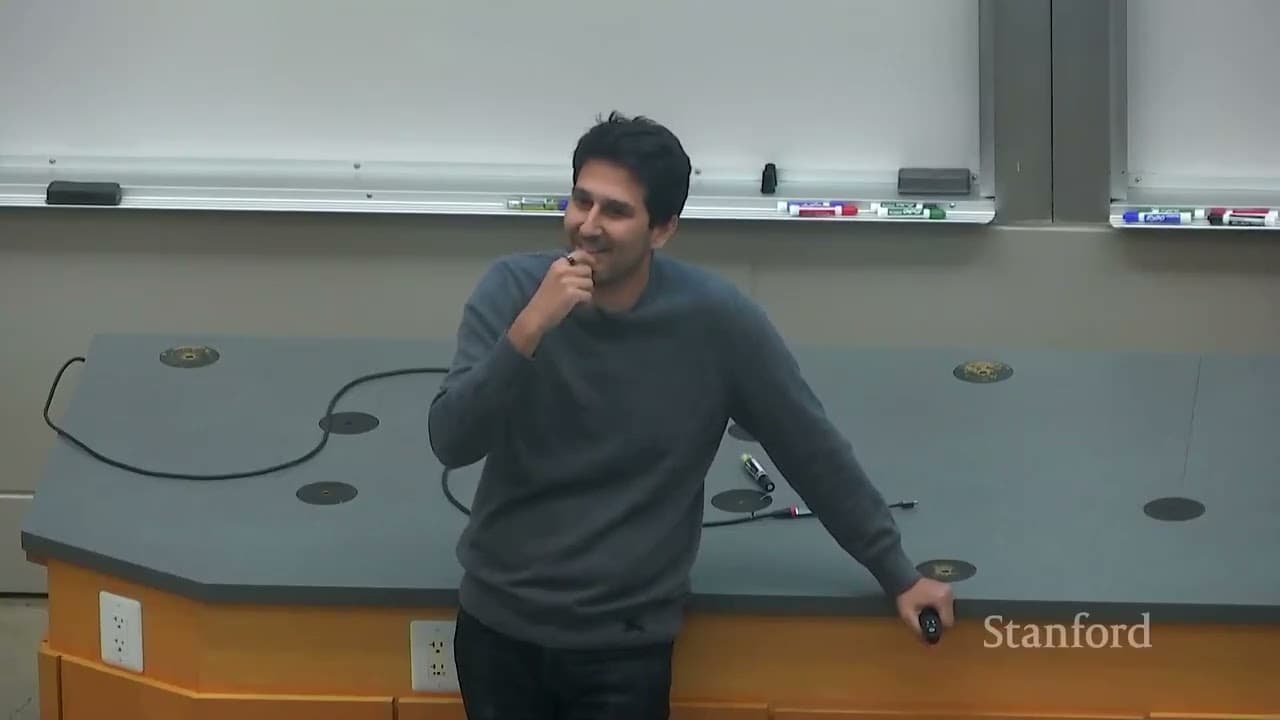
Hi everyone, welcome to another lecture for CS230 deep learning. Today we're going to talk about enhancing large language model applications and I I call this lecture beyond LLM. Um it has a lot of newer content and uh the idea behind this lecture is you we started to learn about neurons and then we learned about layers and then we learned about de... Read More
Key Insights
- LLMs have limitations in context handling, accuracy, and control, which can be addressed with advanced techniques.
- Prompt engineering is crucial for optimizing AI performance, involving methods like chain of thought and few-shot prompting.
- RAG integrates external knowledge sources to improve AI accuracy and ensure up-to-date information.
- Agentic workflows involve multi-step processes using prompts, tools, and memory to achieve complex tasks.
- Fine-tuning LLMs can lead to overfitting and is often resource-intensive, making prompt optimization a preferred approach.
- Multi-agent systems allow parallel processing and can be reused across different applications, enhancing efficiency.
- Testing AI systems involves both quantitative and qualitative evaluations, using end-to-end and component-based metrics.
- Future AI advancements may involve multimodal capabilities and new architectures beyond transformers.
Install to Summarize YouTube Videos and Get Transcripts
Explore YouTube Video Summarizer or Get YouTube Transcript Extractor
Questions & Answers
Q: How to optimize AI performance using agentic workflows?
Optimizing AI performance with agentic workflows involves using multi-step processes that integrate prompts, tools, and memory. These workflows enable AI to perform complex tasks autonomously by retrieving relevant information, interacting with users, and executing actions based on predefined logic. Techniques such as prompt engineering and chaining are used to refine these workflows, ensuring accuracy and efficiency.
Q: What is retrieval-augmented generation (RAG) in AI?
RAG is a technique that integrates external knowledge sources, like databases and documents, into AI systems to improve accuracy and ensure up-to-date information. It involves embedding documents into vector representations, retrieving relevant data based on user queries, and incorporating this information into AI responses. This approach addresses limitations in context handling and knowledge gaps in standalone LLMs.
Q: Why is fine-tuning LLMs not always preferred?
Fine-tuning LLMs can lead to overfitting, where the model loses its general-purpose utility by focusing too narrowly on specific tasks. It is also resource-intensive, requiring substantial labeled data and computational power. Prompt optimization is often preferred as it allows for quick adjustments without modifying model weights, enabling easy updates with newer pre-trained models.
Q: How do multi-agent systems enhance AI applications?
Multi-agent systems enhance AI applications by allowing parallel processing and reusability across different tasks. These systems consist of specialized agents that can operate independently or collaboratively, optimizing efficiency and performance. They are particularly useful for complex workflows where different components can run simultaneously, improving response times and resource use.
Q: What are the key challenges of using LLMs in AI applications?
Key challenges of using LLMs include limitations in context handling, accuracy, and control. LLMs may struggle with large context windows, hallucinations, and lack of up-to-date information. These issues can lead to inaccurate or irrelevant responses, requiring techniques like RAG and agentic workflows to enhance performance and reliability.
Q: What role does prompt engineering play in AI optimization?
Prompt engineering plays a crucial role in AI optimization by refining the way AI systems interpret and respond to user inputs. Techniques like chain of thought, few-shot prompting, and prompt templates help align AI outputs with task requirements, improving accuracy and user interaction. Prompt engineering allows for quick adjustments without modifying model weights, facilitating efficient updates and enhancements.
Q: How can AI systems be tested for performance and reliability?
AI systems can be tested for performance and reliability using both quantitative and qualitative evaluations. Quantitative metrics include success rates and latency, while qualitative assessments involve user feedback and error analysis. Component-based testing helps identify specific areas for improvement, while end-to-end evaluations provide insights into overall system effectiveness and user satisfaction.
Q: What future trends are expected in AI development?
Future trends in AI development include advancements in multimodal capabilities and exploration of new architectures beyond transformers. These developments aim to enhance AI's ability to process diverse data types and perform complex tasks efficiently. Integrating multiple learning methods and modalities will likely improve AI systems' overall performance, making them more versatile and effective in various applications.
Summary & Key Takeaways
-
Enhancing LLM applications involves using agentic workflows and RAG to address limitations such as context handling and knowledge gaps. Techniques like prompt engineering and chaining improve AI performance by optimizing context and accuracy. Multi-agent systems enable parallel processing and reusability, enhancing efficiency.
-
Agentic workflows integrate multiple components like prompts, tools, and memory to perform complex tasks autonomously. Testing AI systems requires both quantitative and qualitative evaluations, using metrics to assess performance and user satisfaction.
-
Future advancements in AI may involve multimodal capabilities and new architectures, moving beyond transformers. These developments aim to improve AI's ability to perform complex tasks efficiently and accurately, integrating various learning methods and modalities.
Read in Other Languages (beta)
Share This Summary 📚
Summarize YouTube Videos and Get Video Transcripts with 1-Click
Try YouTube Summary with ChatGPT & Claude or YouTube Transcript Generator
Explore More Summaries from Stanford Online 📚

Summarize YouTube Videos and Get Video Transcripts with 1-Click
Try YouTube Summary with ChatGPT & Claude or YouTube Transcript Generator