Should You Use Claude Code or Codex GPT 5.2?
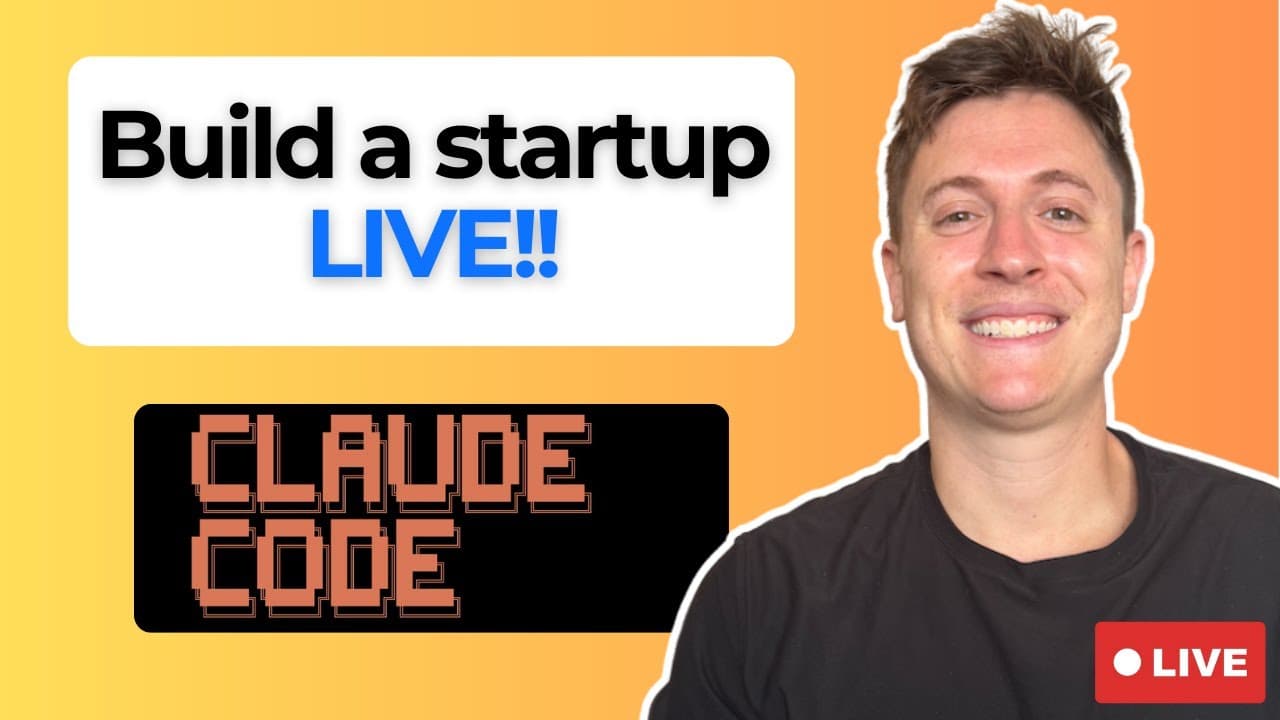
TL;DR
Use Claude Code to build, review, and improve software, then ship once critical issues are resolved and begin collecting feedback from beta testers. The stream praises Claude Code based on the host’s prior comparisons, but the provided segment ends as a live Codex GPT 5.2 review begins, so it does not establish a completed side-by-side verdict.
Transcript
Today we are going to be building and working on and getting our first customers for an AI startup we've been working on for a while in Claude Code. We'll also be covering Claude Co-work the brand new 247 AI agent from Claude as well. We'll be going through use cases on that. We got a lot on deck. You're going to learn a ton about Claude Code. You'... Read More
Key Insights
- Claude Code is the host’s primary tool for building and improving Viber, an app store where creators can submit vibe-coded applications, publish them, and seek their first customers. The planned work includes bug fixing, product refinement, customer acquisition, and a possible review of the existing project.
- Claude Co-work is described as a 24/7 AI employee that combines coding and execution capabilities with broader computer tasks. According to the demonstration, it can inspect files, organize content, research websites, build presentations, produce prototypes, write code, and execute that code.
- File organization is one demonstrated Claude Co-work use case. The host asked it to find images across his computer, create a new images folder, and sort the files into categories including thumbnails, screenshots, AI-generated photos, GIFs, logos, web downloads, and duplicates.
- Media-kit creation is another demonstrated Claude Co-work use case. Given only the newsletter website alexfin.ai and a request to research it, the tool produced a presentation containing a newsletter description, audience information, reported newsletter numbers, and proposed sponsorship options in roughly three to four minutes.
- Shipping readiness depends on resolving genuinely critical problems before release. The host recommends addressing critical issues first, then launching to testers or beta users instead of repeatedly delaying while requesting more reviews. Early release creates the feedback loop needed to guide further development.
- Audience building is part of the product-development process. The host recommends creating tweets, YouTube videos, or other content while building so potential users can discover the creator and the product. Product work and public communication are presented as parallel activities rather than separate phases.
- Prompt quality depends on context rather than a universal list of required prompts. When asked for must-use Claude prompts and plugins, the host says the question is too broad and argues that useful recommendations require information about the user’s goals, interests, and intended tasks.
- The Claude Code versus Codex GPT 5.2 comparison remains incomplete in the supplied transcript. The host says earlier tests produced obviously better results in Claude Code, but then decides to open Viber and have Codex review it. The transcript ends before that live test produces findings or a verdict.
Install to Summarize YouTube Videos and Get Transcripts
Explore YouTube Video Summarizer or Get YouTube Transcript Extractor
Questions & Answers
Q: Should you use Claude Code or Codex GPT 5.2?
The supplied segment supports Claude Code as the host’s preferred option based on his previous tests, which he says produced obviously better results there. However, it does not provide a completed live comparison. The host begins opening Viber so Codex GPT 5.2 high can review the project, but the transcript ends before the review returns results, so no final evidence-based winner is established.
Q: What can Claude Co-work do on a computer?
Claude Co-work is presented as a broad computer assistant that can organize files, research a website, create presentations, write and execute code, and produce prototypes that can be opened in another tool. Demonstrated tasks include sorting computer images into categorized folders and creating a newsletter media kit containing a description, audience details, newsletter numbers, sponsorship options, and presentation-style pages.
Q: How can Claude Co-work organize image files?
The host gave Claude Co-work a simple request to organize the images on his computer. It found the images, created a new images folder, and divided the material into subfolders for thumbnails, screenshots, AI-generated photos, GIFs, logos, downloads from the web, duplicates, and other categories. He reports that the organization task took roughly three minutes and required little detailed instruction.
Q: How can Claude Co-work create a newsletter media kit?
The host supplied his newsletter website, alexfin.ai, and asked Claude Co-work to research the newsletter and create a media kit for potential sponsors. The resulting presentation included a newsletter description, information about its topics and audience, reported newsletter numbers, and suggested sponsorship options. He says the tool created the complete presentation in roughly three to four minutes without receiving those details directly.
Q: When is an AI-built application ready to launch?
An application should not launch while it still has genuinely critical issues, according to the host. Once those critical problems are resolved, the recommended next step is to ship the product to testers or beta users and begin collecting feedback. This approach creates an active feedback loop, allowing real usage to identify priorities instead of relying indefinitely on repeated automated code reviews.
Q: How should builders get their first software customers?
Builders should make the product available, invite testers, and establish a feedback loop while also creating public content. The host specifically mentions tweets and YouTube videos as ways to attract people to a creator’s brand. Viber follows the same general idea by giving creators a live app store where they can submit vibe-coded applications and try to reach their first customers.
Q: What is Viber in the live coding stream?
Viber is described as a live app store for vibe-coded applications. Creators can submit their apps, publish them through the store, and seek their first customers. During the stream, the host considers improving Viber, fixing bugs, refining the experience, and working on customer acquisition. A viewer poll gives Viber 52 percent against the alternative 3D AI agent manager project.
Q: Are there universal must-use prompts for Claude?
The host rejects the idea that one broad list of must-use prompts can suit everyone. He compares the request to asking which foods are essential without explaining personal preferences or the type of meal involved. Useful prompting guidance therefore requires a defined objective, task, or use case. The examples shown use direct requests tied to concrete outcomes, such as organizing images or researching a newsletter.
Summary & Key Takeaways
-
The stream focuses on building Viber, a live app store for vibe-coded applications, while discussing Claude Code, Codex GPT 5.2 high, and Claude Co-work. Viewers vote between improving Viber and continuing a 3D AI agent manager, with Viber narrowly leading at 52 percent during the provided segment.
-
Claude Co-work is presented as a general computer assistant that can organize files, research a website, create presentations, write code, and execute code. The host demonstrates an organized images folder and a newsletter media kit, reporting that these tasks took roughly three to four minutes with minimal prompting.
-
The host advises builders to resolve critical issues before release, then ship to beta testers and establish a feedback loop. He also recommends creating public content to attract users. Although he favors Claude Code from previous tests, the transcript stops just as he opens Viber for a Codex review, leaving the comparison unfinished.
Read in Other Languages (beta)
Share This Summary 📚
Summarize YouTube Videos and Get Video Transcripts with 1-Click
Try YouTube Summary with ChatGPT & Claude or YouTube Transcript Generator
Explore More Summaries from Alex Finn 📚





Summarize YouTube Videos and Get Video Transcripts with 1-Click
Try YouTube Summary with ChatGPT & Claude or YouTube Transcript Generator