Q&A With Grey: Just Because Edition, What Does Grey Say About Breakfast, Time Tracking, Jazz, and University?

TL;DR
Grey says abandoning breakfast as a necessity greatly improved his quality of life, while tracking every hour gave him an uncomfortable but useful view of how he spends his time. He also explains his dislike of jazz, thoughts on programming and economics, and strategy for completing mandatory university classes. Read on for his reasoning, experiments, and practical responses to each question.
Transcript
Hello Internet. When's the next Q&A with Grey? -Discord21337 Right now! What opinion have you held for a time and then changed radically? -desvirtuado Well, as mentioned the first time I talked about changing your mind, This is always hard to discuss because the specifics are often quite personal. But the biggest non-personal thing I've changed my ... Read More
Key Insights
- Experiment overturned apparent evidence: Grey did not casually abandon breakfast. He previously believed he had evidence that even delaying it damaged his day. Only repeated experimentation while trying to become healthier changed that conclusion, showing how his direct bodily experience ultimately outweighed a long-held conviction about what his morning required.
- The transition carried a cost: Skipping breakfast did not produce immediate comfort. Grey explicitly describes a rough adjustment period before his body no longer needed the meal. That detail matters because the later improvement followed an initially difficult phase, rather than appearing as an effortless benefit from the first morning.
- Morning simplicity created the payoff: The main benefit Grey identifies is not a nutritional measurement or numerical result. It is a large improvement in everyday quality of life. Removing breakfast from the necessary routine simplified ordinary mornings and reduced the difficulty of early travel days, while leaving him free to eat it occasionally on vacations.
- Being alive beats remembrance: When asked what people should remember him for 500 years from now, Grey rejects the premise in a single line. He does not name a work, achievement, or legacy. His answer is that he wants to be alive, shifting the question from posthumous reputation to continued existence.
- Frivolous ownership proves elusive: Grey checks the meaning of frivolous as having neither purpose nor value, then cannot readily identify an item he owns that qualifies. His response does not claim that he owns nothing unnecessary. Instead, he says he is unsure and will continue looking for an answer.
- Voice capture can misfire: Grey's shower scenario presents Siri as the available method for recording an idea when no phone or notebook is physically at hand. He asks it to note a million, then billion-dollar idea, but receives weather information for Paradise, Nevada. The exchange highlights the gap between intending to preserve an idea and successfully capturing it.
- Repetition defines musical usefulness: Grey wants music built around recognizable patterns and repetition. Jazz conflicts with those preferences, so he calls it anti-useful as a brain manipulation tool. His dislike of live music follows the same stated standard, connecting both judgments to his desired listening effect rather than treating them as unrelated dislikes.
- Dutch heritage did not transfer: Grey says his mother is Dutch, but he does not speak Dutch because she never used it with him. He describes himself as having grown up with only one language. The answer distinguishes a parent's background from the language environment a child actually experiences.
- One command balances two outcomes: Given control of a super-intelligence that would execute only one command according to his intended meaning, Grey chooses to min-max happiness and suffering. The compact answer contains both a positive objective and a negative one, rather than focusing exclusively on increasing happiness.
- Complete tracking exposes reality: Moving beyond work-hour records gave Grey a picture of every hour in every day. He says this remains uncomfortable regardless of how well someone thinks they use time or how well they actually use it. The data functions as an unflinching mirror rather than a reassuring productivity score.
- Visibility supports behavioral feedback: Grey is responding to an unsatisfying yearly time pie chart by placing his time-use data where he can see it more often. He describes the effort as beginning with baby steps. His early conclusion is that making life more visible appears to create a helpful feedback loop for improvement.
- Compression protected academic time: Grey handled disliked mandatory classes by taking an entire academic year's requirement during an intense summer. He relied on an on-off reading schedule and recalls reading something like 30 books in one summer. Because the method worked, he repeated it each summer to preserve more time during the academic year.
Install to Summarize YouTube Videos and Get Transcripts
Explore YouTube Video Summarizer or Get YouTube Transcript Extractor
Questions & Answers
Q: What opinion did Grey radically change about breakfast?
Grey changed his belief that breakfast was absolutely vital. He had previously felt that skipping or even delaying it ruined everything. After experimenting while trying to become healthier, he endured a rough adjustment period and found that his body no longer needed breakfast. The change improved his quality of life by simplifying normal mornings and making early travel days easier. He still sometimes eats breakfast, especially on vacations, but no longer regards it as necessary.
Q: How does Grey track his time, and why does he do it?
Grey records how every hour of every day is spent, after previously tracking only his work hours. The complete record gives him an unflinching view of his actual behavior, which he finds eternally uncomfortable. His pie chart for the previous year disappointed him because that year was chaotic. He continues because he believes improvement is impossible without knowing the starting point. By making the data visible in more places, he hopes to create a feedback loop that helps him improve.
Q: Why does Grey dislike jazz and live music?
Grey wants music to contain patterns and repetition. Jazz strikes him as the opposite of those qualities, so it does not produce the effect he seeks. He describes music as a brain manipulation tool and calls jazz anti-useful for that purpose. He says he also dislikes live music for the same underlying reason. His answer grounds both preferences in consistency and repetition rather than in performers or particular songs.
Q: What does Grey do when he has an idea in the shower?
Grey calls out to Siri when a phone or notebook is not available for ordinary note-taking. In his demonstration, he asks Siri to make a note about a million-dollar, then billion-dollar, idea. Siri responds with upcoming weather for Paradise, Nevada, United States. Grey groans because the assistant has failed to record the intended note. The scene presents voice assistance as his attempted solution, while also showing that it can misunderstand him.
Q: What single command would Grey give a super-intelligence?
Grey's command would be to min-max happiness and suffering. The hypothetical super-intelligence is described as executing one command to the best approximation of what he intended. His answer therefore combines increasing a desirable condition with addressing an undesirable one. He gives no implementation plan, measurements, or further qualifications. The command itself is the complete response provided in the Q&A.
Q: What would Grey study if he enrolled at a university again?
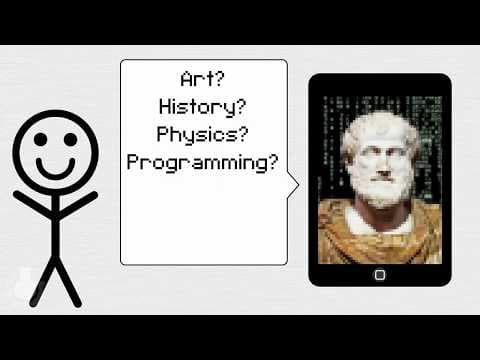
Grey would like to say programming because he enjoys constants, functions, and loops. He doubts he could pass a university-level programming course once it reached pointers, which he considers a level too far. If he had to pass, he would probably choose economics. He previously dropped out of an economics master's course because it did not fit his life at that time. He says he would be happy to give economics another try.
Q: Which university classes were hardest and most disliked for Grey?
Grey says his later physics classes were the hardest and probably the hardest intellectual work he has done or will do. His most disliked class was a required humanities reading course. He objected to a professor selecting favored books and requiring essays that agreed with the professor, or disagreed in an acceptable way. Grey believed the class served professors more than the students involved. He therefore chose an accelerated option to complete the requirement as quickly as possible.
Q: How did Grey finish mandatory university classes quickly?
Grey's college allowed students to compress an entire academic year of certain classes into one intense summer. He stayed at college during the period that was vacation for most people so he could finish a hated humanities requirement quickly. Using an on-off reading schedule, he recalls reading something like 30 books over that summer. The approach worked well enough that he reused it every summer. He compressed as many mandatory classes as possible to leave more time available during the academic year.
Summary & Key Takeaways
-
Changing his mind on breakfast: Grey once considered breakfast absolutely vital because delaying or skipping it seemed to ruin everything. While inconsistently trying different ways to become healthier, he experimented with going without it. The adjustment period was rough, but his body eventually stopped needing breakfast. He describes the result as a huge quality-of-life improvement because mornings became simpler and early travel days became easier, although he still sometimes eats breakfast on vacations.
-
Answering personal and playful questions: Asked how he wants to be remembered 500 years from now, Grey says he would rather be alive than remembered. He struggles to identify his most frivolous possession after checking that frivolous means lacking purpose or value. When asked how he saves an idea in the shower, he demonstrates calling Siri to make a note. Siri misunderstands and reports the weather for Paradise, Nevada, turning the attempted capture of a supposed billion-dollar idea into a joke.
-
Explaining his musical preferences: Grey says jazz represents the opposite of what he wants from music. He values patterns and repetition, repeating those words to emphasize the point. He also dislikes live music for the same underlying reason. His description treats music as a tool for manipulating his brain, and jazz is therefore anti-useful to him. He additionally answers in Dutch that he does not speak Dutch, despite having a Dutch mother, because she never spoke the language with him and he grew up speaking only one language.
-
Measuring time to improve life: Grey progressed from tracking only work hours to recording how every hour of every day is spent. He calls the resulting record an unflinching and eternally uncomfortable mirror, even for someone who believes they use time well. He dislikes the pie chart for his previous year, which he characterizes as chaotic. Because improvement requires a known starting point, he is making his time data visible in more places and sees early signs of a useful feedback loop.
-
Reconsidering university study choices: Grey would like to study programming, but doubts he could pass at university level once the material reaches pointers. If passing were required, he would choose economics and reconsider the master's course he previously left because it did not fit his life then. He identifies later physics classes as his hardest intellectual work and a required humanities reading class as his most hated. To finish unwanted requirements quickly, he compressed them into intense summers, once reading about 30 books during one summer.
Read in Other Languages (beta)
Share This Summary 📚
Summarize YouTube Videos and Get Video Transcripts with 1-Click
Try YouTube Summary with ChatGPT & Claude or YouTube Transcript Generator
Explore More Summaries from CGP Grey 📚




Summarize YouTube Videos and Get Video Transcripts with 1-Click
Try YouTube Summary with ChatGPT & Claude or YouTube Transcript Generator