How to Make Table Salt from Sodium and Chlorine
TL;DR
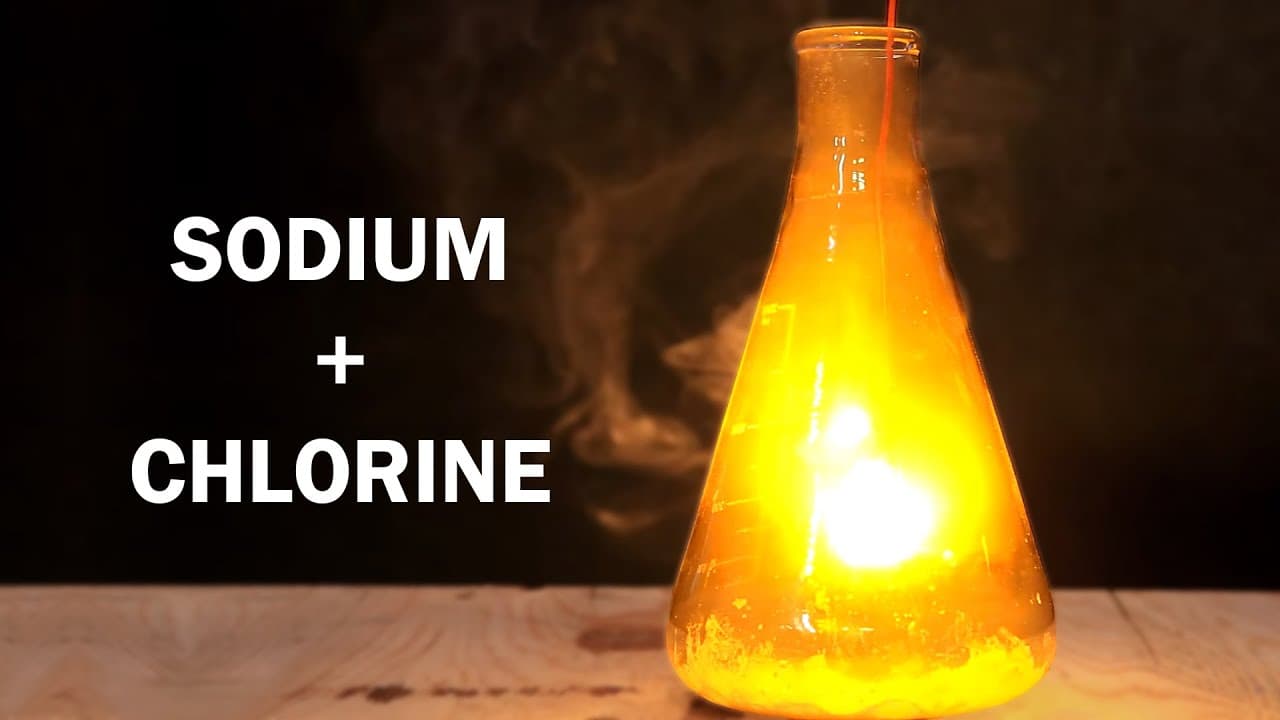
To make table salt, sodium and chlorine gas are reacted together, resulting in sodium chloride. While both sodium and chlorine are highly reactive and dangerous on their own, their combination produces edible salt. The method used can affect the purity of the final product, with options available for varying levels of contamination.
Transcript
So this is my little setup to make some table salt also known as sodium chloride. So just from the name sodium chloride you can pretty easily see that has two major components: sodium and chlorine. On their own, both elements sodium and chlorine are pretty reactive and dangerous. However interestingly enough when they are combined to form a nice ed... Read More
Key Insights
- 💁 Sodium and chlorine, although dangerous on their own, combine to form the everyday table salt we consume.
- ❓ Different methods can be used to produce sodium chloride, with varying degrees of purity.
- 🈷️ The reaction between sodium and chlorine can be more or less spectacular depending on the conditions and amounts used.
- ❓ Sodium chloride generated in the experiment can have different physical properties, such as fluffiness, due to contamination or purification methods.
- 😨 Care should be taken when handling sodium and chlorine due to their reactivity and potential hazards.
- 🥪 Contamination with sand or other substances can affect the purity and quality of sodium chloride.
- 🫢 The use of chlorine gas and sodium in the experiment showcases the concept of chemical reactions and the formation of compounds.
Install to Summarize YouTube Videos and Get Transcripts
Explore YouTube Video Summarizer or Get YouTube Transcript Extractor
Questions & Answers
Q: Why are sodium and chlorine dangerous on their own?
Sodium is highly reactive and reacts with air and moisture, while chlorine is a poisonous gas. Their individual properties make them dangerous substances to handle.
Q: How does sodium chloride form from the reaction of sodium and chlorine?
When sodium and chlorine combine, they undergo a chemical reaction to form sodium chloride. The atoms of sodium and chlorine bond, creating a compound with new properties.
Q: What is the purpose of the chlorine generator?
The chlorine generator produces chlorine gas that is used in the reaction with sodium. It allows for controlled and safe generation of chlorine gas.
Q: Why is it important to remove sand contamination from sodium chloride?
Sand contamination in sodium chloride affects its purity and quality. It is desirable to have pure sodium chloride without contaminants for various applications, including food.
Summary & Key Takeaways
-
Sodium and chlorine are highly reactive and dangerous elements, but when combined, they form edible salt with different properties.
-
The experiment involves cutting a small piece of sodium and reacting it with chlorine gas to produce sodium chloride.
-
The purity of the sodium chloride depends on the method used and can be contaminated with sand or be relatively clean.
Read in Other Languages (beta)
Share This Summary 📚
Summarize YouTube Videos and Get Video Transcripts with 1-Click
Try YouTube Summary with ChatGPT & Claude or YouTube Transcript Generator
Explore More Summaries from NileRed 📚

Summarize YouTube Videos and Get Video Transcripts with 1-Click
Try YouTube Summary with ChatGPT & Claude or YouTube Transcript Generator