What do Russians want in 2025? Life under war, inflation, and state media | BBC News
TL;DR
Nearly three years into Russia's full-scale invasion of Ukraine, most Russians appear resigned rather than hopeful, leaving their future to the man at the top. BBC's report from Moscow finds the Z symbols and soldier ice sculptures of past New Year displays replaced by snowmen, while potato prices are up 88% and butter up 35%, with butter now sold in anti-theft boxes. The details below show how war, prices, and state narratives shape daily life.
Transcript
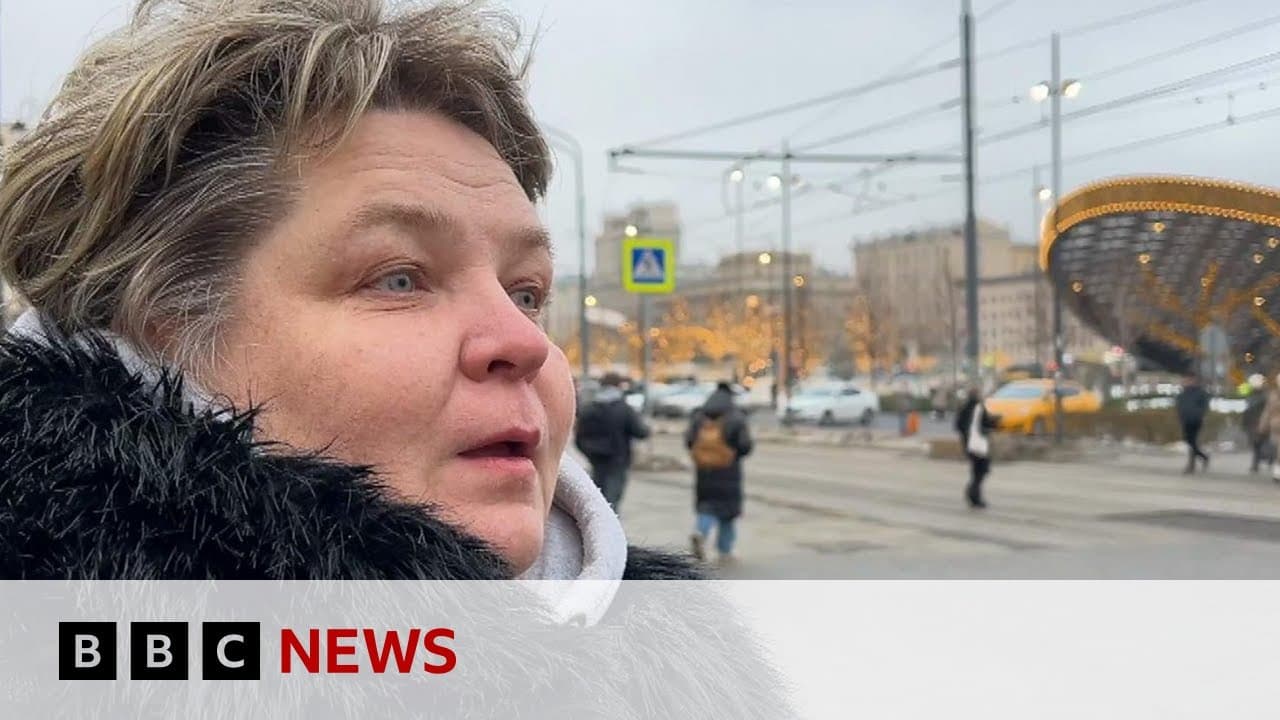
it's nearly 3 years since Russia's full scared invasion of Ukraine and I wonder what Russians are thinking now about what's happening about where their country is going and what they're hoping for in 202 with for foree speee foree for I for well this is gki Park one difference I've noticed from a couple of ye... Read More
Key Insights
- The absence of war symbols in public decorations suggests a shift in public sentiment, possibly indicating a desire to move past the conflict.
- Despite sanctions, food availability remains stable, but inflation has significantly increased the cost of basic goods, like butter and potatoes.
- Public events commemorate past military actions, linking them to the current conflict, reinforcing state narratives blaming the West for the war.
- A significant portion of the Russian population appears to rely on state media narratives, showing trust in government leadership for future direction.
- Economic sanctions and war have not only impacted Russia's economy but have also led to social issues like theft of essential goods.
- The narrative of the war being a defensive act against Western aggression is prevalent, reflecting state propaganda's influence on public opinion.
- The current public sentiment contrasts with the optimism of the late 1980s when Russians felt empowered to change their country.
- President Putin's New Year address emphasizes confidence and pride in military actions, despite the heavy toll on Russia and Ukraine.
Install to Summarize YouTube Videos and Get Transcripts
Explore YouTube Video Summarizer or Get YouTube Transcript Extractor
Questions & Answers
Q: What do Russians want in 2025?
The report finds little sense that ordinary Russians expect to shape what comes next. Whether from fear, fatalism, or belief in the picture painted by state media, many are willing to leave it to the man at the top to decide their future. That marks a change from 1989 and 1990, when the reporter was a student in Moscow and many people believed they had the power to change their lives and their country for the better.
Q: Have the war symbols disappeared from Russia's New Year decorations?
Yes. In Gorky Park in December 2022 there were giant letter Zs, the symbol of the so-called special military operation, alongside the traditional tree; this year there are no Zs and no slogans, just traditional decorations. In the Siberian city of Chita two years ago there were ice sculptures of Russian soldiers holding Kalashnikov rifles, and this year there is nothing like that. The reporter reads it as Russians not wanting to be reminded of the war, and the authorities sensing it: more snowmen than soldiers.
Q: How much have food prices risen in Russia in 2024?
Inflation, not scarcity, is the problem. Even after three years of sanctions the shelves still hold plenty of food, but this year the price of potatoes rose 88% and the price of butter rose 35%.
Q: Why is butter sold in security boxes in Russian supermarkets?
Because people have been stealing it. With butter up 35% in price, there have been many reports of shoppers taking butter from stores, which is likely why one supermarket in the report sells some butter in special anti-theft security boxes.
Q: How does the Kremlin explain the war in Ukraine to Russians?
The official line is that the war is the fault of the West, even though it was Russia that launched the full-scale invasion of its neighbor. At a Moscow event marking the 45th anniversary of the Soviet invasion of Afghanistan, speeches repeatedly linked that war to Russian soldiers fighting in Ukraine today, echoing that Kremlin narrative.
Q: What was the Afghanistan anniversary event in Moscow about?
Some Muscovites gathered to commemorate the 45th anniversary of the Soviet invasion of Afghanistan. The event made frequent references to Russian soldiers fighting today in Ukraine, and the speeches closely reflected the Kremlin's framing of the current war.
Q: How have three years of sanctions affected everyday shopping in Russia?
Sanctions have not emptied the shelves. As the reporter notes from inside a supermarket, there is still a lot of food available after three years of sanctions, and the visible strain shows up in prices and in anti-theft measures rather than in shortages.
Q: How does the mood in Russia today compare with the late 1980s?
It is close to reversed. In 1989 and 1990 many people in Moscow believed they had the power to change their lives and their country for the better, but the reporter's overriding impression now is that this belief is gone. Fear, fatalism, and trust in state media have left many Russians content to let the leadership decide the country's direction.
Summary & Key Takeaways
-
Public decorations in Russia no longer feature war symbols, indicating a shift in public sentiment towards the conflict. Inflation has caused significant price increases for basic goods, despite stable food availability. Public events commemorate past military actions, reinforcing state narratives blaming the West for the conflict.
-
Many Russians appear to trust state media narratives and rely on government leadership for future direction. Economic sanctions and the war have led to social issues like theft of essential goods. The narrative of the war being defensive against Western aggression reflects state propaganda's influence on public opinion.
-
The current public sentiment contrasts with the optimism of the late 1980s when Russians felt empowered to change their country. President Putin's New Year address emphasizes confidence and pride in military actions, despite the heavy toll on Russia and Ukraine. Russians remain cautious about the future amidst ongoing conflict and economic pressure.
Read in Other Languages (beta)
Share This Summary 📚
Summarize YouTube Videos and Get Video Transcripts with 1-Click
Try YouTube Summary with ChatGPT & Claude or YouTube Transcript Generator
Explore More Summaries from BBC News 📚
Summarize YouTube Videos and Get Video Transcripts with 1-Click
Try YouTube Summary with ChatGPT & Claude or YouTube Transcript Generator