How Does Howard Marks Analyze Market Cycles and Crises?
TL;DR
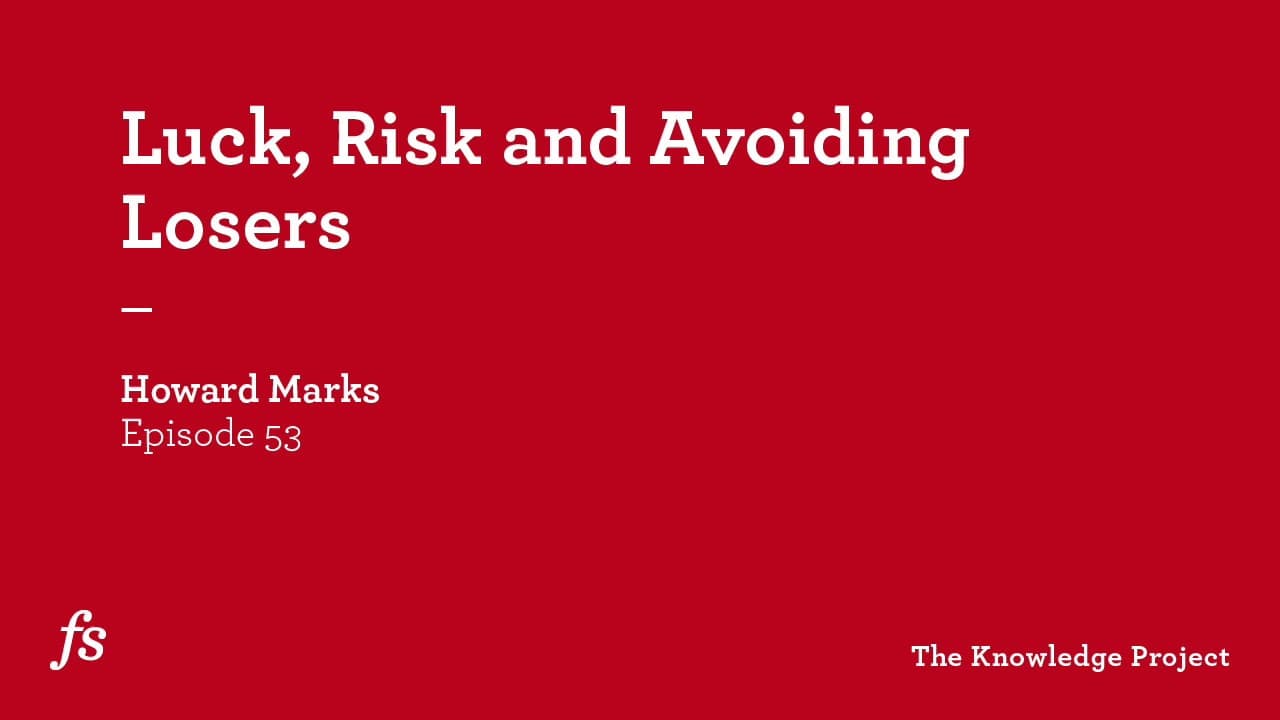
Howard Marks analyzes market cycles and crises by identifying excesses, anticipating their painful correction, and assessing what can and cannot be known. During the 2008 crisis, he concluded that planning for a total financial-system meltdown was impractical, so Oaktree invested an average of $650 million a week for the final 15 weeks of the year. Read on to see how psychology, risk, and responsibility shaped that decision.
Transcript
hello and welcome i'm shane parish and this is the knowledge project podcast exploring the ideas methods and mental models that help you learn from the best of what other people have already figured out learn more and stay up to date at FS da blog slash podcasts on the show today is Howard Marks the co-chairman and co-founder of oaktree capital man... Read More
Key Insights
- ✳️ Risk assessment is crucial in investing, and it involves understanding the probability distribution of future events.
- 🥺 Emotions play a significant role in investment decisions and often lead to suboptimal outcomes.
- 💦 The future of work is being reshaped by technology, particularly automation and artificial intelligence, which will result in job displacement and potential income inequality.
- 🏍️ Understanding market cycles and investor psychology is essential in navigating crises and making successful investment decisions.
- 🎙️ More videos with Howard Marks:
Install to Summarize YouTube Videos and Get Transcripts
Explore YouTube Video Summarizer or Get YouTube Transcript Extractor
Questions & Answers
Q: How does Howard Marks analyze market cycles and crises?
Marks views cycles as excesses followed by corrections. He examines how excessive faith, risky investment, and dramatic shifts in investor psychology create opportunities when fear becomes extreme.
Q: What excesses contributed to the 2008 financial crisis?
Marks says there was too much faith in mortgages and mortgage-backed securities. Essential financial institutions invested in them too heavily and too riskily, leaving those institutions precarious when the excesses were corrected.
Q: Why did Howard Marks decide to invest during the 2008 financial crisis?
Marks believed a financial-system meltdown could not be reliably analyzed, proved, or disproved. If the system collapsed, the investment decision would not matter; if Oaktree refused to invest and the system survived, it would have failed its responsibility to clients.
Q: How much did Oaktree invest during the final weeks of 2008?
Oaktree invested an average of $650 million per week during the final 15 weeks of 2008. The total invested was $10 billion, and the financial world did not melt down.
Q: What major event intensified fear during the financial crisis?
Marks identifies the bankruptcy of Lehman Brothers on September 15, 2008, as the culmination of a series of failures and rescues. Afterward, people discussed the end of the financial world and a potential meltdown of the financial system.
Q: What role do emotions play in investment decisions?
Marks says emotions conspire to make investors do the wrong thing. As earnings, media coverage, and stock prices improve, enthusiasm makes it increasingly difficult not to buy, so people purchase more as prices rise.
Q: Why can acting on an investment opportunity be difficult during a crisis?
Marks connects this difficulty to deeply ingrained fight-or-flight emotions. Even when an opportunity is recognized, extreme fear can prevent action, while enthusiasm during rising markets can push investors toward buying at higher prices.
Q: How does investor psychology differ from ordinary economic fluctuations?
Marks says real-world conditions fluctuate between “pretty good” and “not so hot.” Investor psychology moves much more dramatically, swinging from expectations of perfection to believing there is no chance of survival.
Summary & Key Takeaways
-
Howard Marks discusses the 2008 financial crisis and the importance of understanding market cycles and investor psychology.
-
He emphasizes the role of emotions in investment decisions, highlighting the tendency for investors to buy at the top and sell at the bottom due to fear and greed.
-
Marks explains that markets are not separate entities but rather consist of individuals with emotions and beliefs that drive their buying and selling decisions.
Read in Other Languages (beta)
Share This Summary 📚
Summarize YouTube Videos and Get Video Transcripts with 1-Click
Try YouTube Summary with ChatGPT & Claude or YouTube Transcript Generator
Explore More Summaries from The Knowledge Project | Full Episodes 📚

Summarize YouTube Videos and Get Video Transcripts with 1-Click
Try YouTube Summary with ChatGPT & Claude or YouTube Transcript Generator