How to Design AI-Built Apps That Stand Out
TL;DR
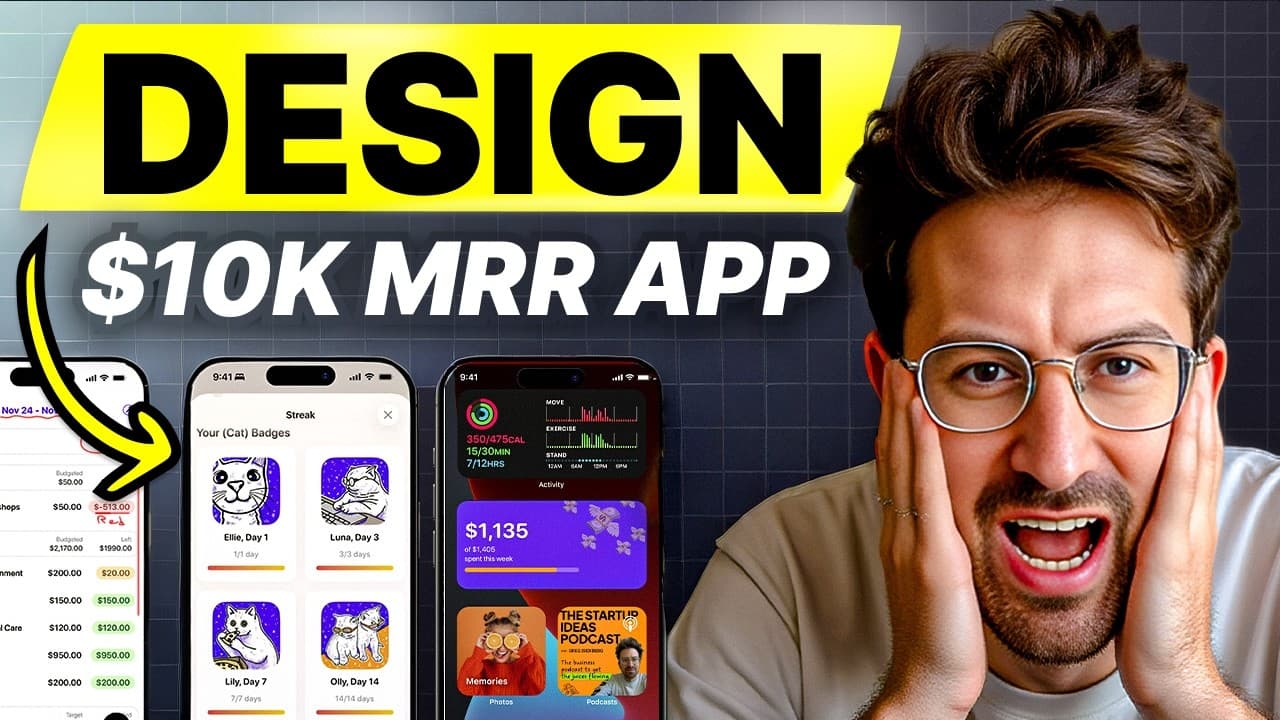
Polished animations, responsive interactions, haptics, custom illustrations, consistent icons, typography, and widgets help AI-assisted mobile apps stand out from quickly produced competitors. Build a refined concept first, share it publicly to measure interest, and treat user response as validation before committing to full development, especially when entering a crowded category.
Transcript
There are a bunch of mobile apps making 10K a month, 50K a month, 100K a month. And I've noticed that there's something in common with all of them. They stand out. So today's episode is a free course. Yes, it's free. And today we're going to teach you about animation, interactions, illustrations, iconography, widgets, and how you can come up with i... Read More
Key Insights
- AI-assisted development is enabling solo builders to create robust mobile apps that previously would have required a team, but easier production also increases competition. Chris says his portfolio can only be launched, maintained, and expanded by one person because AI supports the development workload.
- Polish is a primary differentiator among rapidly produced apps because users can recognize interfaces that feel static or hastily generated. Purposeful movement, responsive states, and carefully designed transitions give a product more life and help separate it from applications assembled within 24 hours.
- Animations and interactions can change how strongly people respond to an otherwise identical concept. Chris presented two versions of Amy with the same Apple Notes-inspired calorie-tracking workflow, but the version with more refined states and motion received dramatically greater attention.
- Amy works by letting users type what they ate in a note-like interface while AI searches for information and calculates calories on the right. The familiar writing pattern gives a crowded calorie-tracking category a different interaction model that viewers described as refreshing.
- Small interface details can communicate meaningful activity while a system processes a request. Amy’s stronger concept displayed a searching label, an animated gradient, and sources descending into view, creating a clearer and more engaging experience than a simpler screen that only displayed calculating.
- Public concept videos are a practical form of product validation because they reveal whether an idea and its presentation resonate before full development. Chris posted Amy while experimenting with Apple’s liquid glass, and the response convinced him that the throwaway project deserved to become a complete product.
- Mascots and custom illustrations give an app a recognizable personality while improving functional moments such as onboarding and empty states. The course identifies these assets as ways to turn otherwise routine screens into memorable experiences that users can associate with a specific product.
- Consistent iconography, basic typography, widgets, and companion experiences affect perceived product quality. These elements are frequently overlooked in quickly generated apps, but refining them helps an application feel cohesive, premium, useful beyond its main screen, and more likely to remain memorable.
Install to Summarize YouTube Videos and Get Transcripts
Explore YouTube Video Summarizer or Get YouTube Transcript Extractor
Questions & Answers
Q: How can an AI-built mobile app stand out?
An AI-built mobile app can stand out by combining a distinctive interaction model with deliberate visual and tactile details. The course recommends refining animations, micro-interactions, haptics, illustrations, mascots, icons, typography, widgets, and companion experiences. These details make an interface feel dynamic and intentional, which helps users distinguish it from static apps that appear to have been produced quickly.
Q: Why are animations important in mobile app design?
Animations are important because they communicate activity, make interactions feel responsive, and add life to an interface. Chris contrasts a polished Amy concept with an earlier version presenting the same underlying workflow. The refined concept used an animated gradient, a searching state, and sources moving into view, while the simpler version attracted very little attention despite sharing the same basic idea.
Q: How did Chris validate the Amy calorie-tracking app?
Chris validated Amy by publishing a concept video before committing to complete development. The project began as a 24-hour experiment with Apple’s liquid glass rather than a firm product plan. After the concept attracted substantial attention and roughly 800 people joined a waitlist from the later portion of one tweet, he concluded that the idea resonated and decided to build it further.
Q: What made the Amy app concept different from other calorie trackers?
Amy combined the familiar behavior of Apple Notes with calorie tracking. Users could type what they ate as ordinary text, while AI searched for information and attempted to calculate calories on the right side of the interface. That interaction model, combined with refined animations and visible search sources, gave the concept a distinctive presentation within an especially competitive app category.
Q: Can a concept video serve as a mobile app MVP?
A polished concept video can function as an early MVP for testing whether people respond to an idea before the complete product exists. The hosts suggest creating the interaction, posting it publicly, and observing the response. Amy followed a similar path: Chris shared an experimental concept, discovered strong interest, collected waitlist signups, and then decided that the project warranted full development.
Q: Why do custom mascots and illustrations improve an app?
Custom mascots and illustrations improve an app by giving it a recognizable personality that generic interfaces often lack. They can also make onboarding, empty states, and other routine moments more memorable. Within the course’s broader design approach, these assets are not presented as decoration alone. They help establish a consistent identity that users can remember and associate with the product.
Q: How do iconography and typography affect app quality?
Consistent iconography and sound typography choices have an outsized effect on perceived app quality because users encounter them throughout the interface. Quickly generated apps often overlook these basics, which can make the overall product feel inconsistent. Applying a coherent icon style and deliberate type choices helps screens feel related, improves the product’s visual identity, and supports a more polished impression.
Q: What should solo developers refine after building an AI-assisted prototype?
Solo developers should refine the parts that make a prototype feel intentional rather than static. The course emphasizes animations, interaction states, haptics, custom illustrations, mascots, iconography, typography, home-screen and lock-screen widgets, and Apple Watch experiences. These additions can turn an AI-assisted prototype into a cohesive product that feels premium, remains useful in more contexts, and is easier for users to remember.
Summary & Key Takeaways
-
AI has made it possible for solo developers to create, launch, maintain, and grow robust mobile products, but it has also produced a flood of similar apps. Differentiation now depends on developing a memorable concept and refining details that make the interface feel dynamic, intentional, polished, and recognizably different from quickly generated alternatives.
-
Animations, micro-interactions, and haptics strongly influence perceived quality. Chris demonstrated this with two concept videos for the same calorie-tracking idea. The refined version included an animated search state, gradient treatment, and descending sources, attracted substantial attention, while the less detailed version received only seven likes despite presenting essentially the same concept.
-
A polished concept can validate an idea before full development. Chris initially built Amy as a throwaway project to experiment with Apple’s liquid glass, then shared the concept publicly. Its reception, including roughly 800 waitlist signups from the later portion of one tweet, persuaded him to develop the product more completely.
Read in Other Languages (beta)
Share This Summary 📚
Summarize YouTube Videos and Get Video Transcripts with 1-Click
Try YouTube Summary with ChatGPT & Claude or YouTube Transcript Generator
Explore More Summaries from Greg Isenberg 📚


Summarize YouTube Videos and Get Video Transcripts with 1-Click
Try YouTube Summary with ChatGPT & Claude or YouTube Transcript Generator