How Does the Small Intestine Digest Food?
TL;DR
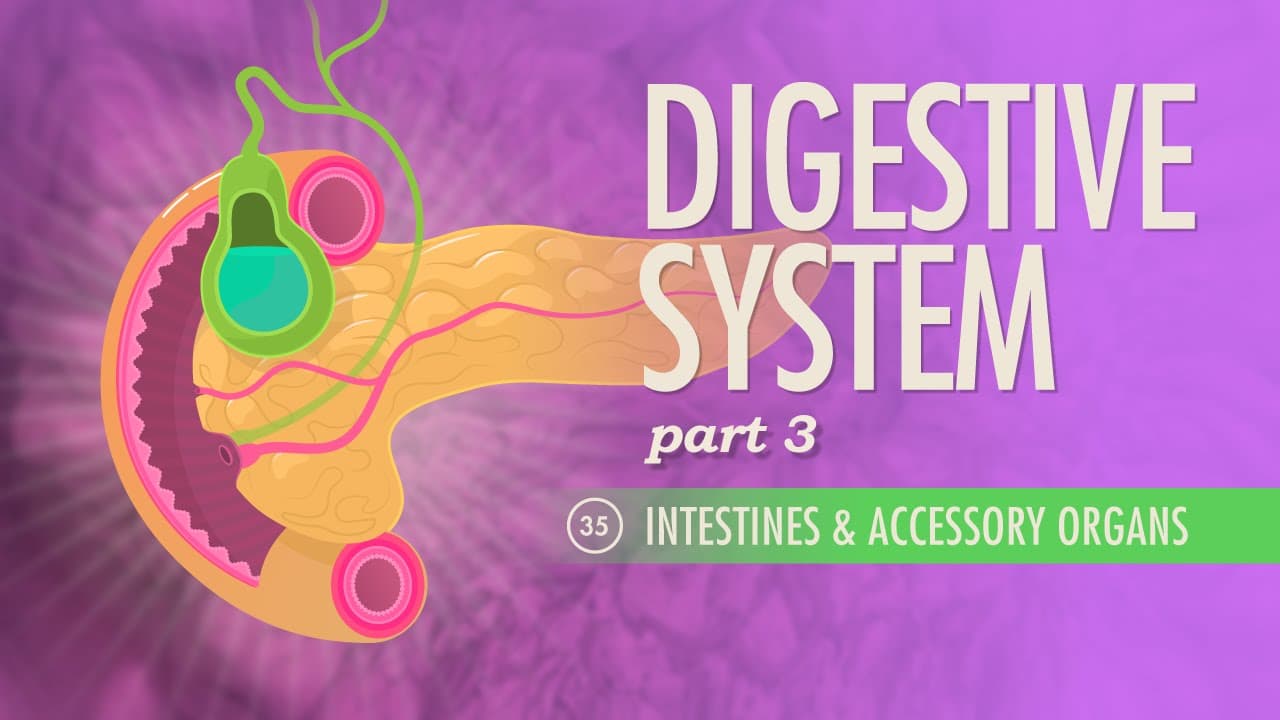
The small intestine is the primary site for chemical digestion, aided by enzymes from the liver, gallbladder, and pancreas. It absorbs nutrients through its villi-lined surface, while the large intestine extracts remaining water and nutrients. Lactose intolerance occurs when the small intestine lacks lactase, leaving digestion to bacteria in the large intestine, causing gas and bloating.
Transcript
You know, we’ve been talking about a lot of serious stuff here lately. Heart failure. Respiratory gas exchange. People with holes in their stomachs. Nachos. Some might say I’ve even been flaunting my ability to eat, digest, and enjoy a plate of chips and melted cheese. And I wouldn't blame them if they did, because sadly, nachos aren’t for everyone... Read More
Key Insights
- Lactose intolerance is caused by a deficiency of the enzyme lactase in the small intestine.
- The small intestine is about 6-7 meters long and has a massive surface area due to villi and microvilli.
- The duodenum is the main site for chemical digestion, receiving bile and enzymes from the liver, gallbladder, and pancreas.
- Bile emulsifies fats, allowing enzymes to break them down into absorbable molecules.
- The pancreas produces enzymes that break down proteins, carbohydrates, and nucleic acids.
- The large intestine absorbs water and hosts bacteria that aid in digesting remaining nutrients.
- Feces formation involves haustral contractions and mass peristalsis movements in the large intestine.
- Accessory organs like the liver, gallbladder, and pancreas play crucial roles in digestion without directly contacting ingested food.
Install to Summarize YouTube Videos and Get Transcripts
Explore YouTube Video Summarizer or Get YouTube Transcript Extractor
Questions & Answers
Q: How does the small intestine absorb nutrients?
The small intestine absorbs nutrients through its villi-lined surface, which increases its surface area significantly. The villi and microvilli provide a large area for nutrient absorption, allowing digested food particles to be absorbed into the bloodstream via capillaries located just beneath the epithelial tissue.
Q: What role does bile play in digestion?
Bile, produced by the liver and stored in the gallbladder, plays a crucial role in digestion by emulsifying fats. This process prevents fat molecules from clumping together, allowing lipid-hungry enzymes to break them down into fatty acids and monoglycerides, which can then be absorbed by the small intestine.
Q: Why do some people experience lactose intolerance?
Lactose intolerance occurs when the small intestine does not produce enough lactase, the enzyme needed to break down lactose, a sugar found in milk. Without lactase, lactose passes into the large intestine, where bacteria ferment it, producing gas, bloating, and diarrhea as byproducts.
Q: What functions does the large intestine perform?
The large intestine absorbs remaining water and electrolytes from indigestible food matter, forming solid waste or feces. It also hosts a diverse microbiome that breaks down undigested carbohydrates, producing essential vitamins like B and K, and gases as byproducts of fermentation.
Q: How do accessory organs assist in digestion?
Accessory organs like the liver, gallbladder, and pancreas contribute vital enzymes and bile that aid digestion. The liver produces bile for fat emulsification, the gallbladder stores and releases bile, and the pancreas secretes enzymes that break down proteins, carbohydrates, and nucleic acids, facilitating nutrient absorption.
Q: What is the role of the duodenum in digestion?
The duodenum, the first section of the small intestine, is the primary site for chemical digestion. It receives chyme from the stomach and mixes it with bile from the liver and gallbladder and enzymes from the pancreas, breaking down nutrients into absorbable forms and regulating stomach emptying through hormonal signals.
Q: How does the pancreas contribute to digestion?
The pancreas produces a range of digestive enzymes, including trypsin and peptidase for proteins, lipases for fats, amylase for carbohydrates, and nuclease for nucleic acids. These enzymes are released into the duodenum, where they help break down food into absorbable molecules, facilitating efficient nutrient uptake by the small intestine.
Q: What happens to food in the large intestine?
In the large intestine, food is primarily dehydrated as water is absorbed, forming solid feces. Bacteria further break down remaining nutrients, producing gases and vitamins. Slow haustral contractions and mass peristalsis movements push the fecal matter toward the rectum, where it is stored until defecation.
Summary & Key Takeaways
-
The small intestine performs most chemical digestion, aided by enzymes from the liver, gallbladder, and pancreas. It absorbs nutrients through its villi-lined surface. The large intestine extracts remaining water and nutrients, hosting bacteria that digest leftover material, producing gases.
-
Lactose intolerance occurs when the small intestine lacks the enzyme lactase, leading to bacterial digestion in the large intestine, causing gas and bloating. The duodenum, jejunum, and ileum are key sections of the small intestine, each with distinct roles in digestion and absorption.
-
Accessory organs like the liver, gallbladder, and pancreas contribute essential enzymes and bile for digestion. The liver produces bile to emulsify fats, the gallbladder stores it, and the pancreas provides a cocktail of enzymes to break down proteins, carbohydrates, and nucleic acids.
Read in Other Languages (beta)
Share This Summary 📚
Summarize YouTube Videos and Get Video Transcripts with 1-Click
Try YouTube Summary with ChatGPT & Claude or YouTube Transcript Generator
Explore More Summaries from CrashCourse 📚



Summarize YouTube Videos and Get Video Transcripts with 1-Click
Try YouTube Summary with ChatGPT & Claude or YouTube Transcript Generator