What Is Utilitarianism in Philosophy?
TL;DR
Utilitarianism is a moral theory that emphasizes the consequences of actions, aiming to produce the greatest good for the greatest number. Unlike Kantian ethics, which focuses on intent, utilitarianism prioritizes outcomes, often requiring personal sacrifice for overall happiness. It distinguishes between act utilitarianism, which assesses individual actions, and rule utilitarianism, which follows rules that generally maximize utility.
Transcript
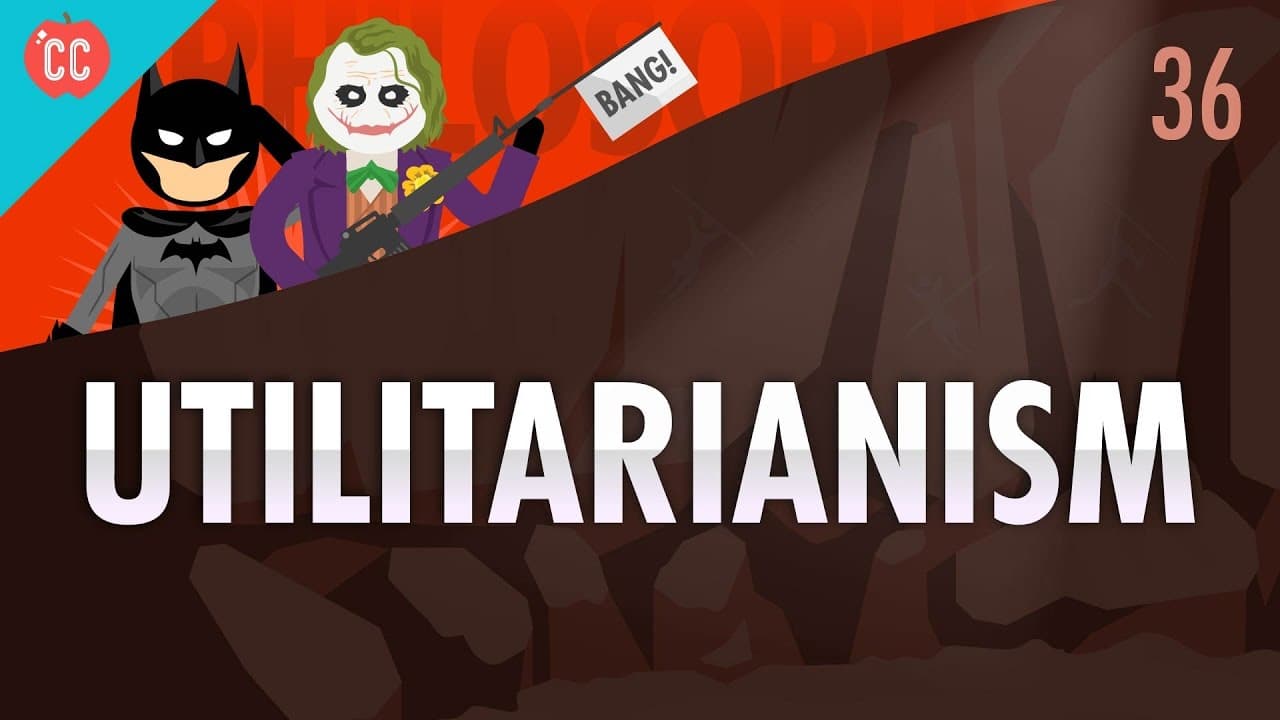
Should Batman kill the Joker? If you were to ask the Dark Knight himself, with his hard-and-fast no-killing rule, he’d say absolutely not. Actually, in fact, he would say: [Batman voice] “Absolutely not.” When you think about it, dude is pretty Kantian in his ethics. Regardless of what Joker does, there are some lines that good people do not cross,... Read More
Key Insights
- Utilitarianism is a consequentialist theory that prioritizes the outcomes of actions over intentions.
- The principle of utility aims to produce the greatest good for the greatest number of people.
- Act utilitarianism evaluates each action individually based on its ability to maximize happiness.
- Rule utilitarianism advocates for following rules that generally lead to the greatest good.
- Utilitarianism is hedonistic, equating the good with pleasure and happiness.
- Unlike egoism, utilitarianism considers the happiness of all sentient beings, not just oneself.
- The theory demands difficult moral choices, sometimes requiring personal sacrifice for greater good.
- Utilitarianism faces criticism for potentially justifying morally questionable actions if they maximize utility.
Install to Summarize YouTube Videos and Get Transcripts
Explore YouTube Video Summarizer or Get YouTube Transcript Extractor
Questions & Answers
Q: What is utilitarianism in philosophy?
Utilitarianism is a moral theory that focuses on the consequences of actions, aiming to produce the greatest good for the greatest number. It evaluates actions based on their ability to maximize happiness and minimize pain, considering the well-being of all sentient beings rather than just individual interests.
Q: How does act utilitarianism differ from rule utilitarianism?
Act utilitarianism evaluates each action individually, determining whether it produces the greatest good for the greatest number. In contrast, rule utilitarianism advocates for following rules that, in general, lead to the greatest overall utility. While act utilitarianism focuses on specific situations, rule utilitarianism considers long-term effects and societal norms.
Q: Why is utilitarianism considered a consequentialist theory?
Utilitarianism is considered a consequentialist theory because it evaluates the morality of actions based on their outcomes or consequences. The theory prioritizes the results of actions, aiming to maximize happiness and minimize pain, rather than focusing on the intentions behind those actions.
Q: What is the principle of utility in utilitarianism?
The principle of utility in utilitarianism is the idea that actions should be evaluated based on their ability to produce the greatest good for the greatest number. It emphasizes maximizing overall happiness and minimizing pain, guiding moral decisions to benefit the majority rather than focusing on individual interests.
Q: How does utilitarianism address personal bias in moral decisions?
Utilitarianism addresses personal bias by suggesting that individuals make moral decisions from the perspective of a benevolent, disinterested spectator. This approach encourages impartiality, allowing individuals to consider the greater good without being influenced by personal interests or emotional investment.
Q: What are some criticisms of utilitarianism?
Critics argue that utilitarianism can justify morally questionable actions if they maximize overall happiness, potentially leading to ethical dilemmas. The theory's focus on consequences may overlook individual rights and intentions, demanding difficult moral choices and personal sacrifices that challenge inherent self-interest biases.
Q: Why is utilitarianism considered hedonistic?
Utilitarianism is considered hedonistic because it equates the good with pleasure and happiness. The theory posits that actions should be evaluated based on their ability to maximize pleasure and minimize pain, guiding moral decisions to pursue overall happiness as the ultimate goal.
Q: How does utilitarianism differ from egoism?
Utilitarianism differs from egoism by considering the well-being of all sentient beings rather than focusing solely on individual interests. While egoism advocates for pursuing one's own good, utilitarianism emphasizes maximizing happiness and minimizing pain for the greatest number, requiring consideration of the collective rather than personal benefit.
Summary & Key Takeaways
-
Utilitarianism is a moral theory focused on the consequences of actions, aiming to achieve the greatest good for the greatest number. It contrasts with Kantian ethics, which emphasizes moral intent. Utilitarianism can be divided into act and rule utilitarianism, with the former assessing individual actions and the latter advocating for rules that generally maximize happiness.
-
The theory is grounded in the pursuit of happiness and pleasure, considering the well-being of all sentient beings. It requires individuals to sometimes sacrifice personal happiness for the greater good, challenging the inherent bias towards self-interest.
-
Critics argue that utilitarianism can justify morally questionable actions if they lead to the greatest overall happiness. The theory's demanding nature requires individuals to act as benevolent spectators, making impartial decisions for the benefit of the group.
Read in Other Languages (beta)
Share This Summary 📚
Summarize YouTube Videos and Get Video Transcripts with 1-Click
Try YouTube Summary with ChatGPT & Claude or YouTube Transcript Generator
Explore More Summaries from CrashCourse 📚




Summarize YouTube Videos and Get Video Transcripts with 1-Click
Try YouTube Summary with ChatGPT & Claude or YouTube Transcript Generator