Making the dye in jeans edible
TL;DR
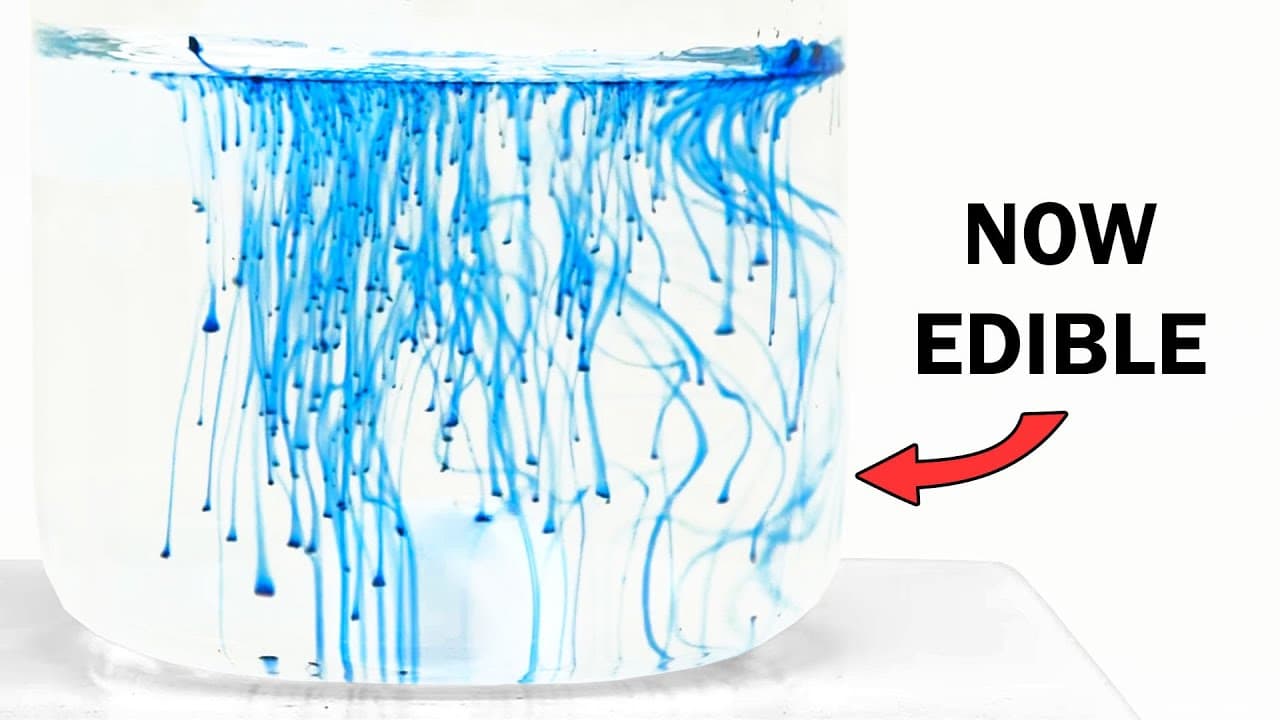
The video explains the process of making indigo carmine dye, including the steps of chemical modification and purification, and demonstrates how to dye food with it.
Transcript
this video has been sponsored by Nord VPN which is an excellent service that helps keep your data and private information safe on the Internet they're giving all my viewers 77% off a three-year plan so if you want to support my channel you should definitely sign up by going to Nord VPN comm / nyle red or by clicking the link in the description seve... Read More
Key Insights
- 💁 Indigo dye can be converted into a soluble form, indigo carmine, through chemical modification using sulfonate groups.
- 🧂 The process of making indigo carmine dye involves several steps, including reaction with sulfuric acid, dilution, filtration, and precipitation using salt.
- ☕ Vacuum filtration may not be suitable for filtering indigo carmine, and gravity filtration with a coffee filter can be a better alternative.
- 🥺 The final yield of indigo carmine dye can be impacted by transfer and washing steps, leading to potential product loss.
- 😥 The dye can undergo color changes based on pH and oxidation levels, making it suitable for experiments with chemical reactions.
- 🥵 Indigo carmine dye can be used to color edible items such as margarine and scrambled eggs, although the high heat can cause color degradation.
- ❓ The purification of indigo carmine dye can be achieved through methods like recrystallization or precipitation using isopropanol.
Install to Summarize YouTube Videos and Get Transcripts
Explore YouTube Video Summarizer or Get YouTube Transcript Extractor
Questions & Answers
Q: How is indigo converted into indigo carmine dye?
Indigo dye is converted into indigo carmine dye through chemical modification, specifically by adding sulfonate groups. This increases its solubility in water, allowing it to be used as a dye.
Q: What are the steps involved in making indigo carmine dye?
The steps include reacting indigo with sulfuric acid, dissolving the resulting compound in water, filtering out unreacted indigo, adding non-iodized salt to form indigo carmine, and washing and drying the dye.
Q: Why is it important to use cold water when diluting the indigo and sulfuric acid mixture?
Cold water is used to prevent excessive heat generation during the dilution process, as adding sulfuric acid to water can cause a rapid release of heat and potential boiling or splashing.
Q: How is the separation of indigo carmine from the solution achieved?
Indigo carmine is separated from the solution through the common ion effect, where the addition of excess salt makes it less soluble compared to sodium chloride. This causes indigo carmine to precipitate out of the solution.
Summary & Key Takeaways
-
The video describes the process of converting indigo dye into a soluble form through chemical modification by adding sulfonate groups, creating a new dye called indigo carmine.
-
The content covers the steps of making indigo carmine dye, including the reaction of indigo with sulfuric acid, precipitation with salt, filtration, and drying.
-
The video also demonstrates how to dye food using indigo carmine, with examples such as coloring margarine and scrambled eggs.
Read in Other Languages (beta)
Share This Summary 📚
Summarize YouTube Videos and Get Video Transcripts with 1-Click
Try YouTube Summary with ChatGPT & Claude or YouTube Transcript Generator
Explore More Summaries from NileRed 📚

Summarize YouTube Videos and Get Video Transcripts with 1-Click
Try YouTube Summary with ChatGPT & Claude or YouTube Transcript Generator