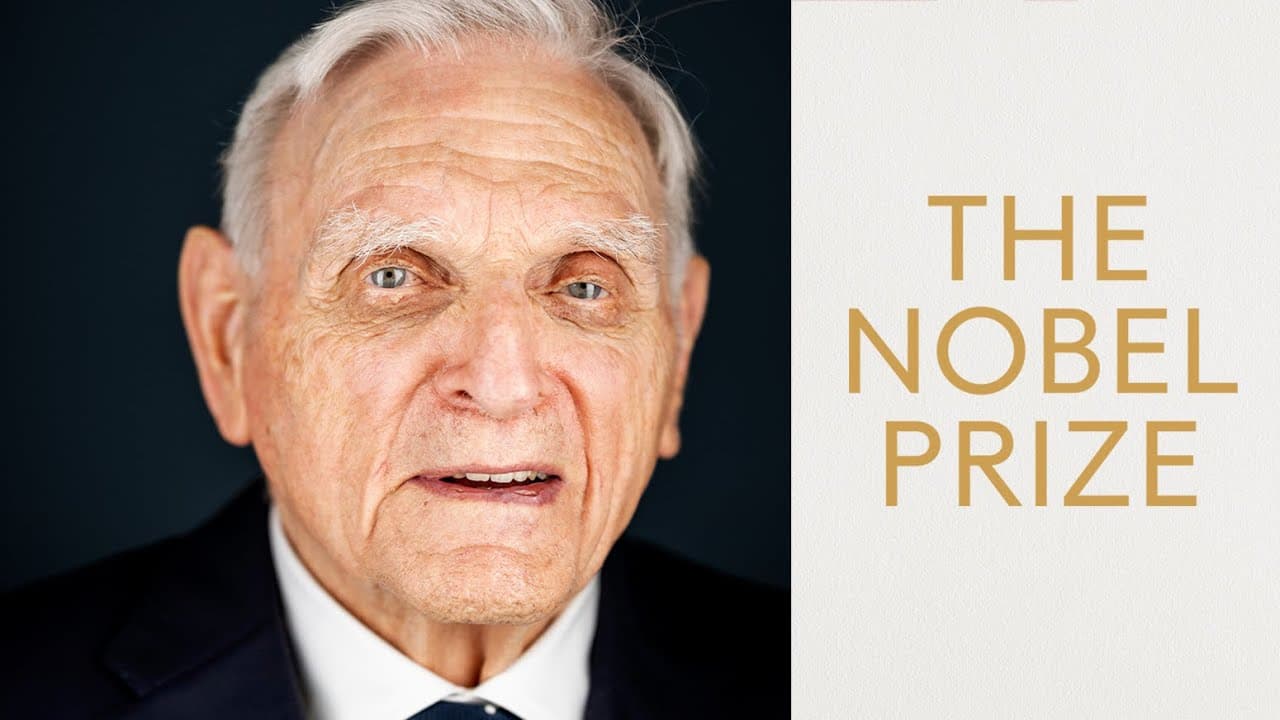
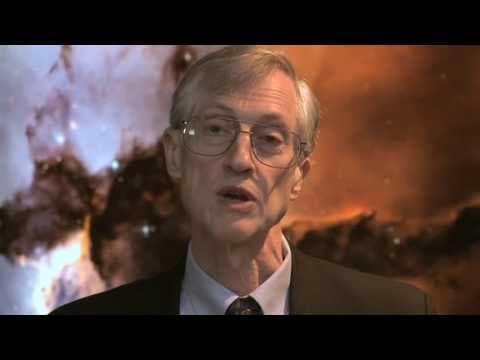
John B. Goodenough, Nobel Prize in Chemistry 2019: Official interview
TL;DR
Scientific progress depends on dialogue, independent thinking, and competing against problems rather than people. Good teachers challenge students beyond what they think they can do, while good teams share credit and respect intellectual property. Sustainable energy also requires better rechargeable batteries to store intermittent wind and solar power when supply and demand occur on different time scales.
Transcript
that's a difficult question because I hope that the younger version of myself that you're talking about would be a little bit brighter than I was a younger person but dialogue dialogue dialogue is always very important we both learn that way well I think you reckon as a good teacher first if they're clear and understand what they're talking about b... Read More
Key Insights
- Dialogue is a central method of learning and thinking because participants exchange understanding, expose ignorance, and benefit from one another's intuition. Goodenough says wisdom emerges through conversation, and he often does his best thinking while discussing a problem with another person.
- A good teacher is clear, understands the subject, and challenges students without turning them away. Effective teaching encourages people to accomplish slightly more than they believed possible, combining intellectual demands with the motivation needed to keep them engaged.
- Scientific mentorship is meant to develop independent thinkers rather than copies of the mentor. Goodenough visits the laboratory to interact with postdoctoral students, ask questions, and help them discover their own wisdom while acknowledging that he is not the source of all answers.
- Scientists compete against problems, not against people. Researchers should understand earlier work without believing everything they read, then develop an internal voice and their own methods of interpretation instead of relying on imitation.
- Scientific success can arise from different individual talents, including building equipment, measuring accurately, interpreting results, developing theory, and using intuition. Dialogue allows these distinct abilities to complement one another and helps researchers benefit from insights they would not produce alone.
- A good scientific team is unselfish, shares its work, and recognizes collective achievement. Team members should respect the intellectual property of students and colleagues rather than taking ideas from one another, while maintaining relationships that extend beyond narrow research discussions.
- Science is an international language that builds relationships across countries. Publishing, reading, traveling, and discussing shared problems create international interaction, which Goodenough believes can help counter the greed and poor judgment that contribute to war.
- Sustainable electricity requires energy storage because wind and radiant solar energy arrive on time scales different from those of demand. Rechargeable batteries already perform useful work, but Goodenough says they still need substantial improvement and continued research.
Install to Summarize YouTube Videos and Get Transcripts
Explore YouTube Video Summarizer or Get YouTube Transcript Extractor
Questions & Answers
Q: What advice did John B. Goodenough give young scientists?
Goodenough advises young scientists to seek dialogue, question what they read, and think independently. They should understand previous work without merely copying it, develop their own internal voice, and remain open to different ways of solving problems. His central principle is that researchers compete against problems rather than against people, so collaboration and shared insight are more productive than personal rivalry.
Q: How does John B. Goodenough define a good teacher?
A good teacher communicates clearly and understands the subject, but knowledge alone is insufficient. The teacher must also challenge students in a way that does not discourage or alienate them. Goodenough says effective teachers push learners to do slightly more than they thought they could do, helping them expand their abilities while preserving their willingness to engage with difficult work.
Q: How should a scientist mentor postdoctoral researchers?
A scientific mentor should encourage postdoctoral researchers to ask questions and think for themselves rather than copy the mentor. Goodenough uses laboratory dialogue to shape independent judgment and openly rejects the idea that a mentor possesses all wisdom. By exposing their own ignorance, mentors create room for students to recognize uncertainty, contribute insights, and discover their own intellectual abilities.
Q: What qualities are needed to become a successful scientist?
Successful scientists need independent thought, careful interpretation, openness to dialogue, and some form of scientific intuition. Goodenough emphasizes that researchers have different strengths. Some build equipment, some excel at measurement, some develop theory, and others rely strongly on intuition. There is no single path to success, but every scientist must know what is being measured and remain willing to learn from other people's talents.
Q: How did dyslexia influence John B. Goodenough's life?
Goodenough says dyslexia meant he would never become a very good reader and had to struggle with reading as best he could. He also connects the experience with learning to love nature. His response was not to remain worried about limitations, but to enjoy life, identify what he could do well, and perform that work as capably as possible.
Q: What makes a scientific research team effective?
An effective research team is not selfish. Its members share their work, recognize that accomplishments are produced together, and respect one another's intellectual property. Goodenough specifically says he should not take the intellectual property of his students, and students should not take it from each other. Informal conversations, shared meals, and discussion beyond immediate experiments can also strengthen laboratory relationships.
Q: Why does John B. Goodenough call science an international language?
Goodenough calls science an international language because people from different countries can publish papers, read one another's work, travel, and discuss the same problems. These interactions allow researchers to exchange knowledge despite national boundaries. Drawing on his experience of war, he argues that building relationships through science can reduce conflict by countering the greed and poor judgment that lead societies toward war.
Q: Why are better batteries necessary for sustainable energy?
Better batteries are necessary because modern society's dependence on energy stored in fossil fuels is not sustainable. Wind and radiant solar energy can be converted into electric power, but their availability occurs on time scales that differ from electricity demand. Batteries store that power for later use. Rechargeable batteries already work reasonably well, but Goodenough says they must improve because existing performance does not yet meet every need.
Summary
This video features a dialogue with an individual reflecting on various topics including the importance of dialogue, the role of a good teacher, the value of individual perspectives in scientific research, the significance of love and friendship, and the need for sustainable energy solutions. The speaker emphasizes the importance of challenging oneself, thinking independently, and being grateful for life and meaningful interactions with others.
Questions & Answers
Q: Why is dialogue important?
Dialogue is important as it allows individuals to learn and grow by exchanging ideas and perspectives. It helps in challenging oneself and exploring new possibilities. Dialogue also fosters wisdom by allowing individuals to expose their own ignorance and discover their own inner wisdom.
Q: What qualities make a good teacher?
A good teacher is someone who is clear and knowledgeable about the subject matter they are teaching. They should also be able to challenge their students, not in a discouraging way, but in a way that pushes them to exceed their own expectations. A good teacher helps their students do things they never thought they could do.
Q: Why is it important to develop one's own internal voice in interpreting information?
Developing one's own internal voice is important because interpreting information is a subjective process. While understanding what has been done before is important, relying solely on copying limits one's growth. Each person has their own unique perspective and interpretation, so it is crucial to develop one's own internal means of interpreting information to contribute something new and individual.
Q: What are the different ways to be successful in scientific research?
Success in scientific research can be achieved through various approaches. Some individuals excel in building equipment, while others focus more on theory and developing a theoretical understanding. Scientific intuition is also a valuable skill. Every scientist brings different talents to the table, but what matters is their willingness to engage in dialogue and share their intuition with others.
Q: How should one approach failure?
It is important to recognize that failure is part of the learning process. While failures can be traumatic, they also provide opportunities for growth and improvement. It is crucial to embrace failures as learning experiences and to not be discouraged by them.
Q: How does the speaker view nature and its relationship to humanity?
The speaker believes in loving and understanding nature as a way of appreciating and showing love for its creator. Nature is seen as a wonderful creation full of surprises and resources. The speaker expresses gratitude for being a part of nature and emphasizes the importance of enjoying life and what one can do within it.
Q: How did the speaker develop an interest in poetry?
The speaker initially struggled with reading poetry and understanding metaphors. To overcome this, they began writing poetry themselves. This helped them understand the challenges of composing metaphors and gave them a deeper appreciation for poetry. They started writing poems for their wife, often focusing on nature and religious themes due to their shared vision of Christianity.
Q: How did the speaker meet their wife?
The speaker met their wife while in graduate school. They were living in different houses in close proximity, and they met at the dining room table between the two houses. The speaker was drawn to their wife's authenticity and how comfortable she was in her own skin. They clicked as friends, and their friendship eventually grew into a deeper relationship.
Q: What does the speaker believe is important for living life to the fullest?
The speaker believes that enthusiasm, enjoying what one does, and having meaningful dialogue with like-minded individuals are key for living life to the fullest. They highlight the significance of being thankful for life and engaging in meaningful interactions with others.
Q: How does the speaker view war and its relation to science?
The speaker believes that war is a waste and emphasizes the stupidity of it. They promote building relationships as a way to minimize the drive for war. The speaker sees science as an international language that can help foster relationships and suppress the greed and stupidity that lead to war.
Takeaways
In this insightful video, the importance of dialogue, personal growth, friendship, and love is emphasized. The speaker highlights the significance of challenging oneself and thinking independently. They also stress the need to appreciate and understand nature as a way of expressing love for its creator. Additionally, the importance of sustainable energy solutions and the value of scientific research in building relationships and preventing conflicts are discussed. The video serves as a reminder to approach life with enthusiasm, gratitude, and a willingness to engage in meaningful dialogue with others.
Summary & Key Takeaways
-
Goodenough describes dialogue as a foundation for teaching, mentorship, and scientific thought. Teachers should communicate clearly and challenge students without discouraging them. Mentors should admit their own ignorance, help researchers discover their individual wisdom, and encourage them to question ideas instead of copying established work or treating colleagues as competitors.
-
Successful scientists bring different abilities to shared problems, including equipment building, measurement, theory, interpretation, and intuition. Failure is unavoidable, so researchers must keep thinking independently and remain willing to learn from others. Goodenough says writing also strengthens thought because it demands clarity, brevity, and removal of distracting intellectual clutter.
-
Goodenough connects science with gratitude, friendship, international cooperation, and sustainability. He values nature, meaningful dialogue, and relationships over pessimism, walls, or war. Because fossil fuel dependence is unsustainable, society must harness wind and radiant solar energy, convert it to electricity, and improve batteries that store power across mismatched supply and demand periods.
Read in Other Languages (beta)
Share This Summary 📚
Summarize YouTube Videos and Get Video Transcripts with 1-Click
Try YouTube Summary with ChatGPT & Claude or YouTube Transcript Generator
Explore More Summaries from Nobel Prize 📚


Summarize YouTube Videos and Get Video Transcripts with 1-Click
Try YouTube Summary with ChatGPT & Claude or YouTube Transcript Generator