How to start a DevOps engineering career for beginners
TL;DR
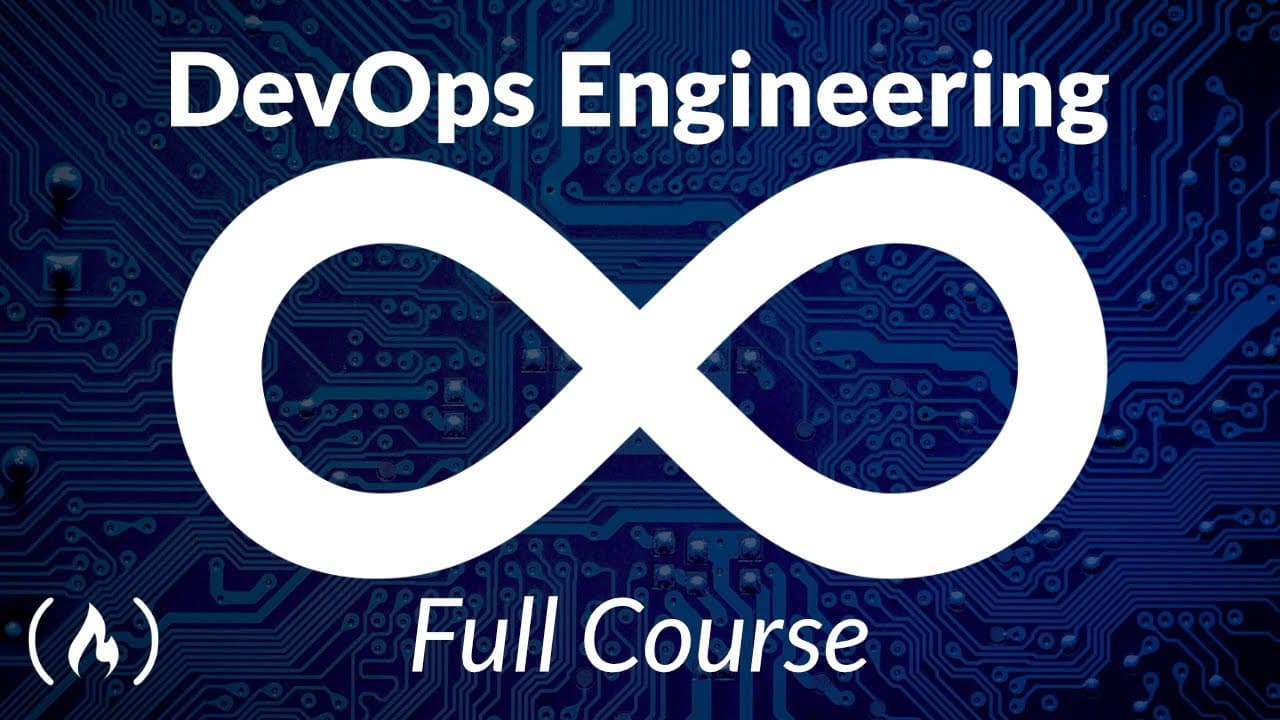
DevOps is a methodology that connects planning, building, testing, releasing, operating, and learning from user feedback in a continuous cycle. A DevOps engineer focuses on pull request automation, deployment automation, and application performance management to speed up delivery while maintaining quality. The course explains terminology, tools, and practices used by modern engineering teams.
Transcript
This beginner's DevOps course is your first step toward a DevOps engineering role. It is taught by the CEO and co founder of LayerCI. The goal of this course will be for regular developers and regular engineering practitioners to learn fundamental DevOps concepts so that they can go towards the DevOps engineering role. We'll also be talking ... Read More
Key Insights
- DevOps is a continuous cycle where planning feeds building and testing, which then leads to releasing and operating, followed by feedback that reshapes future work.
- The core aim of pull request automation is to let developers merge changes quickly after automated tests and code reviews, reducing bureaucratic bottlenecks while maintaining quality gates.
- Deployment automation focuses on releasing software with minimal user disruption, supporting canary deployments and automatic rollbacks to ensure stability during upgrades.
- Application performance management automates health monitoring, alerting, and automatic recovery actions to keep services reliable under load.
- Git and pull requests are central to collaboration, with automated gates like linting and typo checks ensuring code quality before merge.
- Ephemeral environments and automated testing are used to provide fast, isolated feedback per change, reducing cross-team conflicts and speeding up delivery.
- The three pillars—pull request automation, deployment automation, and application performance management—together enable rapid, safe delivery of features to users.
- The course frames DevOps as the engineering side of a broader feedback-driven, digitally transformed organization rather than just a workflow label.
Install to Summarize YouTube Videos and Get Transcripts
Explore YouTube Video Summarizer or Get YouTube Transcript Extractor
Questions & Answers
Q: A real search query question about the video (e.g. 'How to...', 'What is...'). Question 1
DevOps is a set of practices that connects planning, building, testing, releasing, and operating software in a continuous cycle. It aims to deliver user value faster by automating integration, deployment, testing, and monitoring while incorporating feedback from users and stakeholders into ongoing development.
Q: What is the role of pull request automation in DevOps?
Pull request automation is designed to help developers get quick, automated feedback on changes through tests, ephemeral environments, and code review facilitation. It aims to allow a change to be merged the same day it is proposed, assuming all gates are passed and the change meets requirements.
Q: How does deployment automation improve software releases?
Deployment automation focuses on releasing software with minimal downtime and disruption. It supports strategies like canary deployments, where a feature is gradually rolled out to users, and can automatically roll back if problems are detected, ensuring user experience remains stable during updates.
Q: What are the three pillars of DevOps engineering mentioned?
The three pillars are pull request automation, deployment automation, and application performance management. Pull request automation accelerates code reviews and merges, deployment automation speeds and stabilizes releases, and application performance management monitors health, detects downtime, and triggers automatic responses as needed.
Q: Why is continuous integration important in DevOps?
Continuous integration ensures code changes are automatically tested and validated as they are integrated, reducing the risk of integration issues. Automated tests and gates catch errors early, enabling developers to merge changes quickly and maintain overall software quality across iterations.
Q: What is the difference between traditional software development and DevOps as described?
Traditional development treated releases as discrete, major events with larger gaps between versions. DevOps, by contrast, emphasizes a continuous cycle where feedback from users and stakeholders informs ongoing changes, enabling frequent updates and smoother, less disruptive deployments.
Q: How do ephemeral environments contribute to the DevOps process?
Ephemeral environments provide isolated, short-lived spaces to test changes quickly without affecting the main system. They enable per-change validation, reduce cross-team conflicts, and speed up feedback loops, contributing to faster and safer releases.
Q: What does the course say about the target audience for DevOps engineering roles?
The course targets regular developers and engineering practitioners who want to move toward DevOps engineering roles. It covers core concepts, tooling, and the practical engineering aspects of planning, building, testing, deploying, and monitoring software in a modern, feedback-driven environment.
Summary & Key Takeaways
-
DevOps is a continuous cycle that turns user feedback into improved features through planning, building, testing, releasing, and operating stages, closing the loop with feedback for the next cycle.
-
The course emphasizes three pillars of DevOps engineering: pull request automation to speed up code reviews, deployment automation to enable safe releases, and application performance management to keep systems healthy.
-
The material links to practical concepts like continuous integration, continuous deployment, canary deployments, ephemeral environments, and the distinction between traditional and modern software delivery models.
Read in Other Languages (beta)
Share This Summary 📚
Summarize YouTube Videos and Get Video Transcripts with 1-Click
Try YouTube Summary with ChatGPT & Claude or YouTube Transcript Generator
Explore More Summaries from freeCodeCamp.org 📚


Summarize YouTube Videos and Get Video Transcripts with 1-Click
Try YouTube Summary with ChatGPT & Claude or YouTube Transcript Generator