How to Create Optical Rugate Filters from Silicon Wafers
TL;DR
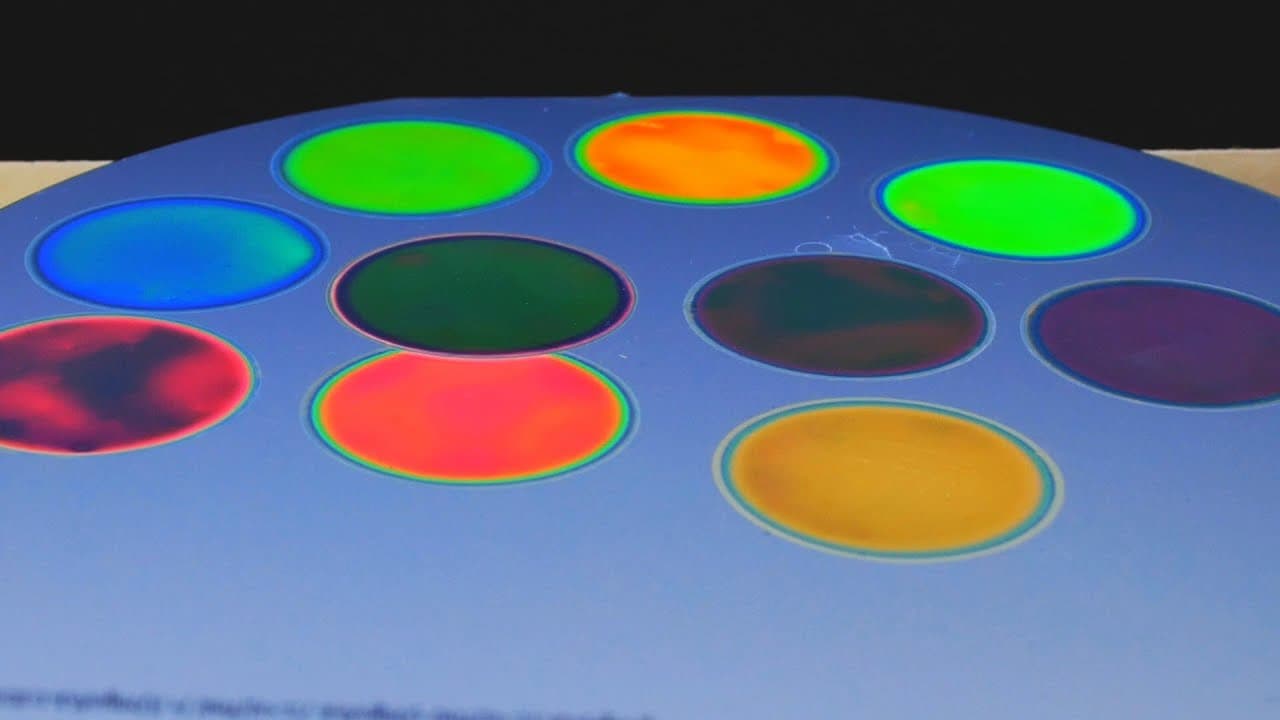
You can create optical rugate filters by etching silicon wafers using an acid bath and controlled electrical current. This process allows for precise manipulation of the silicon's porosity and optical properties, enabling the production of filters that can also function as chemical sensors and exhibit unique light transmission characteristics.
Transcript
today on applied science i'd like to show you a technique to etch silicon wafers to make optical filters these are the same wafers that are used to make integrated circuits but in today's experiment we're going to use an acid bath and an electrical current to make these specialized optical rugate filters these filters have a lot of interesting prop... Read More
Key Insights
- 💿 The etching process allows for precise control of the porosity and optical properties of silicon wafers, enabling the creation of specialized optical filters.
- 🕵️ Optical rugate filters can be used as chemical sensors by functionalizing the surface to detect specific substances.
- 🙂 Anti-reflection coatings are designed to minimize reflections and improve transmission of light, enhancing optical performance.
- 💿 Multiple coatings can correct for reflections at different wavelengths, improving color rendition and overall optical quality.
- 🎮 Silicon wafers used for etching should be heavily doped and p-type for optimal conductivity and control over the etching process.
- 🙂 The etching process also allows for the creation of light-emitting structures and light-sensitive devices.
- 💿 Porous silicon, resulting from the etching process, exhibits varied optical properties and can be used for a range of applications in optics.
Install to Summarize YouTube Videos and Get Transcripts
Explore YouTube Video Summarizer or Get YouTube Transcript Extractor
Questions & Answers
Q: How are the optical rugate filters made using the etching process?
Optical rugate filters are made by etching silicon wafers using an acid bath and applying an electrical current. The current controls the porosity of the wafer, allowing precise control of the optical properties.
Q: Can the optical filters be used as chemical sensors?
Yes, the surface of the optical filters can be functionalized, allowing them to be used as chemical sensors. The response of the filter can be tailored to detect specific chemical substances.
Q: What is the purpose of anti-reflection coatings in optics?
Anti-reflection coatings are used to minimize reflections at the interface of materials with different indices of refraction. They enhance transmission of light and improve overall optical performance.
Q: How do multiple coatings improve the performance of anti-reflection coatings?
Multiple coatings can correct for reflections at multiple wavelengths, allowing for better control and matching of the desired spectral response. This results in improved color rendition and optical performance.
Summary & Key Takeaways
-
The video showcases a technique to etch silicon wafers using an acid bath and electrical current to create optical rugate filters.
-
These filters have unique properties and can be used as chemical sensors, patterned using light, and made transparent or opaque.
-
The video also explores the use of anti-reflection coatings and their design principles.
Read in Other Languages (beta)
Share This Summary 📚
Summarize YouTube Videos and Get Video Transcripts with 1-Click
Try YouTube Summary with ChatGPT & Claude or YouTube Transcript Generator
Explore More Summaries from Applied Science 📚

Summarize YouTube Videos and Get Video Transcripts with 1-Click
Try YouTube Summary with ChatGPT & Claude or YouTube Transcript Generator