Rener Gracie on Jiu Jitsu Principles for Life
TL;DR
Jiu Jitsu is more than a catalog of moves. It is a system built on underlying principles that also apply to leadership, combat, business and relationships. Jocko Willink and Rener Gracie trace how a frail Helio Gracie adapted Japanese techniques to suit his limited strength, and how the family later spread Gracie Jiu Jitsu in America through free classes and challenge matches.
Transcript
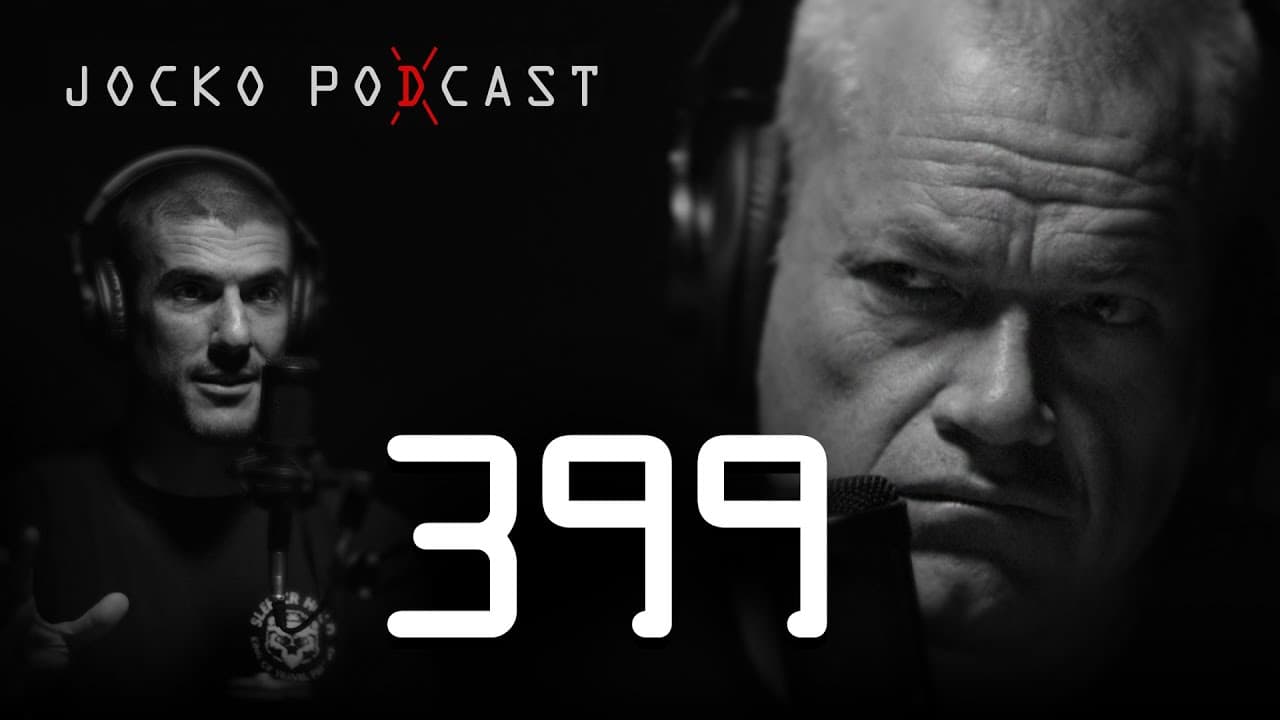
this is Jocko podcast number 399 with Echo Charles and me Jocko willink good evening Echo good evening Jiu Jitsu is life this statement is often made by practitioners of the art of Jiu Jitsu some mean it in a playful way Jiu Jitsu is so fun and engaging that it seems to permeate every aspect of life others mean it in a more serious way the power of... Read More
Key Insights
- Jiu Jitsu is an interconnected system, not a list of separate moves. Techniques work best when combined in sequence so they support each other, and principles underneath them make the whole system work.
- The principles of Jiu Jitsu are a way of thinking as well as a way of fighting. Jocko Willink says applying them to leadership and life made him a better SEAL, a better leader and a better person.
- Even basic Jiu Jitsu can dominate untrained opponents. Master Chief Steve Bailey called himself a beginner, yet he repeatedly made larger, younger Navy SEALs tap out using only fundamental techniques.
- Helio Gracie built Gracie Jiu Jitsu around physical limitation. He was frail, suffered from vertigo and was kept from training, so he modified the techniques his brothers practiced to fit his limited physical ability.
- Helio Gracie became a teacher by watching, not by practicing. When his brother Carlos missed a private class, Helio taught it from memory, and the student asked to keep training with him from then on.
- Deprivation can drive dedication. Rener Gracie compares his grandfather to someone in the desert dying of thirst: not being allowed to train made him throw himself into Jiu Jitsu with total commitment.
- Challenge matches proved Jiu Jitsu worked in Brazil and later in America. Helio, a small man, defeated much larger opponents, and students at the Gracie Garage later challenged instructors of other martial arts.
- Rorion Gracie grew Jiu Jitsu in America through referrals. Every person who referred a friend earned another free class, which filled the Gracie Garage until people were waiting to get in.
Install to Summarize YouTube Videos and Get Transcripts
Explore YouTube Video Summarizer or Get YouTube Transcript Extractor
Questions & Answers
Q: What are the main ideas behind the book The 32 Principles by Rener Gracie?
The 32 Principles, written by Rener Gracie, is about using the power of Jiu Jitsu to succeed in business, relationships and life. It treats Jiu Jitsu as more than a fighting method. The principles that make Jiu Jitsu techniques work are presented as ways of thinking that can be applied to leadership, conflict and personal growth outside the gym.
Q: How did Jocko Willink first get introduced to Jiu Jitsu?
Jocko Willink learned Jiu Jitsu as a young Navy SEAL on his first overseas deployment. Master Chief Steve Bailey asked who wanted to learn to fight, and Jocko raised his hand. The older, smaller Master Chief then tied him and his teammates in knots for almost an hour and told them, welcome to Gracie Jiu Jitsu.
Q: Why could a beginner like Master Chief Bailey beat stronger Navy SEALs?
Master Chief Steve Bailey had trained at the Gracie Garage in Torrance, California, and admitted he was only a beginner. Even so, the most basic Jiu Jitsu moves let him dominate younger, bigger SEALs who had no grappling training. Jocko could not last long against him no matter what he tried, which showed how effective technique is against untrained strength.
Q: What basic positions and submissions are learned in Jiu Jitsu?
Jocko Willink lists the basic positions as the mount, the back, the guard, the half guard and side control. The basic submissions he learned include the straight arm lock, the Kimura, the Americana, collar chokes, guillotine chokes, the rear naked choke, and foot, ankle and knee locks. Together they make up the core toolkit used to make an opponent tap out.
Q: How did Helio Gracie create Gracie Jiu Jitsu despite being frail?
Helio Gracie was a frail young man who suffered from vertigo and was not allowed to do strenuous activity, so he spent years watching his brothers train. After he started teaching, he found that many techniques did not suit his limited physical ability. He began modifying and adapting them, with help from his brothers, so a smaller person could make them work against larger opponents.
Q: How did Helio Gracie become a Jiu Jitsu teacher without formal training?
One day Helio's older brother Carlos missed a private class with an influential Brazilian banker. Helio, who had been observing classes for years, offered to teach in his place and ran the session entirely from memory. When Carlos arrived late, the student said he wanted to keep training with the younger brother, which effectively made Helio a Jiu Jitsu teacher overnight.
Q: How did the Gracie family spread Jiu Jitsu in America?
Rorion Gracie brought Jiu Jitsu to Southern California and offered a free class to everyone he met. Anyone who referred a friend earned another free class, and the friend got one too, so students kept recruiting. The Gracie Garage soon ran out of space and built a long waiting list, while students challenged instructors of other martial arts to test the system.
Q: What does the phrase Jiu Jitsu is life mean to Jocko Willink?
For Jocko Willink, Jiu Jitsu is life means the real correlations between training and living. The struggles, trials, tribulations and triumphs on the mat mirror what everyone experiences in life. Over time he saw that its principles were a way of thinking, applied them to everything he did, and found he became a better SEAL, leader and person.
Summary & Key Takeaways
-
Jocko Willink opens by reading his foreword to Rener Gracie's book The 32 Principles. He describes being dominated by Master Chief Steve Bailey on his first SEAL deployment, then training with Fabio Santos, and realizing that Jiu Jitsu principles connect to leadership, combat and life itself.
-
Rener Gracie explains how his grandfather Helio, a frail young man barred from training, watched his older brothers practice for years. When Carlos missed a private lesson, Helio taught it from memory, impressed the student, and began adapting techniques to fit his limited physical ability.
-
Helio became the family champion in Vale Tudo challenge matches, beating much larger fighters. His son Rorion brought Jiu Jitsu to Southern California, grew the Gracie Garage through free referral classes, and students there challenged instructors of other martial arts to prove the system worked.
-
Jiu Jitsu is more than a set of moves. Rener and Jocko frame it as a set of underlying principles that also guide decisions in business, relationships and everyday life.
Read in Other Languages (beta)
Share This Summary 📚
Summarize YouTube Videos and Get Video Transcripts with 1-Click
Try YouTube Summary with ChatGPT & Claude or YouTube Transcript Generator
Explore More Summaries from Jocko Podcast 📚

Summarize YouTube Videos and Get Video Transcripts with 1-Click
Try YouTube Summary with ChatGPT & Claude or YouTube Transcript Generator