How to Turn a Business Idea Into a Company
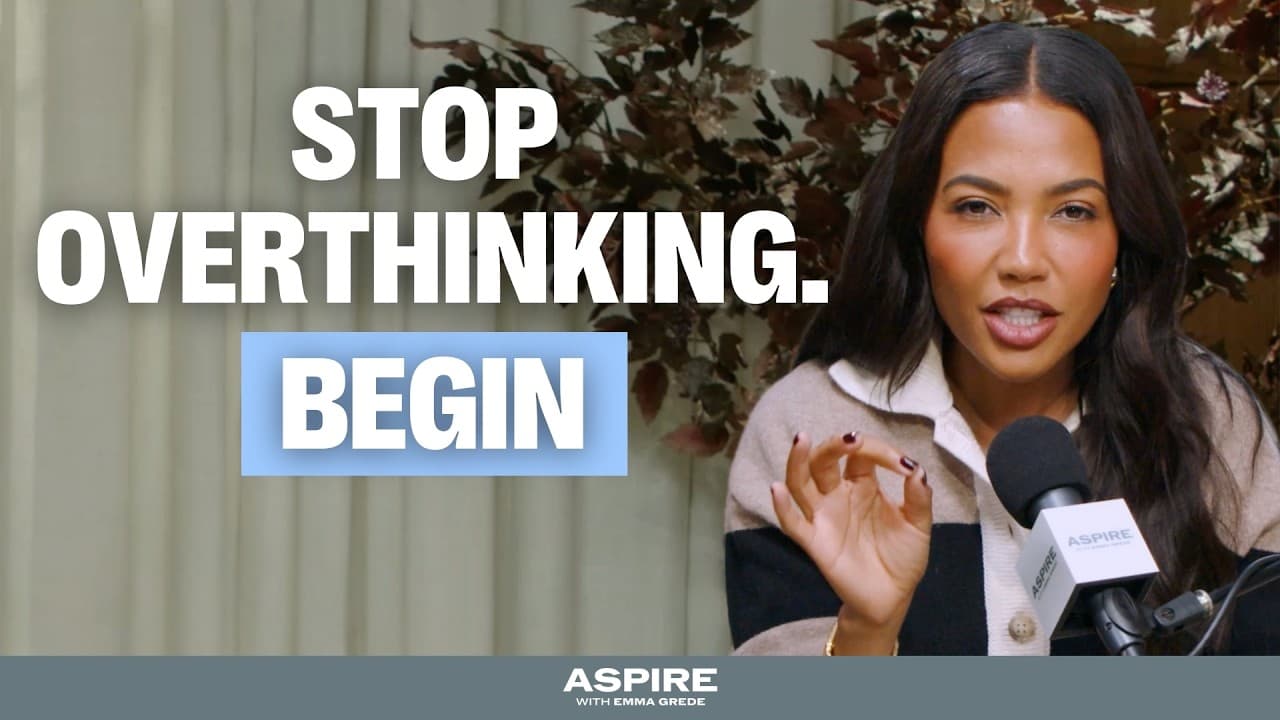
TL;DR
Start before every detail feels perfect, then manage uncertainty through planning, customer research, testing, and disciplined execution. Define the problem, identify exactly who experiences it, and clarify why you are equipped to solve it. Build around genuine conviction, adapt as the market changes, and make sure the product consistently fulfills its promise.
Transcript
Hi everyone, it's Emma and welcome back to Aspire. So for those of you who have ever thought about starting a business, here's a number that stopped me in my tracks. 40% of new businesses fail within 3 years and nearly half are gone by year five. But the ones that make it, well, they often follow the same playbook. And today, I'm breaking down that... Read More
Key Insights
- Starting is the first requirement of entrepreneurship because an idea, unfinished business plan, prototype, or registration page does not create a functioning company. Waiting until money, materials, knowledge, and circumstances align perfectly can prevent a founder from gathering the real information that only action produces.
- Risk is an unavoidable part of forming a company, but it can be managed through planning, research, testing, and learning. Each business decision can produce data that helps refine the approach, so uncertainty should be treated as something to prepare for and use rather than something founders can completely remove.
- Business building is difficult even for capable and ambitious people because it demands time, sacrifice, persistence, and comfort with fear. Founders should anticipate those pressures before launching, recognize that results do not appear overnight, and treat preparation for sustained work as a requirement rather than an optional exercise.
- Execution is what turns an idea into a business because ideas alone do not attract customers, generate revenue, build systems, or pay salaries. Better products, stronger teams, disciplined processes, effective marketing, higher quality, clearer storytelling, and deeper customer understanding can separate successful companies from others pursuing similar concepts.
- Authenticity can create differentiation even when an idea is not original. A founder can apply personal experience, perspective, and insight to an existing category, then compete by serving customers better. The relevant question is not whether anyone has attempted the idea, but whether the founder can execute it distinctly.
- Good American was built around an underserved customer problem rather than the novelty of selling denim. Research into limited options and poor fit for women with curves led to an inclusive product range spanning sizes 00 through 24, while further research revealed needs among petite and tall customers.
- A credible partner can accelerate a brand, but the product still has to fulfill its promise. Khloe Kardashian brought fame, popularity, and personal understanding of being taller and curvier than most, yet the account emphasizes that customers would not continue paying $160 for jeans unless the jeans were genuinely good.
- Customer research has two connected purposes: understanding the people being served and evaluating the business opportunity. Founders should investigate where customers shop, how they live, what frustrates them, and which brands they already buy, then use those observations to refine the product and market it effectively.
Install to Summarize YouTube Videos and Get Transcripts
Explore YouTube Video Summarizer or Get YouTube Transcript Extractor
Questions & Answers
Q: How do you start a business before feeling ready?
Begin by taking a concrete step instead of waiting for ideal conditions. The account describes launching Good American despite insufficient money, unavailable preferred fabric, and uncertainty about how everything would work. Planning, customer research, and testing can reduce uncertainty, but they cannot eliminate risk. Progress begins when the idea, unfinished plan, prototype, or registration page becomes real execution.
Q: Why does execution matter more than a business idea?
Execution creates the elements that an idea cannot produce by itself: a useful product, customers, revenue, teams, systems, processes, marketing, and consistent service. Two companies may pursue similar concepts, but the company operating faster, with greater discipline, better quality, stronger storytelling, and deeper customer understanding can differentiate itself and build lasting value.
Q: How should a first-time founder manage business risk?
A founder should treat risk as something to manage, learn from, and potentially leverage, not something that can be removed entirely. Planning, research, and testing can reduce uncertainty before major decisions. Each decision also creates data that can refine the approach. Personal responsibilities remain real, so founders should anticipate the required time, work, sacrifice, and fear.
Q: What questions should founders ask about a business idea?
Founders should ask three central questions: What is the one problem being solved, exactly who is it being solved for, and why is this founder the person to solve it? These questions connect the product to a specific customer and establish personal conviction. That conviction becomes particularly important when progress is difficult and motivation is under pressure.
Q: How do you research customers for a new business?
Customer research begins by getting close to the intended market and learning how potential buyers behave. Investigate where they shop, how they live, what frustrates them, and which brands they currently purchase. The goal is practical understanding, not an academic exercise. These observations help founders shape the product, identify unmet needs, and communicate with customers more effectively.
Q: Why should entrepreneurs avoid chasing trends?
Trends change, so a business built mainly around a temporary opportunity may leave its founder without enough motivation when conditions become difficult. The recommended approach is to begin where personal conviction is strongest. A clear belief in the customer, problem, and proposed solution provides a more durable reason to persist through fear, sacrifice, uncertainty, and slow progress.
Q: How did customer research shape Good American?
The initial opportunity centered on women with curves who faced limited, unfashionable, poor-quality choices and poorly fitting jeans. Continued denim research showed that fit problems also affected petite and tall women. The concept consequently expanded into an inclusive denim brand offering sizes 00 through 24, while remaining focused on giving customers options they were not receiving elsewhere.
Q: Can a famous partner make a product successful?
A famous partner can accelerate awareness, but fame does not replace product quality. Khloe Kardashian brought popularity, curves, lovability, and personal understanding of being taller and curvier than most, which helped propel Good American. However, the product still needed to satisfy its promise because customers would not spend $160 on jeans simply because they admired the person associated with them.
Summary & Key Takeaways
-
Starting a company requires accepting that risk cannot be eliminated. Founders should manage uncertainty with planning, research, testing, and realistic expectations about sacrifice and time. Perfectionism, professional ambition, family responsibilities, and fear can all delay action, but an unfinished plan or prototype becomes meaningful only when the founder begins executing.
-
A business is created through execution, not through the idea alone. Strong execution includes developing the right product, refining its details, hiring suitable people, building systems, marketing effectively, telling a compelling story, and understanding the customer deeply. Companies pursuing similar ideas can achieve very different results because their discipline, quality, speed, and differentiation vary.
-
Good American began with observations about inadequate clothing choices and poorly fitting jeans for women with curves. Customer and product research broadened the concept into inclusive denim covering sizes 00 through 24. The example shows how focused insights, continuous adaptation, a credible partner, and a product that fulfills its promise can support growth.
Read in Other Languages (beta)
Share This Summary 📚
Summarize YouTube Videos and Get Video Transcripts with 1-Click
Try YouTube Summary with ChatGPT & Claude or YouTube Transcript Generator
Explore More Summaries from Emma Grede 📚

Summarize YouTube Videos and Get Video Transcripts with 1-Click
Try YouTube Summary with ChatGPT & Claude or YouTube Transcript Generator