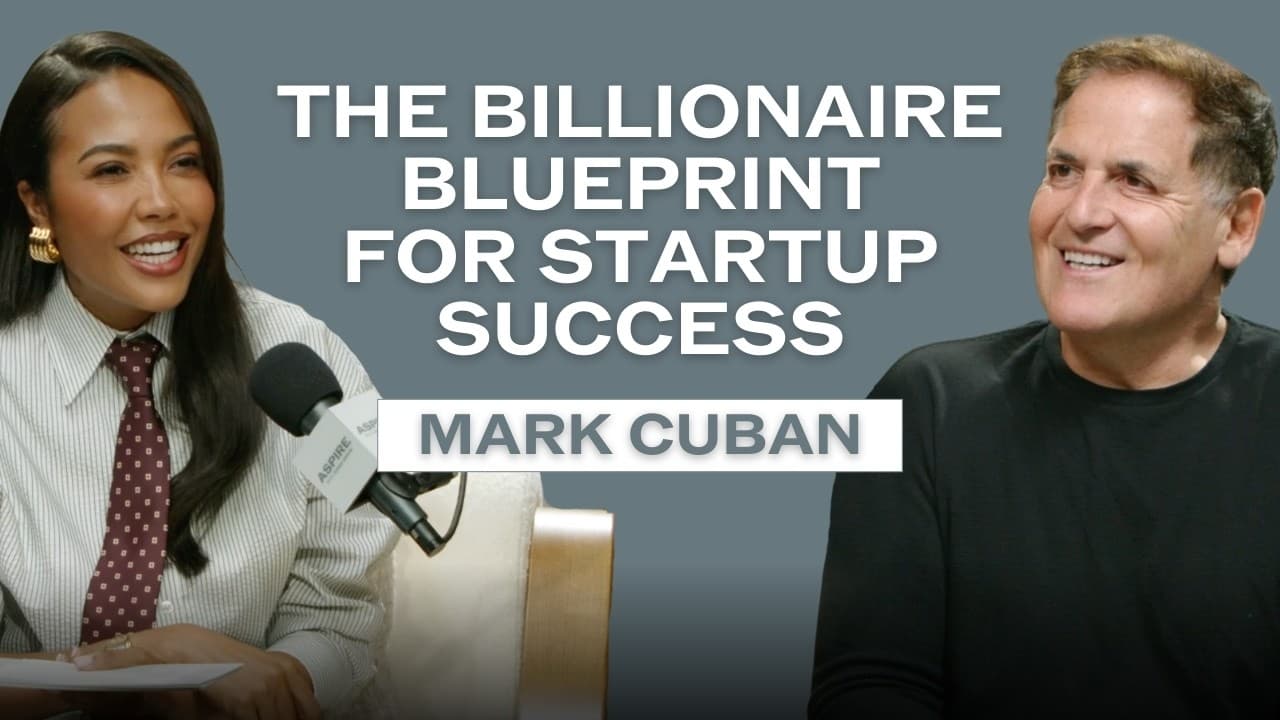
How to build startup discipline with Mark Cuban
TL;DR
Mark explains that balancing family and business is a conscious choice, not a failure. He emphasizes clear priorities, learning from early hustle, and using honest, practical advice to help entrepreneurs grow. The core takeaway is that success comes from relentless focus, resilience, and seeking value beyond the check when investing in others.
Transcript
All right, Mark. I'm so happy to have you here. >> Thanks for having me. I'm I'm excited. >> No, I'm excited, too. I I couldn't be more excited. Obviously, you and I met on Shark Tank, which was I don't know, a couple of years back now. I had the distinct pleasure of sitting next to you for three seasons. >> Yeah, they always put the rookies next t... Read More
Key Insights
- Mark’s success was built on a foundation of hustle and early sales experience, starting with door-to-door garbage bag sales.
- The key to entrepreneurship is earning what you want through work, not waiting for opportunity to knock.
- Being seen as a real example matters because representation motivates peers to pursue their own ventures.
- Founders benefit from candid, practical feedback even when it does not lead to an investment.
- Work-life balance is a choice and sacrifice; family time can be prioritized without abandoning ambition.
- Market success comes from execution, not just brilliant ideas, according to Mark’s experience with startups.
- Mentorship and guidance add value beyond money, helping teams refine strategy and product-market fit.
- Authentic storytelling and being relatable help attract support, investors, and customers alike.
Install to Summarize YouTube Videos and Get Transcripts
Explore YouTube Video Summarizer or Get YouTube Transcript Extractor
Questions & Answers
Q: A real search query question about the video (e.g. 'How to...', 'What is...', 'Why does...', 'When should...'). Question 1
How can founders balance intense work periods with family life, according to Mark Cuban? Mark explains that balancing work and home life is a deliberate choice guided by priorities. He describes missing many family moments due to Shark Tank but stresses the importance of being present when it matters most. The core is aligning commitments with personal values while maintaining professional drive.
Q: Question 2
What early experiences shaped Mark Cuban’s entrepreneurial mindset? He recounts buying and selling trading cards and selling garbage bags door-to-door as a child. These early hustle experiences taught him that you can earn money through talking to people and solving problems. This foundational mindset underpins his later approach to startup investments and business growth.
Q: Question 3
Why does Mark believe representation matters for aspiring entrepreneurs? He argues that you cannot be what you cannot see, and seeing successful people who resemble you motivates others to pursue their own ventures. This belief underpins his long tenure on Shark Tank and his emphasis on authentic, relatable mentorship.
Q: Question 4
What is the value of honest feedback in entrepreneurship, according to Mark Cuban? He says honest feedback helps founders understand real-world constraints and potential pivots, even without an investment. The value lies in actionable guidance that entrepreneurs can implement to strengthen their business model, sales strategy, and product-market fit.
Q: Question 5
How does Mark view the role of money versus guidance in startup success? He notes that investments offer more than capital; they bring mentorship, networks, and strategic advice. He emphasizes that the impact of guidance can be as meaningful as the financial support, helping teams accelerate growth and avoid common pitfalls.
Q: Question 6
What does Mark say about sacrifice and the perception of entrepreneurship in families? He acknowledges trade-offs, highlighting that long hours and travel can affect family life. He frames sacrifices as part of pursuing a meaningful path, not as a punishment, and stresses the importance of communicating priorities clearly within the family.
Q: Question 7
What early lessons did Mark Cuban learn about earning and opportunity? From his garbage bag route, he learned that people respond to direct communication and simple value propositions. This translates to modern startups where clear messaging, practical solutions, and accessible sales processes drive early traction.
Q: Question 8
What practical steps can aspiring founders take from this interview? Focus on solving real problems with clear value, seek feedback from mentors, and build visibility through authentic storytelling. Prepare to explain not only what you do but why it matters, and pursue opportunities where you can leverage guidance as much as capital.
Summary & Key Takeaways
-
Mark emphasizes prioritizing family and personal life alongside business, illustrating that sacrifices can be intentional rather than regrets. He shares early hustles and the mindset that money follows execution, not the other way around. The conversation also highlights mentorship value and the impact of being seen as a real example for aspiring entrepreneurs.
-
The episode covers Mark Cuban’s rise from selling garbage bags to building a media and tech empire, stressing practical lessons in execution, sales, and resilience. It also discusses the importance of honest feedback to founders and the non monetary benefits of Shark Tank investments.
-
The interview ends with a reflection on role models and representation, arguing that seeing relatable success fuels ambition and demonstrates that the American dream is achievable through effort and opportunity.
Read in Other Languages (beta)
Share This Summary 📚
Summarize YouTube Videos and Get Video Transcripts with 1-Click
Try YouTube Summary with ChatGPT & Claude or YouTube Transcript Generator
Explore More Summaries from Emma Grede 📚



Summarize YouTube Videos and Get Video Transcripts with 1-Click
Try YouTube Summary with ChatGPT & Claude or YouTube Transcript Generator