How Can Countries Accelerate AI Innovation?

TL;DR
Countries can accelerate innovation by making new technologies legal by default, supporting startups, encouraging adoption, and expanding electricity generation. Elon Musk predicts major gains from digital AI and humanoid robotics, but argues that physical deployment will take longer because it requires global supply chains, manufacturing capacity, advanced chips, capable software, and electromechanical dexterity.
Transcript
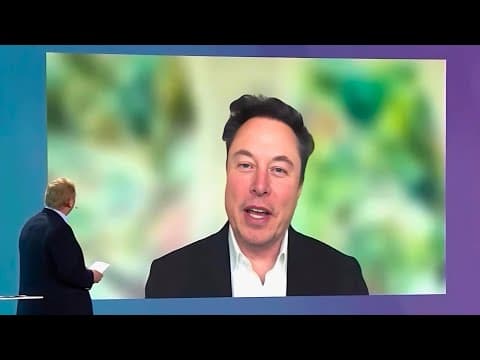
So thank you Elon for for joining us. What in your opinion separates countries where innovators can successfully turn breakthroughs into deployed technologies from those where where progress actually stalls because I think there's a lot of lessons learned about what people governments should be doing and what maybe they they shouldn't be. Well, yea... Read More
Key Insights
- Innovation policy is most effective when new technologies are legal by default. Musk argues that unusually heavy regulation makes emerging products effectively illegal until approved, slowing technological deployment even when it does not stop progress entirely.
- Startups are comparable to small saplings competing with mature trees. Governments often support large incumbent companies that already possess resources and influence, while young companies need venture capital, favorable conditions, and active policy support to survive and grow.
- Technology adoption is a driver of economic growth when countries take a forward-looking approach. Musk says governments should embrace and encourage emerging technologies instead of remaining tied to older systems, particularly as artificial intelligence and robotics begin producing productivity gains.
- Digital AI could increase the global economy by approximately 20 to 30 percent. Musk describes this as roughly 20 to 30 trillion per year and predicts that AI will become extremely capable across software, engineering, and other entirely digital activities.
- AI software could reach what Musk calls Stockfish-level capability within 12–18 months. The comparison means AI may become so effective at writing software that human programmers cannot compete directly, similar to how chess software can decisively outperform leading human players.
- Physical AI develops more slowly than digital AI because physical products require factories, components, logistics, and global supply chains. Software can be copied easily between computers, while robots require the coordinated production and movement of large quantities of physical materials.
- A humanoid robot's usefulness is the product of three factors: AI software quality, onboard AI chip capability, and electromechanical dexterity, especially hand performance. Because all three are improving exponentially, Musk expects their combined progress to produce rapidly increasing practical value.
- Electricity availability is becoming a constraint on AI infrastructure outside China. Musk cites an anticipated shortfall of at least 15 gigawatts in 2027 because AI chip production is rising by roughly 40 to 50 percent annually while available power grows more slowly.
Install to Summarize YouTube Videos and Get Transcripts
Explore YouTube Video Summarizer or Get YouTube Transcript Extractor
Questions & Answers
Q: How can countries accelerate technological innovation?
Countries can accelerate innovation by establishing an environment where new technologies are legal by default, maintaining access to venture capital, supporting new companies, and encouraging adoption. Musk argues that excessive regulation slows deployment. He also says policy should favor young startups that still need help instead of concentrating assistance on large incumbent companies that already have resources and influence.
Q: Why does default-legal regulation support innovation?
Default-legal regulation allows developers and companies to test and deploy new technologies without first overcoming broad prohibitions. Musk argues that systems where new activities are generally illegal until approved create substantial delays. Regulation may not stop technological progress permanently, but it can slow progress considerably and make it harder for young companies to establish themselves.
Q: Why should governments prioritize startups over large companies?
Startups need more assistance because they resemble small saplings competing with mature trees. Large companies generally possess established resources and access to influence, while young firms need venture capital, favorable rules, and active encouragement to grow. Musk argues that governments commonly direct too much support toward incumbents even though startups face the greater need for protection and opportunity.
Q: How much could AI increase the global economy?
Musk estimates that digital AI could increase the global economy by approximately 20 to 30 percent, which he describes as roughly 20 to 30 trillion per year. He expects additional gains from humanoid robotics to be much larger, potentially increasing the economy by a factor of 10 or more as general-purpose robots become widely deployed.
Q: When could AI outperform humans at software development?
Musk predicts that AI software could reach what he calls Stockfish-level performance within 12–18 months. By this he means AI would become so capable that humans could no longer compete directly in writing software, similar to the decisive advantage chess software has over leading human players. He also expects extremely strong performance across engineering and other digital work.
Q: Why does humanoid robotics progress more slowly than digital AI?
Humanoid robotics progresses more slowly because physical systems require complete manufacturing and supply-chain infrastructure. A solved software problem can be copied easily across computers, but a robot must be physically produced from components sourced through global supply chains. Deployment therefore depends on factories, materials, chips, mechanical systems, transportation, and the ability to assemble large quantities of hardware.
Q: What determines how useful a humanoid robot will be?
Musk describes robot usefulness as the product of AI software quality, the capability of the AI chip inside the robot, and electromechanical dexterity, especially the performance of its hands. He says all three factors are improving exponentially. If robots eventually manufacture other robots, that combination could create a recursive expansion that begins slowly and then accelerates sharply.
Q: Why could electricity limit AI growth in 2027?
Electricity could limit AI growth because chip production is expanding faster than power availability outside China. Musk says AI chip output is increasing by roughly 40 to 50 percent per year, while available electricity is rising by about 10 to 20 percent. He cites an analyst consensus estimate of at least a 15-gigawatt power shortfall for AI chips in 2027.
Summary & Key Takeaways
-
Innovation thrives when regulation permits new technologies by default and policy favors young companies that need support. Musk compares startups to small saplings competing with established trees, arguing that large incumbents already possess influence and resources while new firms require venture capital, regulatory clarity, and active encouragement.
-
Digital AI could produce significant productivity gains because software can be copied rapidly across computers. Musk predicts AI will become exceptionally capable at software and other digital engineering tasks within 12–18 months, while estimating that digital AI could increase the global economy by approximately 20 to 30 percent.
-
Humanoid robotics could ultimately produce much larger economic gains, but physical technology develops more slowly because factories and global supply chains must move and assemble atoms. Musk also identifies electricity as a near-term constraint, citing an expected power shortfall of at least 15 gigawatts for AI chips in 2027.
Read in Other Languages (beta)
Share This Summary 📚
Summarize YouTube Videos and Get Video Transcripts with 1-Click
Try YouTube Summary with ChatGPT & Claude or YouTube Transcript Generator
Explore More Summaries from Farzad 📚


Summarize YouTube Videos and Get Video Transcripts with 1-Click
Try YouTube Summary with ChatGPT & Claude or YouTube Transcript Generator