What Factors Led to Human Dominance and Environmental Challenges?

TL;DR
Human dominance over the planet arises from significant population growth and consumption patterns, resulting in environmental challenges like toxification and resource conflicts. To navigate these issues, a shift in cultural evolution and human behavior is essential, as traditional approaches to understanding the environment are often inadequate for addressing modern crises.
Transcript
hello my name is Alexander Rose I'm the executive director at the long now foundation about seven months ago the Pierre and Pamela a MIDI our foundation when we asked them for a grant they asked us to have it matched by new membership and we set ourselves a fairly ambitious goal of a hundred thousand dollars in new memberships not just renewals in ... Read More
Key Insights
- 😀 The world is facing major challenges in population growth, consumption patterns, environmental toxicity, and resource wars.
- ❓ Cultural evolution and a shift in mindset are necessary to address these challenges and promote sustainable practices.
- 🧑⚕️ Toxification and the spread of toxic substances pose significant risks to human health and the environment.
Install to Summarize YouTube Videos and Get Transcripts
Explore YouTube Video Summarizer or Get YouTube Transcript Extractor
Questions & Answers
Q: How can cultural evolution help address the challenges of population growth and consumption patterns?
Cultural evolution refers to the process of change in human behavior and societal norms. By shifting cultural norms towards sustainable practices and responsible consumption, we can reduce population growth and mitigate the negative impact on the environment.
Q: What are some potential consequences of toxification and the spread of toxic substances?
Toxification can have various health effects on both human and animal populations. These effects can range from reproductive issues, immunosuppression, and even cancer. Additionally, the long-term consequences of exposure to these substances are largely unknown, making it even more crucial to prioritize awareness and prevention.
Q: How can we address the issues of resource wars and environmental conflicts?
By reducing our dependence on fossil fuels and increasing investment in renewable energy sources, we can decrease the likelihood of resource wars. Additionally, adopting sustainable practices and resource management can help mitigate environmental conflicts and promote equitable distribution of resources.
Q: How can we encourage a shift in mindset towards sustainable practices and responsible consumption?
Education and awareness campaigns play a vital role in changing mindsets. By highlighting the consequences of unsustainable practices and promoting alternative solutions, we can encourage individuals and communities to adopt more sustainable and responsible behaviors.
Summary & Key Takeaways
-
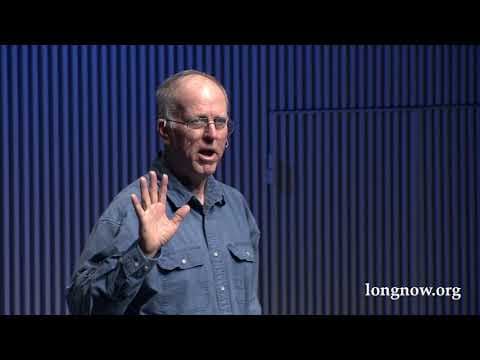
The speaker highlights the dominance of humans on the planet and the impact it has on the environment through factors such as population growth, consumption patterns, toxification, and resource wars.
-
He emphasizes the need for understanding and changing human behavior to address these challenges, and suggests the importance of a comprehensive assessment of human behavior as a policy priority.
-
The speaker also raises concerns about global heating, epidemiological environment, and the need for sustainable practices to preserve ecosystems and biodiversity.
Read in Other Languages (beta)
Share This Summary 📚
Summarize YouTube Videos and Get Video Transcripts with 1-Click
Try YouTube Summary with ChatGPT & Claude or YouTube Transcript Generator
Explore More Summaries from Long Now Seminars 📚





Summarize YouTube Videos and Get Video Transcripts with 1-Click
Try YouTube Summary with ChatGPT & Claude or YouTube Transcript Generator