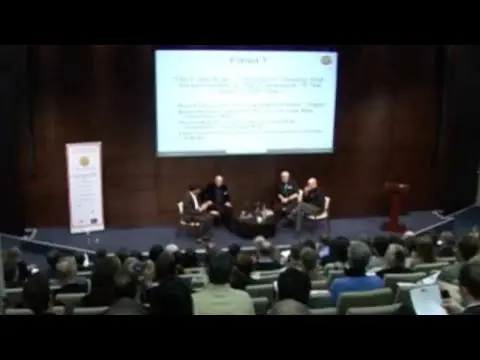
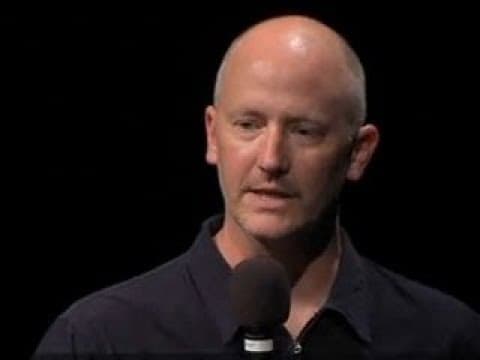
What Is the Future of Spaceflight? Long Conversation 12 of 19 with Peter Schwartz and Pete Worden

TL;DR
The future of spaceflight is a private-sector route to low-Earth orbit, followed by true spaceships that travel between worlds and eventually support settlement elsewhere. The discussion favors visiting asteroids and the moons of Mars before landing on Mars, with a possible mission around 2030, while synthetic biology could help life adapt to alien environments. Read on for the proposed sequence and its safety rationale.
Transcript
[Applause] Peter how you doing great I got a say so I don't know if you know I mean I'm an astronomical engine right so like this is heaven and you can turn off the clock now we're gonna geek out for about the next two hours I got lots of questions so can we pick up where were you were absolutely so the future of space flight okay has been very con... Read More
Key Insights
- 👾 The future of space flight involves settling on another world, which signifies progress in long-term thinking and evolution of the human space program.
- 😘 NASA's new plan includes turning to the private sector for low-earth orbit operations and focusing on building a true spaceship for interplanetary travel.
- 😒 The use of electric propulsion and heavy-lift airships could change the way we travel in both space and aviation.
- 🌍 Synthetic biology offers potential in modifying life to adapt to environments on other worlds.
- 🔋 The future of aviation could become more sustainable through the use of high-density batteries powered by ground-based solar grids.
- 🗺️ DARPA has started the 100 Year Starship project, aiming to invest in technologies for interstellar travel.
Install to Summarize YouTube Videos and Get Transcripts
Explore YouTube Video Summarizer or Get YouTube Transcript Extractor
Questions & Answers
Q: What is the proposed new approach to human spaceflight?
The proposed approach gives private companies a larger role in reaching low-Earth orbit while NASA concentrates on travel between worlds and living on another world. It replaces the idea of simply rebuilding Apollo with an effort to invent more affordable methods.
Q: Why should the private sector handle trips to low-Earth orbit?
Private companies are already building and launching rockets, and the speaker argues that their involvement could save NASA substantial money. That would let NASA focus on the harder tasks of interplanetary transportation and settlement.
Q: What would a true spaceship for interplanetary travel look like?
It would be a reusable ship designed to travel between worlds instead of making only one journey. The speaker suggests electric propulsion powered by solar energy, or possibly nuclear energy.
Q: Why visit asteroids and the moons of Mars before landing on Mars?
A spaceship that does not need to land on a world is much cheaper to build and operate. Asteroids and the moons of Mars can therefore serve as intermediate destinations before attempting a Mars landing.
Q: Why are the moons of Mars useful for studying Mars?
They offer a base for extensive telerobotic exploration of the planet and are described as being littered with Martian material. The speaker considers them a useful place to investigate Mars before sending people to its surface.
Q: When might humans reach the moons of Mars?
The speaker predicts that people will probably reach the moons of Mars around 2030. He presents that timing as plausible rather than certain.
Q: Why should missions be cautious about possible life on Mars?
Mars may contain existing life, and mixing life from two different areas could result in one killing the other. Exploring from the moons of Mars would allow careful research without immediately landing people on the planet.
Q: How could synthetic biology contribute to settling another world?
Instead of recreating an Earth-like environment on Mars, synthetic biology could modify life so it is better suited to Martian conditions. The speaker also suspects that settlers may eventually modify the human genome.
Summary & Key Takeaways
-
Definition: The human space program is increasingly aimed at settling another world.
-
Who: Private companies would take a larger role in transporting people and equipment to low-Earth orbit.
-
Step 1: Shift routine low-Earth orbit launches toward the private sector to reduce NASA's costs.
-
Step 2: Build a true spaceship that can travel repeatedly between worlds without landing on them.
-
Step 3: Visit asteroids and the moons of Mars before attempting a crewed landing on Mars.
-
Tool: Electric propulsion could use solar energy, with nuclear energy presented as another possibility.
-
Compare: Rebuilding Apollo is described as unaffordable, while inventing new approaches receives a high priority.
-
When: Humans may reach the moons of Mars around 2030, according to the speaker's estimate.
-
Tool: Telerobotic exploration from the moons of Mars could investigate the planet while limiting biological risk.
-
Definition: Synthetic biology could adapt life to another world's environment instead of recreating Earth-like conditions there.
Read in Other Languages (beta)
Share This Summary 📚
Summarize YouTube Videos and Get Video Transcripts with 1-Click
Try YouTube Summary with ChatGPT & Claude or YouTube Transcript Generator
Explore More Summaries from Long Now Seminars 📚




Summarize YouTube Videos and Get Video Transcripts with 1-Click
Try YouTube Summary with ChatGPT & Claude or YouTube Transcript Generator